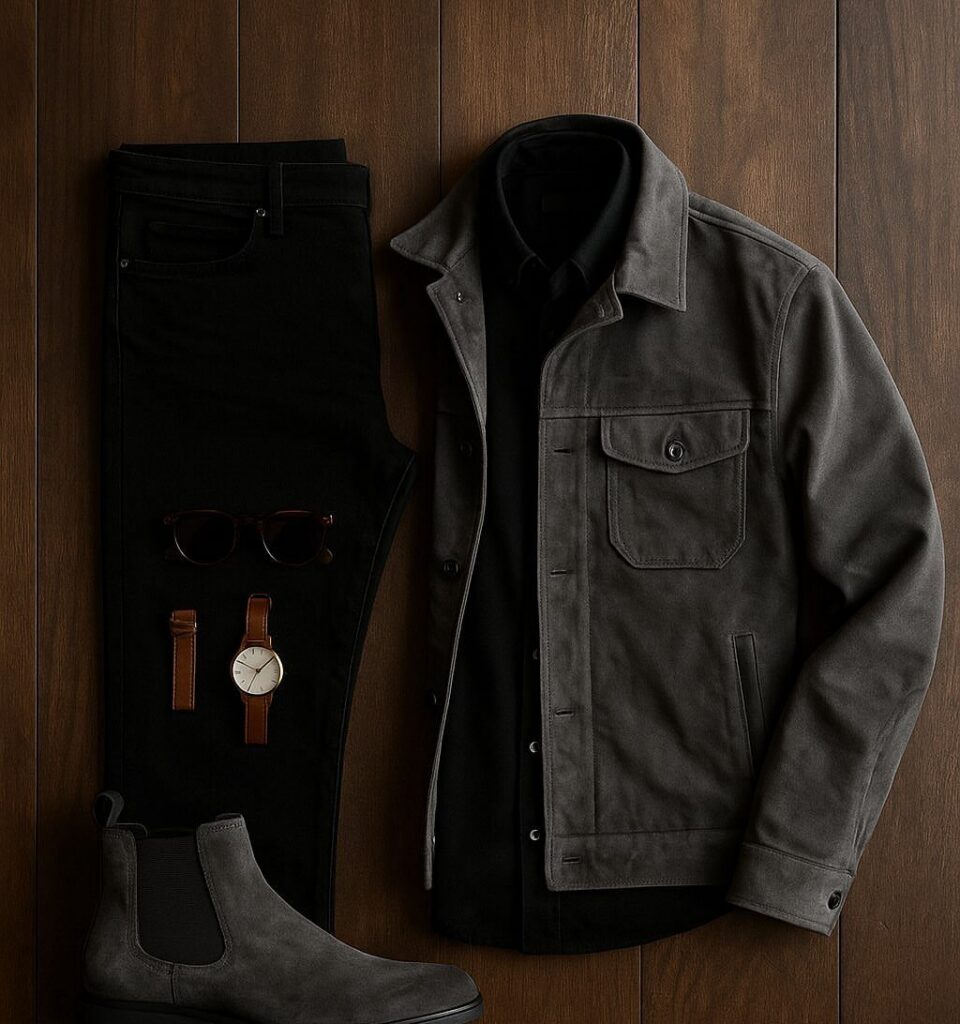
The outfits here run from a white tee and wide-leg jeans to a pinstripe blazer over tan chinos, and the same rule picks between them: the setting decides how much of the outfit should be dressy.
Work, a casual outing and an evening event each sit at a different point on that scale, and the weather only changes the fabric weight, not the formula.
Every look pairs one dressy piece with one relaxed piece in a tight palette, so you can reuse what you already own.
1. Collared Shirts
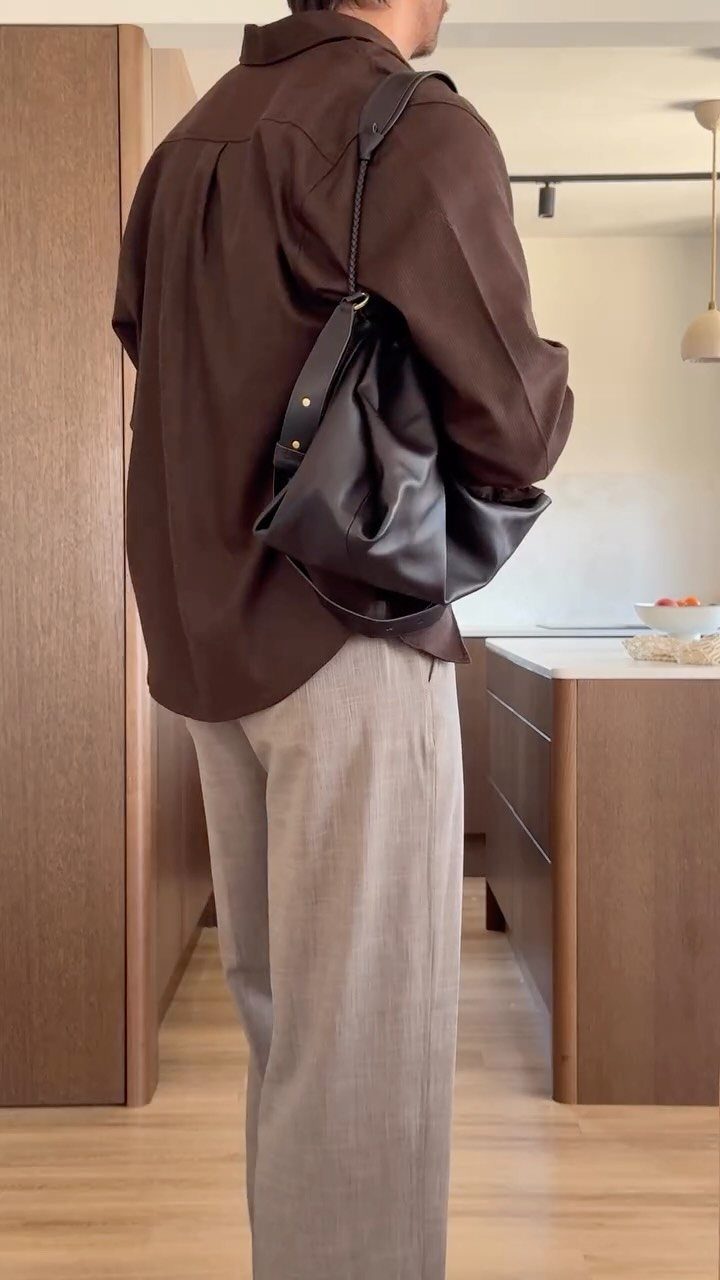
A brown collared shirt over grey trousers is a two-color formula that takes almost no thought. Brown and grey sit close enough in tone that neither fights the other, so the outfit reads calm and put together.
Keep the shirt tucked or cut to hit around mid-fly, and let the collar sit flat. A black leather bag, as here, adds contrast without adding a third color to manage.
2. Trousers and Bottoms
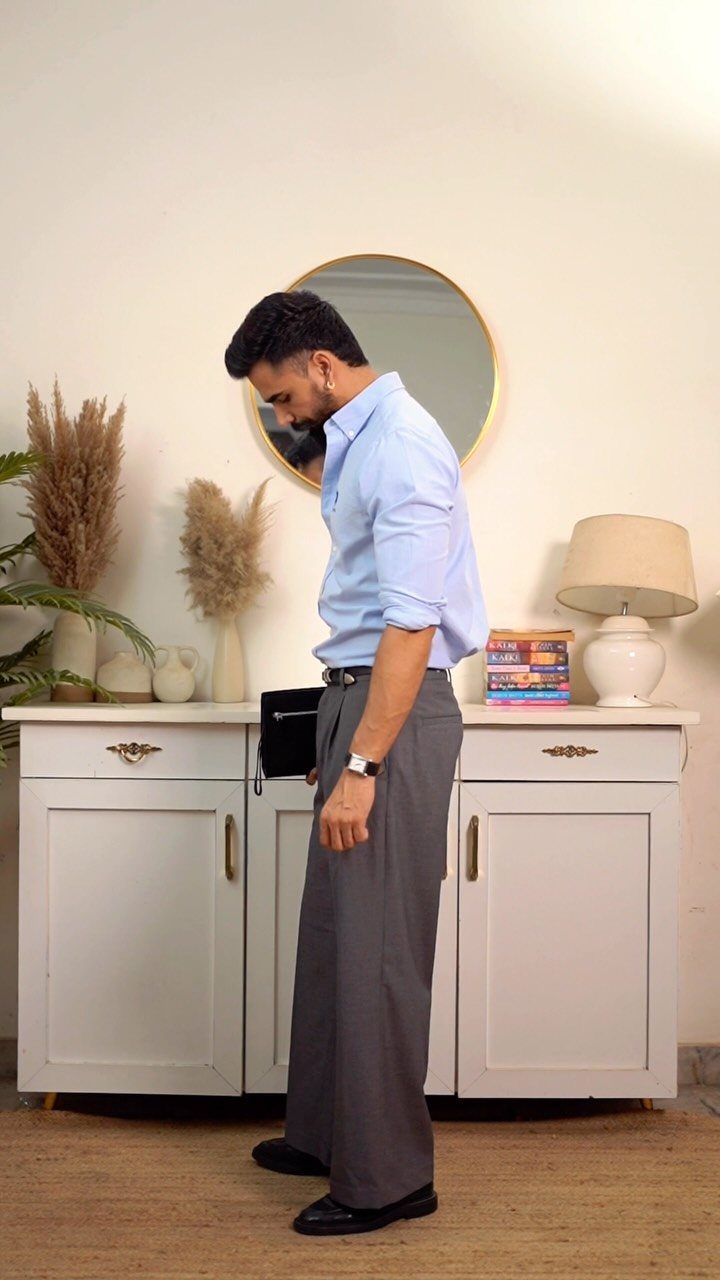
Wide-leg grey trousers are the quickest way to make a plain shirt look intentional. Grey goes with nearly everything, and the wider cut gives the outfit a relaxed shape that slim chinos can’t.
Pair them with a light blue button-down, as here, and keep the shirt tucked so the waist stays defined.
Let the hem break slightly over your shoes. Chinos, dark denim and tailored shorts are the other bottoms I’d keep in rotation.
3. Get Layered
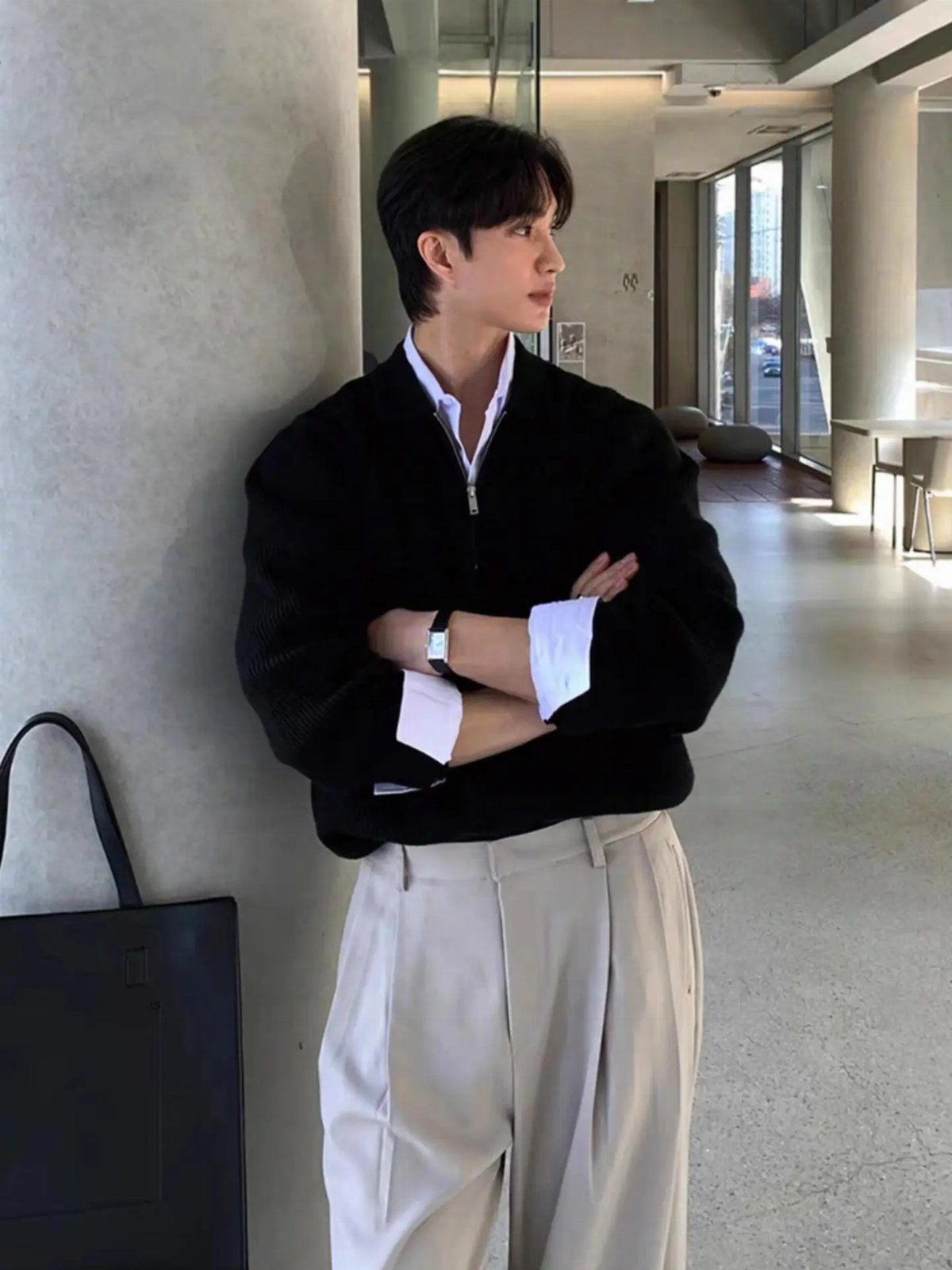
A zip-up sweater over a collared shirt gives you two layers that work together and one that you can drop when the room warms up.
Black over white gives the sharpest look, and keeping the trousers light stops the outfit from feeling bottom-heavy.
Choose a knit thin enough to sit under a jacket later, and keep the shirt collar sticking out above the neckline. Layering this way suits offices with unpredictable thermostats.
4. Smart Casual Definition
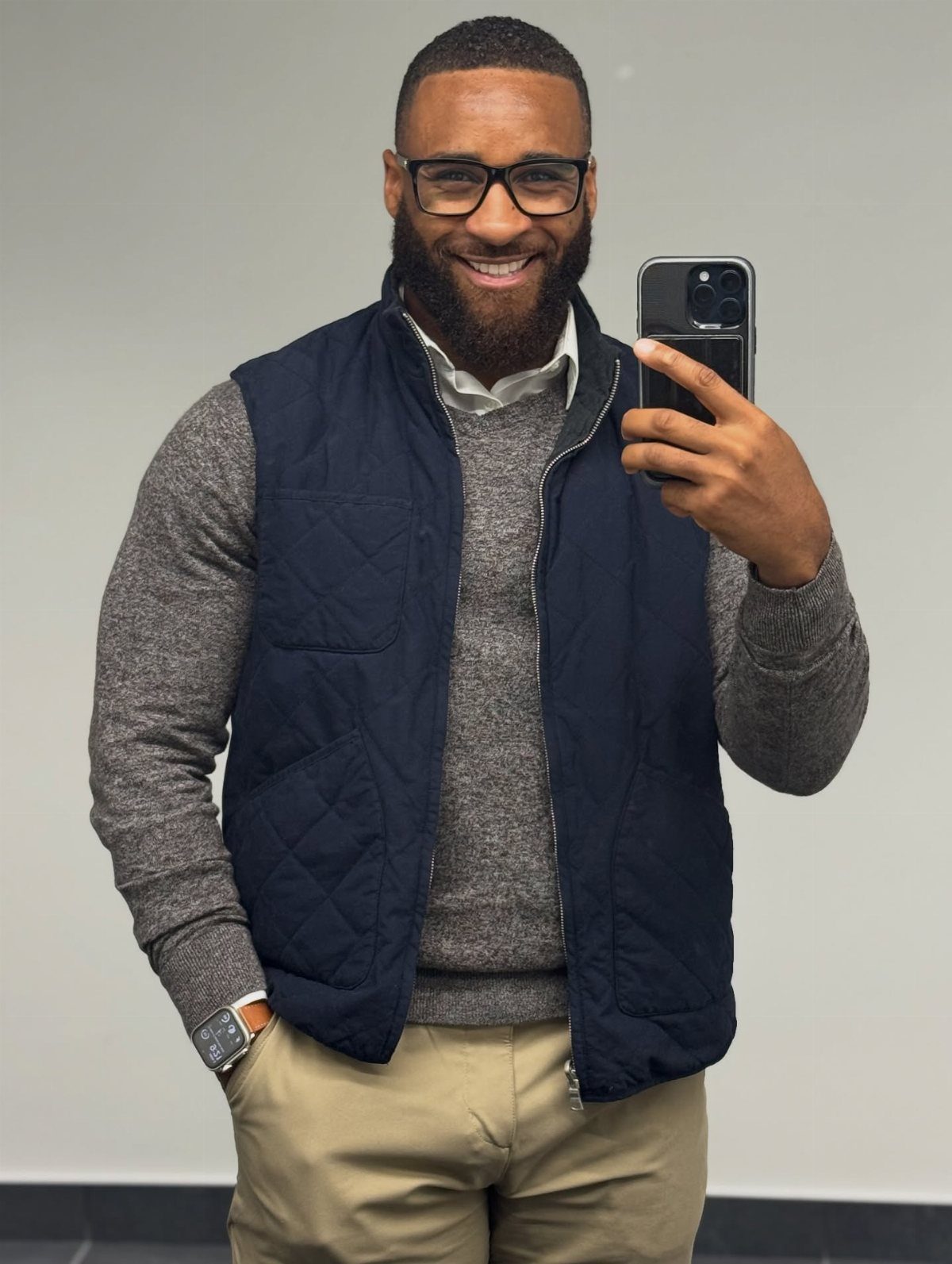
Smart casual means one dressy piece and one relaxed piece in every outfit, and the balance is the whole skill.
Stay in a tight palette, here navy, grey, white and tan, and the mix of formal and casual looks planned rather than random. If an outfit feels too stiff, swap one piece for something softer.
5. Seasonal Smart Casual Dressing
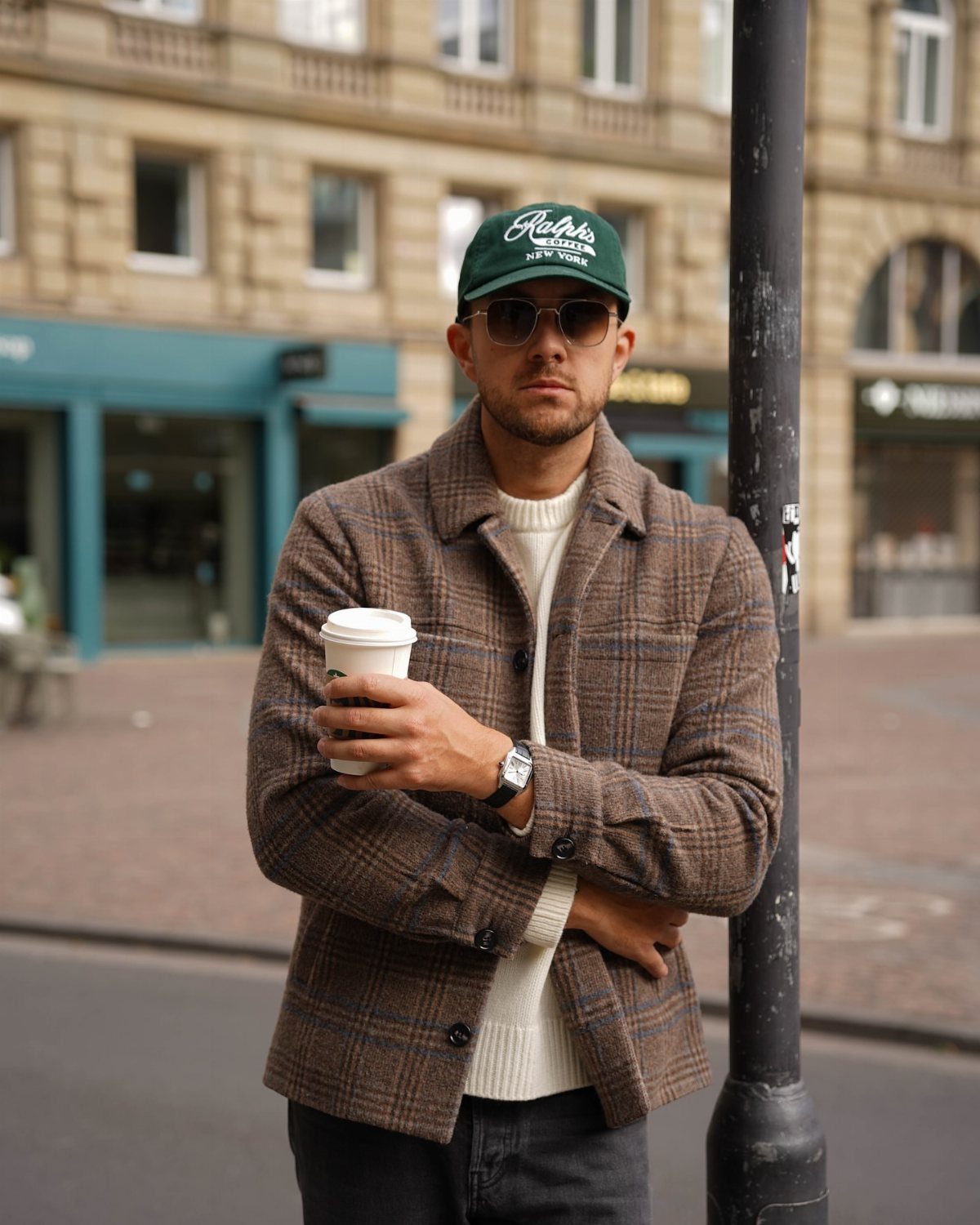
Swap the weight of the pieces, not the formula, and smart casual follows the calendar.
In summer, I’d drop to a short-sleeve collared shirt or fine knit tee and lighter trousers.
In winter, add a coat over the same base. Earthy browns and creams carry across most of the year, so you can reuse the pieces you already own.
6. Smart Casual for Work
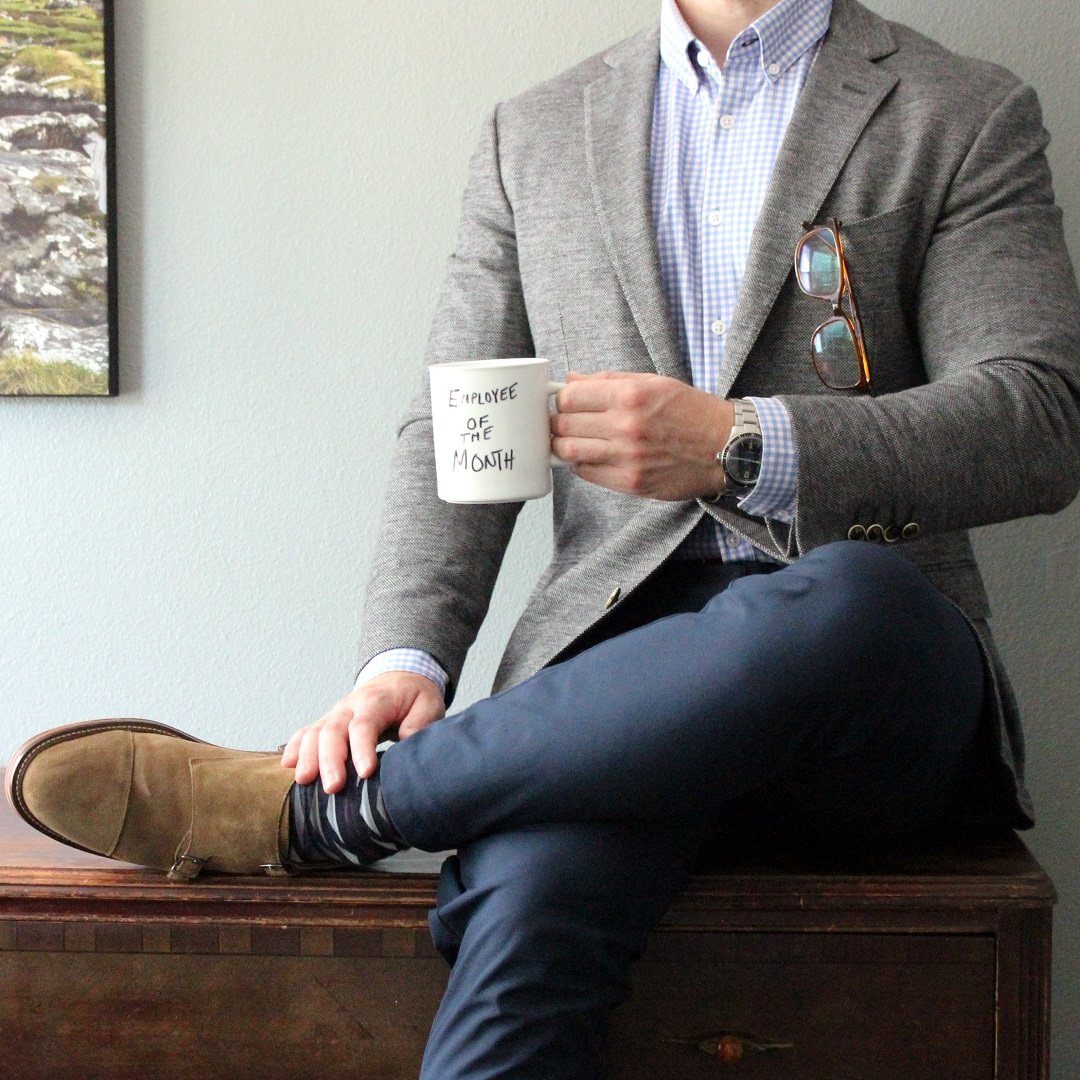
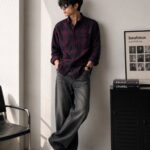
A grey blazer with navy trousers is a safe, sharp base for the office, and it doesn’t need a tie. Add a blue checkered shirt for pattern, as here, and the outfit stays friendly instead of stiff.
Tan boots finish it better than sneakers when you want to look a step above casual.
I’d keep the blazer unstructured and the shirt collar soft. Pick a shirt pattern small enough to read as a solid from across a room.
Because business casual doesn’t have to be boring. You should still look like you: Your job is just to find which pieces land on the bullseye in the Venn diagram featuring your job and your sartorial vibe.
— GQ
7. Smart Casual for Evening Events
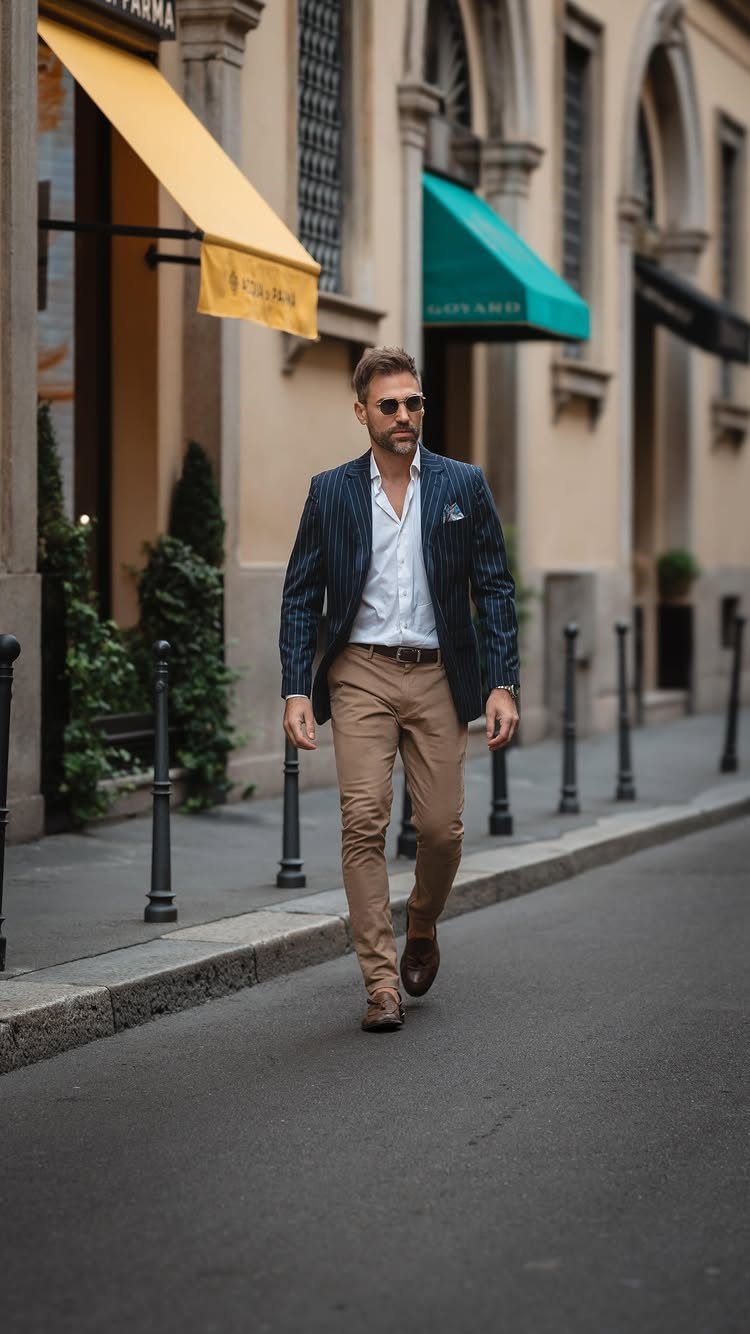
A pinstripe blazer over a white shirt and tan chinos is the evening version of smart casual: the blazer carries the dressy half, and the chinos keep it relaxed.
Leave the tie at home and open the top button.
Keep the stripe fine and the blazer navy or blue, as here, so it pairs with khaki without clashing. I’d pick leather shoes over sneakers after dark.
Swap the white shirt for a fine knit tee if the venue is casual.
8. White Tee with Wide-Leg Jeans
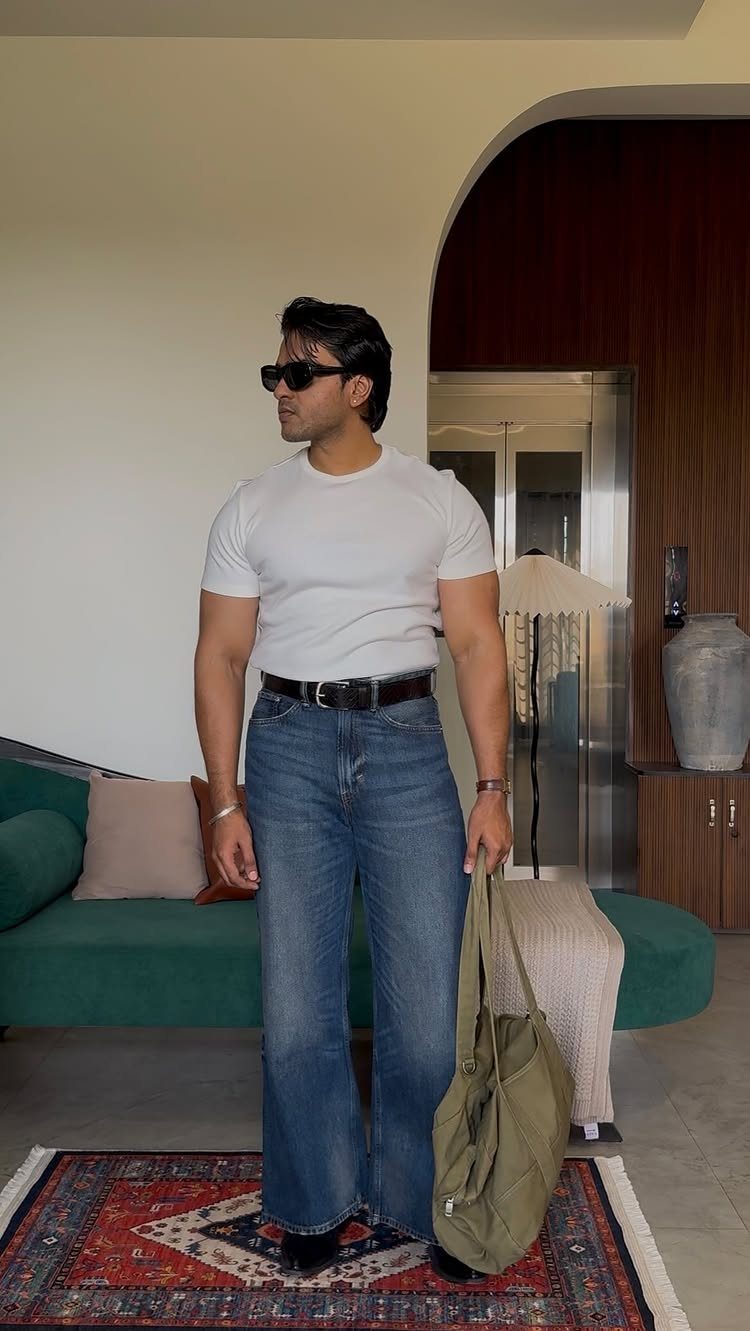
Wide-leg jeans need a fitted top, or the whole outfit turns to fabric. A white crewneck tee, tucked in, gives the jeans a defined waist to hang from.
Add a belt so the tuck looks deliberate, and let the hem fall to the top of your shoes.
A tote and sunglasses finish it without adding another color. I’d choose a mid-blue wash for the easiest wear.
9. Quarter-Zip Sweater with Trousers
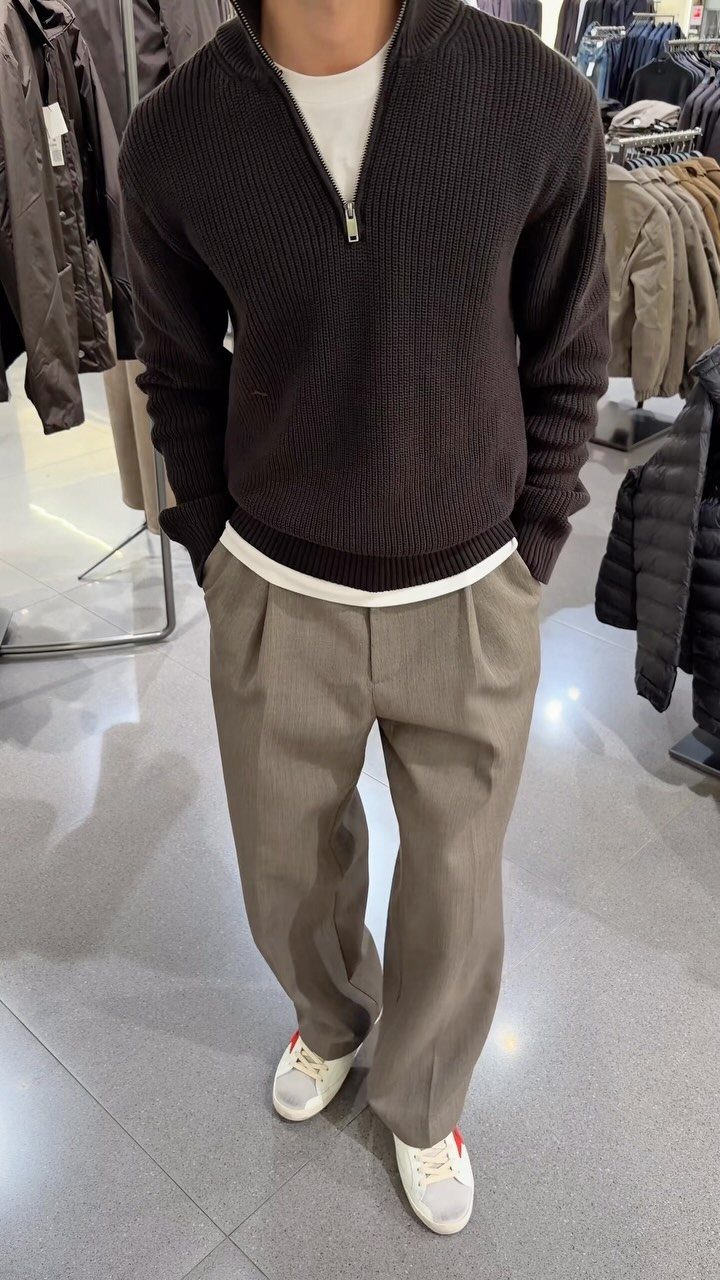
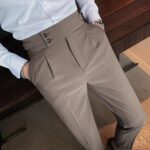
Ribbed quarter-zip sweaters are the easiest way I know to dress up tan trousers without a collared shirt. The zip sits open at the neck, and a white tee underneath keeps the look clean.
Brown with taupe stays in one warm family, so nothing fights. White sneakers keep the outfit casual, which is the right call when the knit already looks polished.
Choose a sweater that ends at your belt line, not below it.
10. Suede Jacket and Pleated Trousers
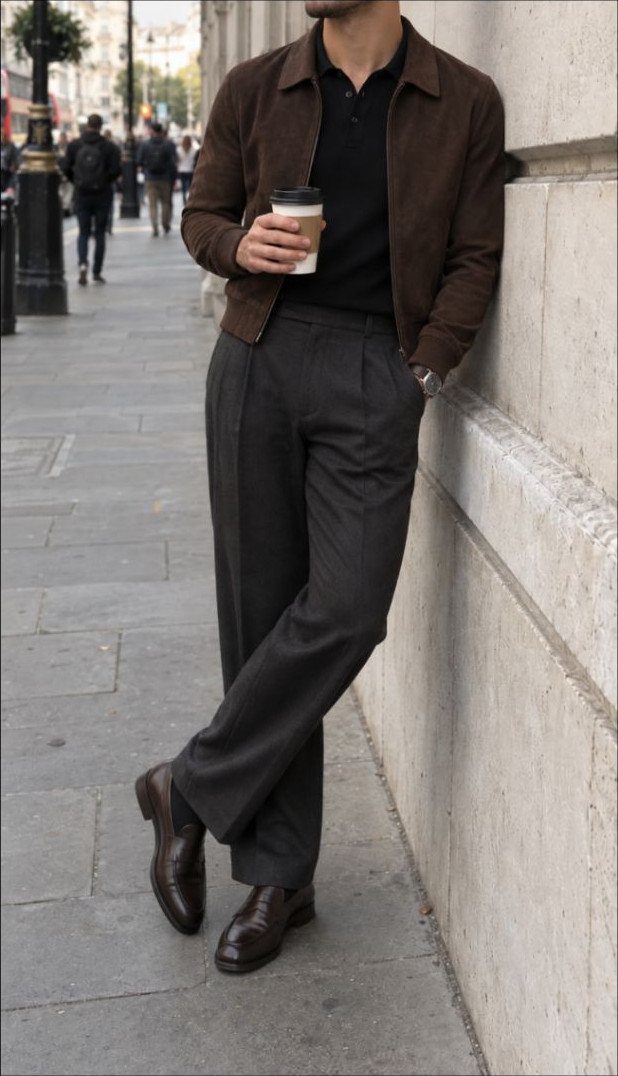
Brown suede over a black polo is a dark, soft combination, and grey pleated trousers give it a tailored lower half. The mix of textures does the work: suede, knit cotton and wool all read differently.
Brown dress shoes tie the jacket to the outfit. Keep the trousers dark grey and the polo plain, since the jacket is the piece people will notice.
Pleats add room at the hip, which I find more comfortable than flat fronts.
11. All-Black Casual Dressing
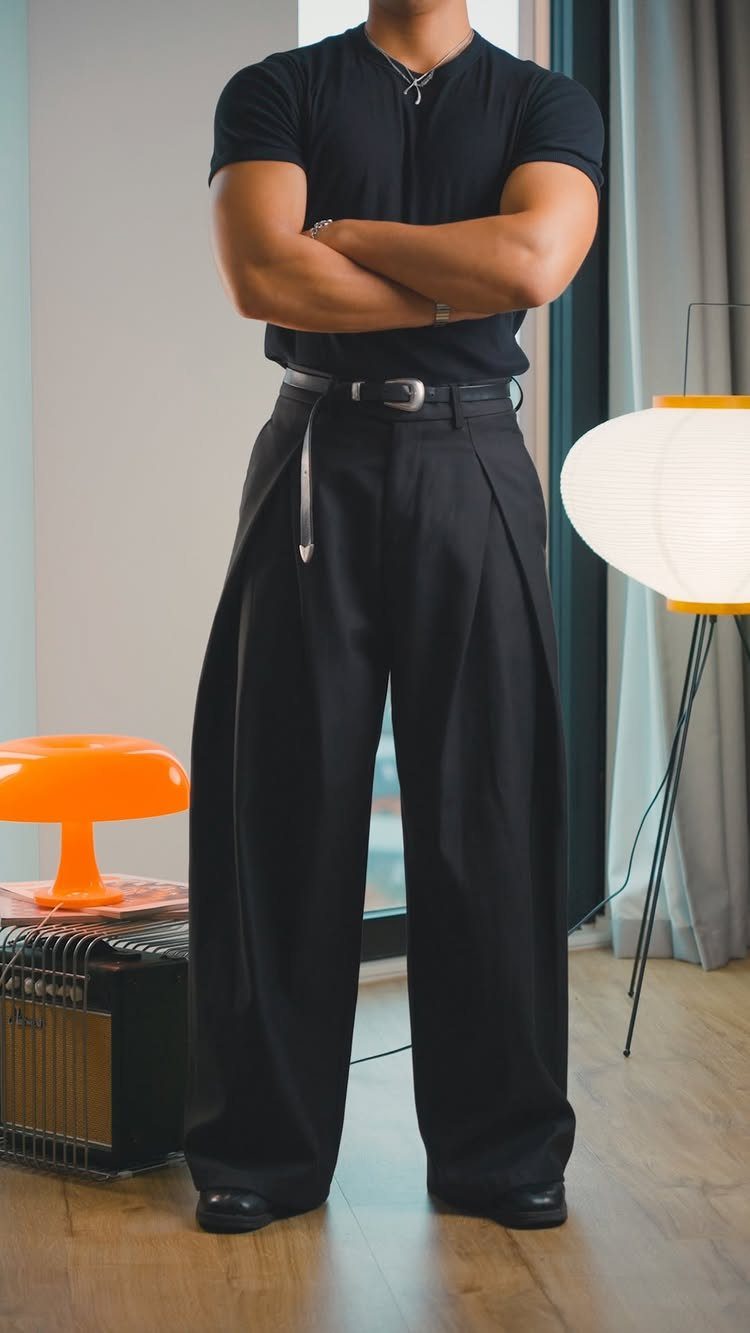
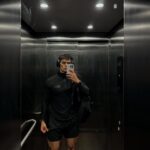
All black works when the shapes differ even though the color does not. A short-sleeved shirt tucked into wide-leg pleated trousers gives you a clear waist and a lot of movement below it.
Add a black belt and black shoes so no other tone breaks the line. Matching blacks matter here: a faded tee next to deep trousers looks like a mistake, so buy pieces in similar fabric weights.
I’d keep jewelry minimal and let the cut carry it.
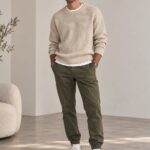
12. Overshirt with Cargo Trousers
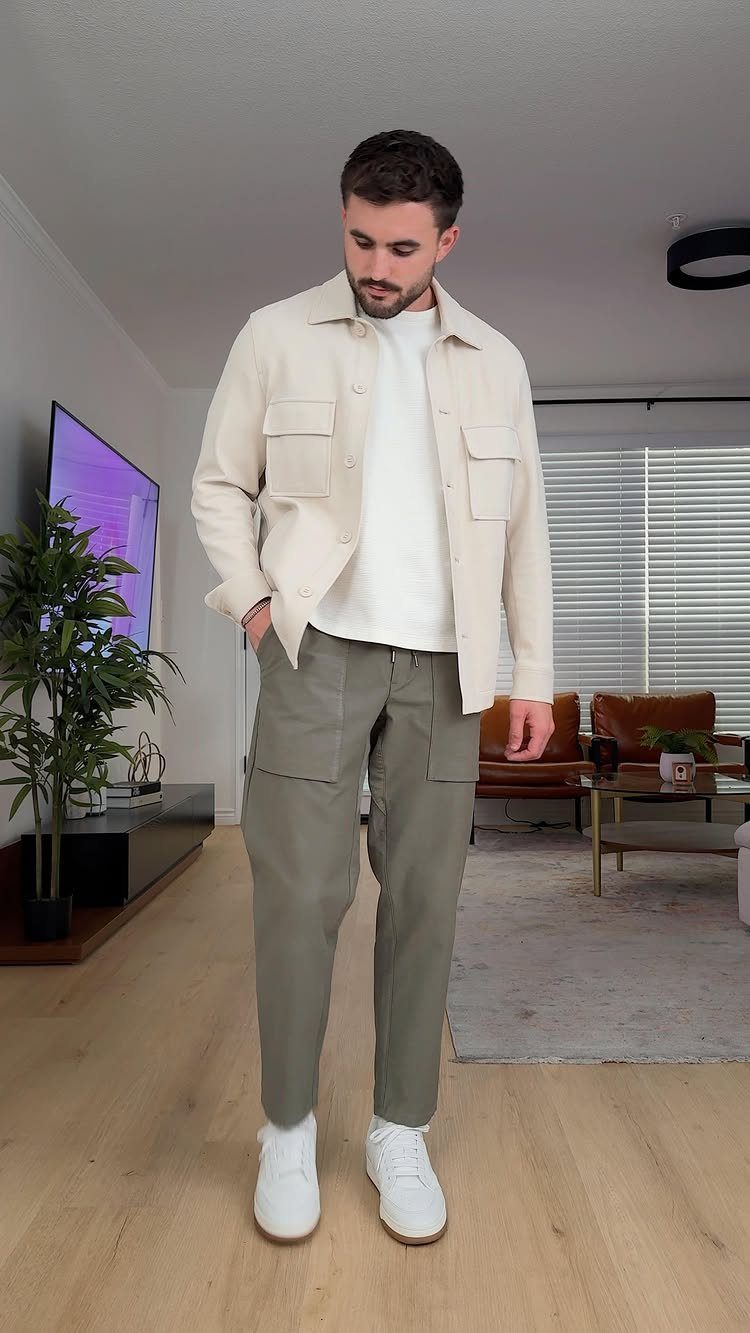
A cream overshirt works as a light jacket over a white tee, and olive cargo trousers give the outfit its earthy base. Cream and white sit close, so the top half stays soft while the olive adds weight.
Wear the overshirt open.
Choose cargo trousers with a straight leg and pockets that lie flat, not bulging, so the shape stays clean. White sneakers keep the palette tight.
Skip the second pair of pockets on the shirt if the trousers already have them.
Understanding Smart Casual
The swap rule is simple: a tailored shirt in place of a tee, neat trousers in place of beat-up jeans, polished shoes in place of trainers. Change one of those and you have moved the outfit up a notch.
Blazers and dress shoes are the refined pieces.
Chinos and well-fitted jeans are the relaxed ones. Mix from both columns and the outfit works in an office or at a social event.
Fit matters more than the label on any of it. Well-fitted jeans pass; baggy or worn ones pull the whole outfit back down.
Dressing for Different Occasions
Start with the setting, then decide how much of the outfit should be dressy. Work, a casual outing and an evening event each sit at a different point on that scale.
For evening, dress to show you made an effort.
Check the invitation before you pick. Some formal events call for a suit, and smart casual will look underdressed there.
If the invitation says nothing, ask the host. Wearing slightly more than the room is easier to fix than wearing less: you can take off a blazer, but you can’t add one.
Seasonal Adaptations
Comfort decides whether an outfit gets worn twice, so adjust for the weather before anything else. Overheating in a heavy knit or shivering in thin cotton ruins even a well-matched outfit.
Think in fabric weight.
Lighter, breathable fabrics suit warm months, and heavier ones suit cold months. The cut and the dressy-plus-relaxed balance can stay the same.
Layering does the rest. Choose pieces that work alone and together, so you can add or remove one as the temperature changes during the day.
Before each season starts, try your core pieces on and check that they still fit over or under the layers you plan to wear.
Frequently Asked Questions
What is a casual dress code for men?
A casual dress code allows relaxed clothes such as jeans and tees.
Smart casual sits a step above it: one dressy piece and one relaxed piece in each outfit, like a blazer with chinos or well-fitted jeans. Keeping the palette tight makes the mix look planned instead of random.
How do you dress smart casual?
Swap one casual piece for a dressier one: a tailored shirt for a tee, neat trousers for beat-up jeans, or polished shoes for trainers.
Blazers and dress shoes count as the refined pieces, while chinos and well-fitted jeans are the relaxed ones. Mixing from both groups works at an office or a social event.
How do you adjust casual outfits for the seasons?
Change the fabric weight and keep the same formula.
Choose lighter, breathable pieces for summer, like a short-sleeve collared shirt or fine knit tee, and add a coat over the same base in winter. Pieces that work alone and layered let you adjust as the day’s temperature shifts.