The pants on this list run from joggers and carpenter pants to dress trousers with pleats, and what decides between them is where you’ll be wearing them.
Work and dinners call for structure, like wool trousers or dress pants with a crease, while weekends and warm days suit linen, which wrinkles and looks better for it.
1. Chinos
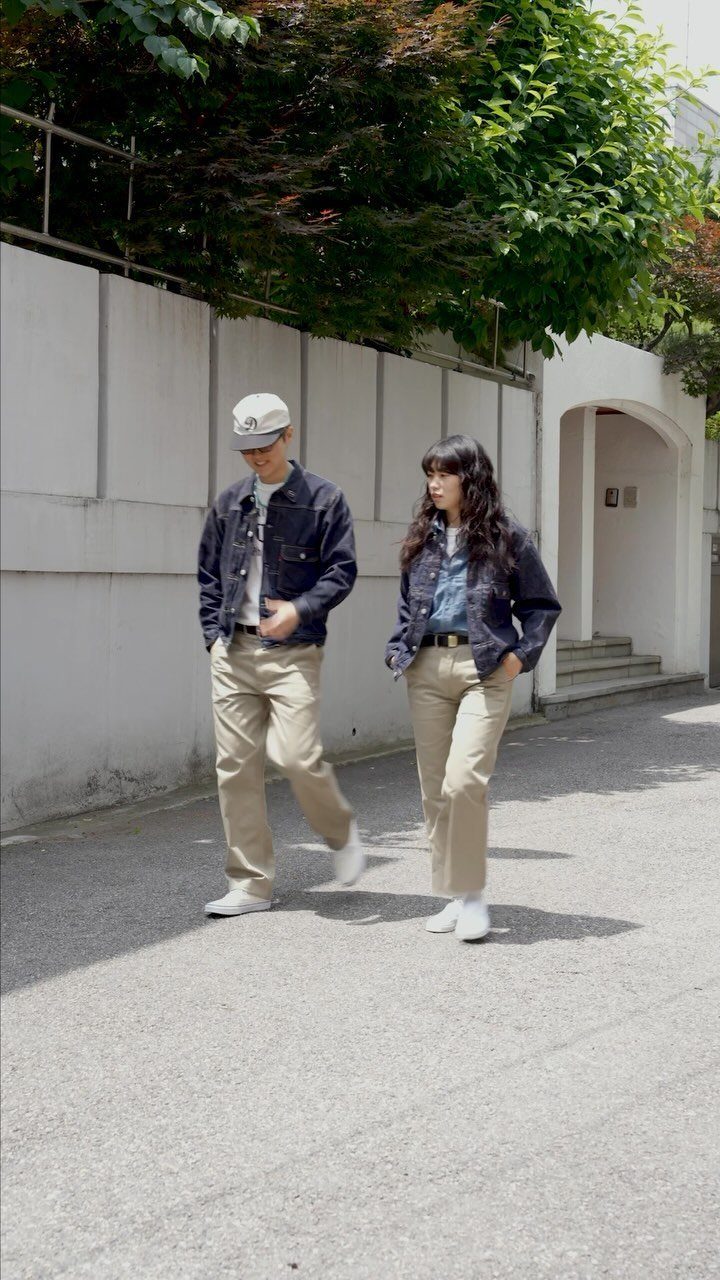
Cotton twill is what makes chinos the easiest pair in a wardrobe: sturdier than a dress trouser, smoother than denim.
Tan is the version I’d buy first, because it sits well under a dark jacket and it works just as well with a plain white tee.
Keep the leg clean and the hem near the shoe. Chinos look sharp with minimal effort, which is why they suit a man who doesn’t want to think about it.
2. Dress Pants
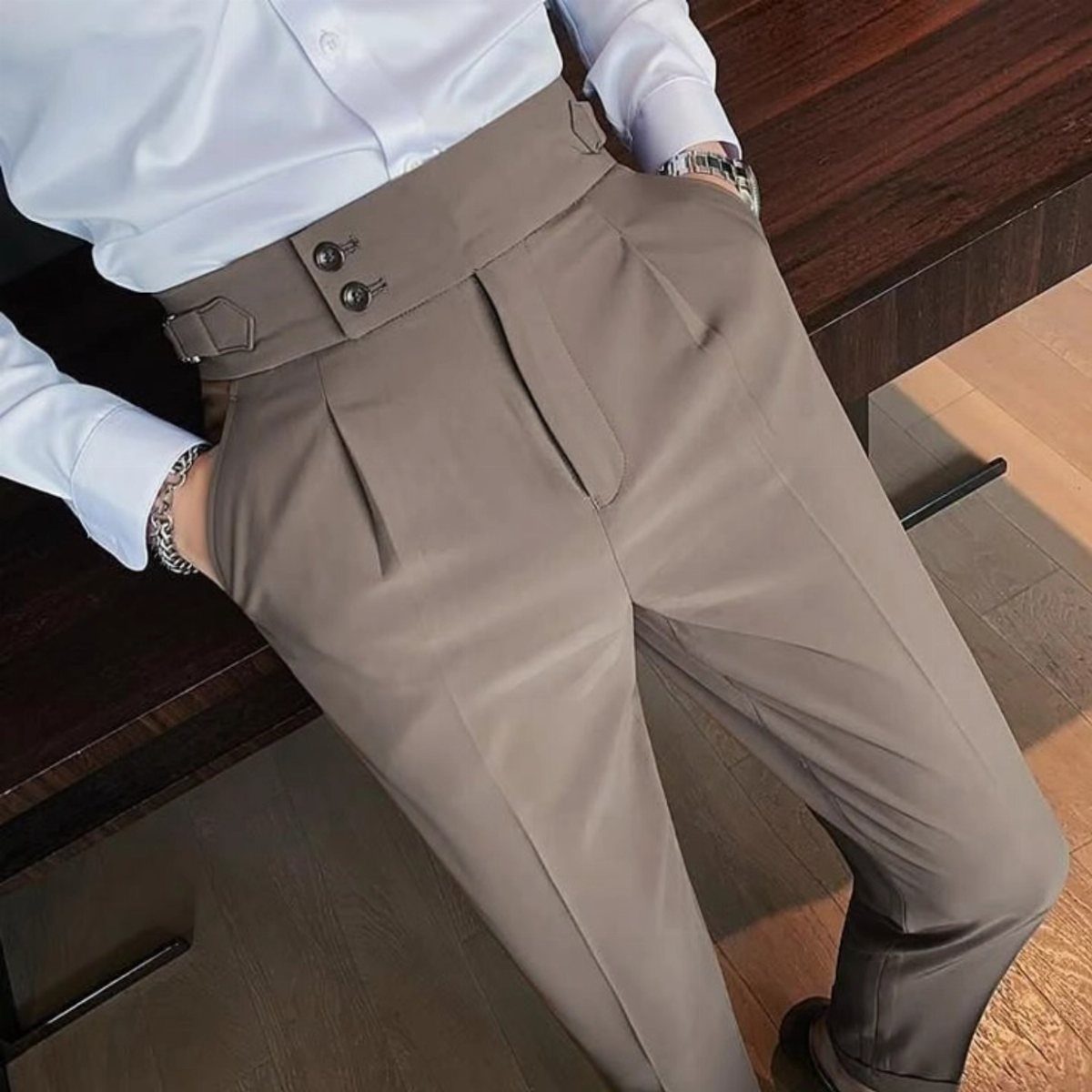
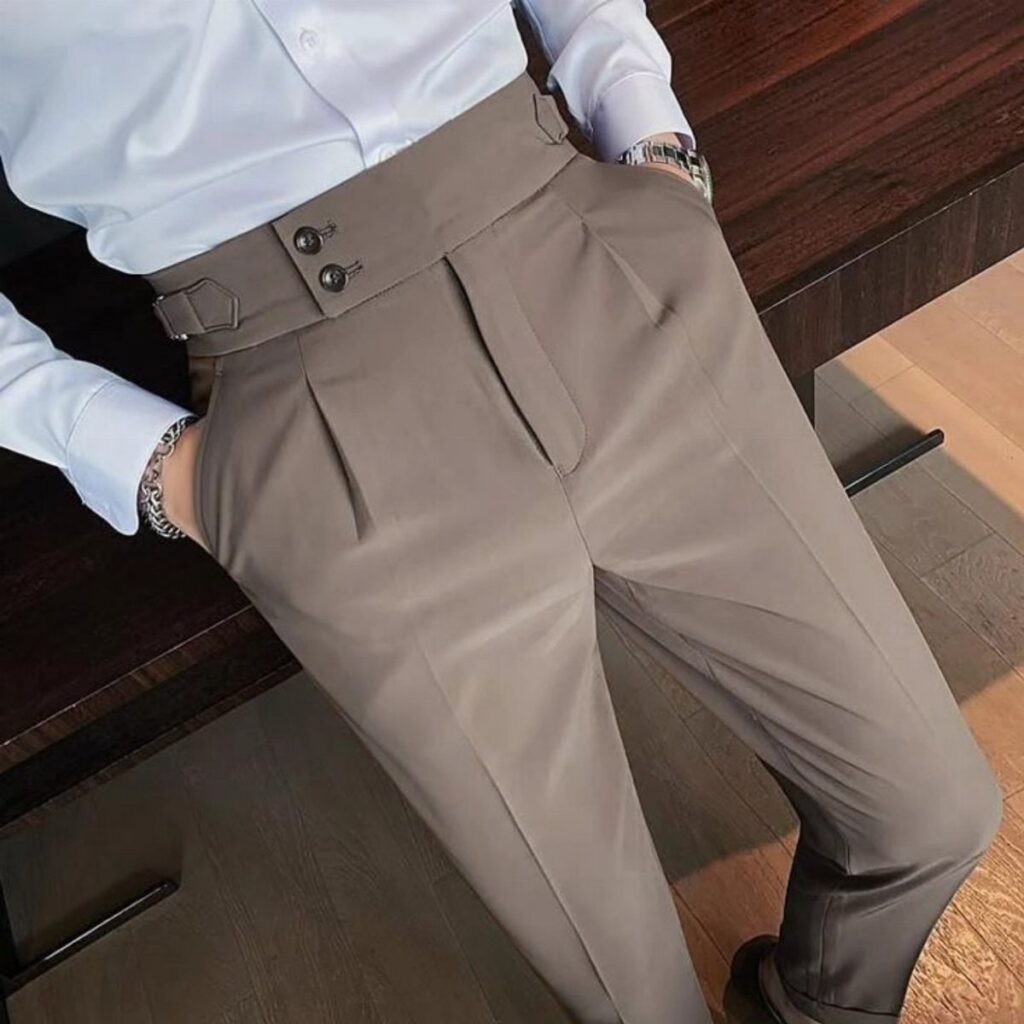
Pleats and a high waist give dress pants a fuller, more comfortable line through the hip, and a button-tab waistband keeps the front tidy without a belt.
I like a muted shade such as taupe over black: it pairs with a white shirt and looks less like a uniform.
These belong in professional settings, so keep the rest simple. A tucked shirt, a leather belt if the waistband needs one, and polished shoes finish the job.
YES, DRESS PANTS can be comfortable. Forget those stiff, boxy trousers you’ve encountered and meet the new crop of slim dress slacks with stretch to hit the scene.
3. Cargo Pants
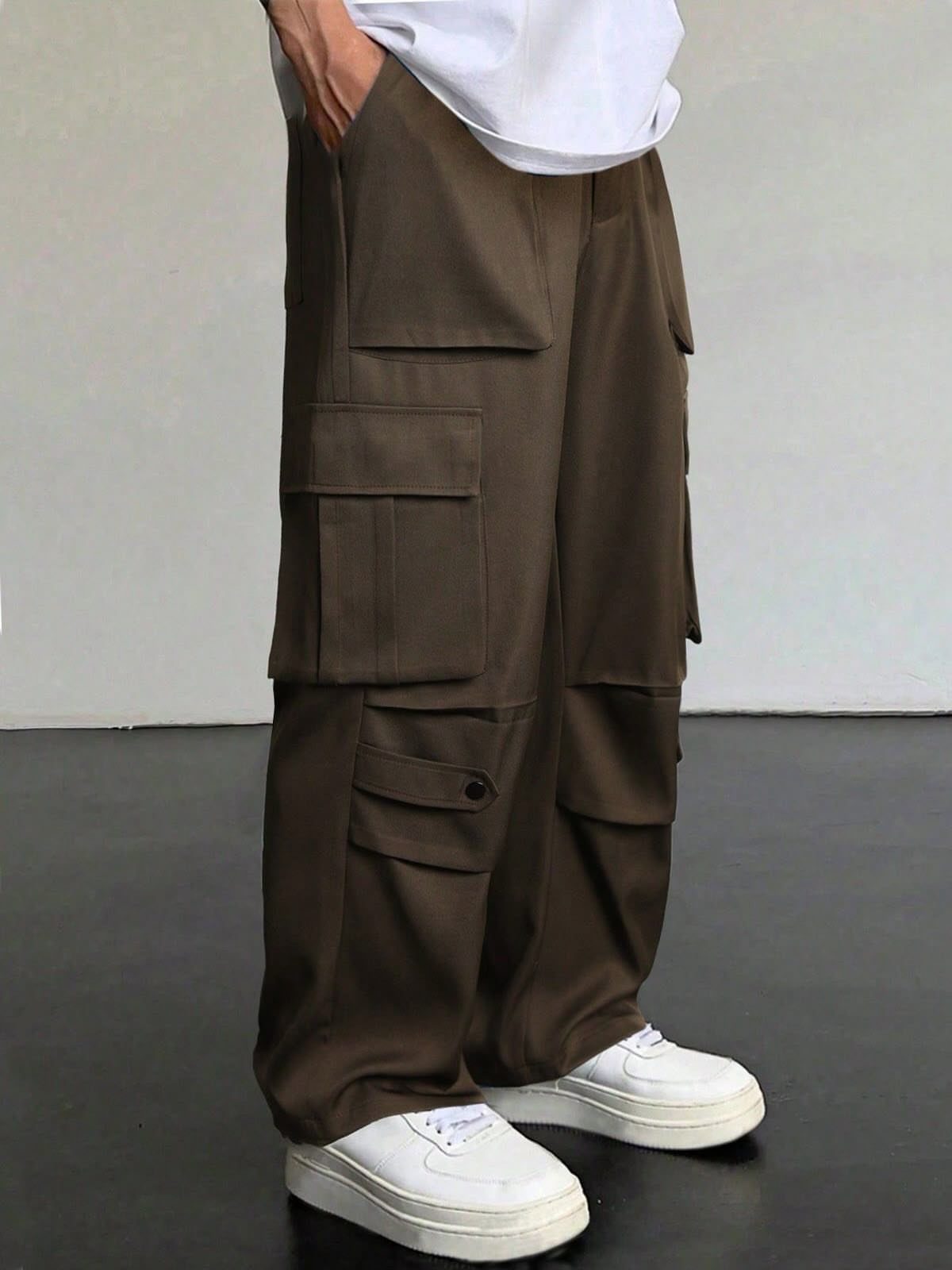
Pockets are the whole story with cargo pants, and the risk is looking bulky.
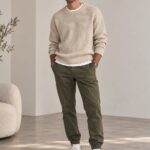
Muted olive or brown keeps the look grounded, and I’d pair them with a plain white tee and clean white sneakers so the pockets stay the only busy detail.
Keep those pockets mostly empty. Stuffed ones ruin the line fast, and a slimmer leg keeps the pants from swallowing your frame.
4. Linen Trousers
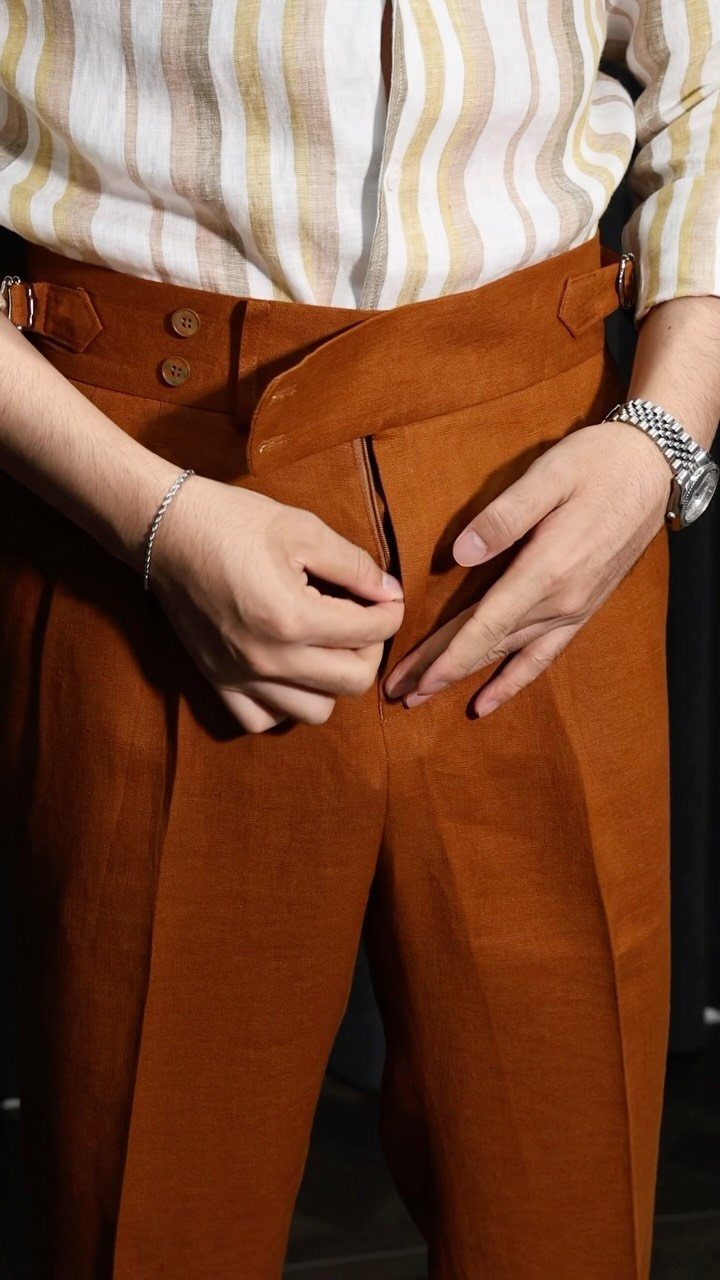
Linen is the pick for summer: light, airy and cooler on the skin than most fabrics. A rust or brown shade looks warmer than the usual beige, and a striped shirt keeps it from feeling flat.
Expect creases.
They come with the cloth, and I think they look better than a pressed-flat pair that fights the fabric. A high waist with a button fly gives the loose cut some structure.
5. Pleated Trousers
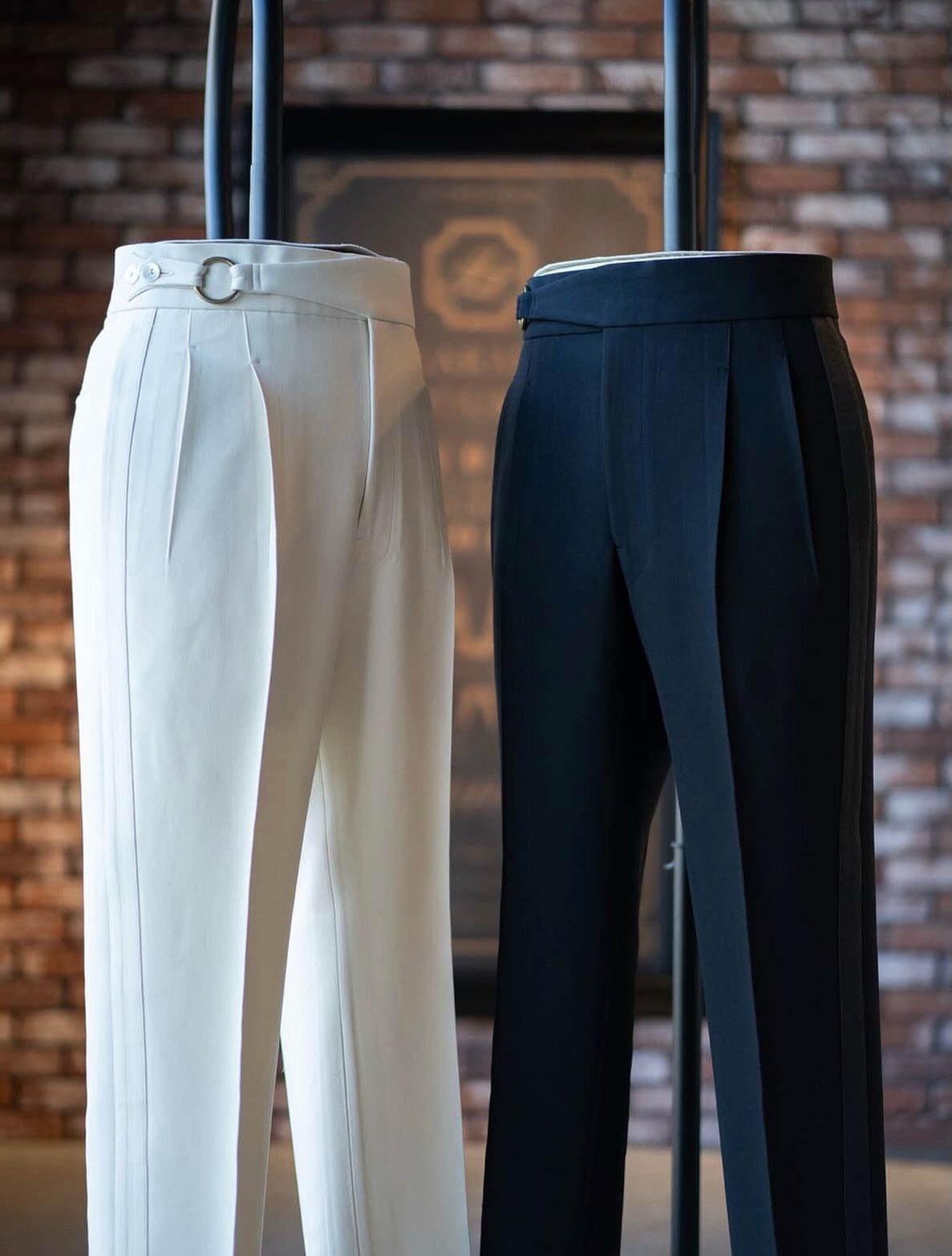
Front pleats add room at the hip and thigh, so the trouser hangs fuller and sits easier when you move or sit. They suit men who find flat-front pants tight across the seat.
Black is the safe choice; white is bolder and shows every mark, so I’d save it for warm days and clean surfaces. Whichever you buy, hang them up rather than folding, which protects the pleat lines.
6. Cropped Pants
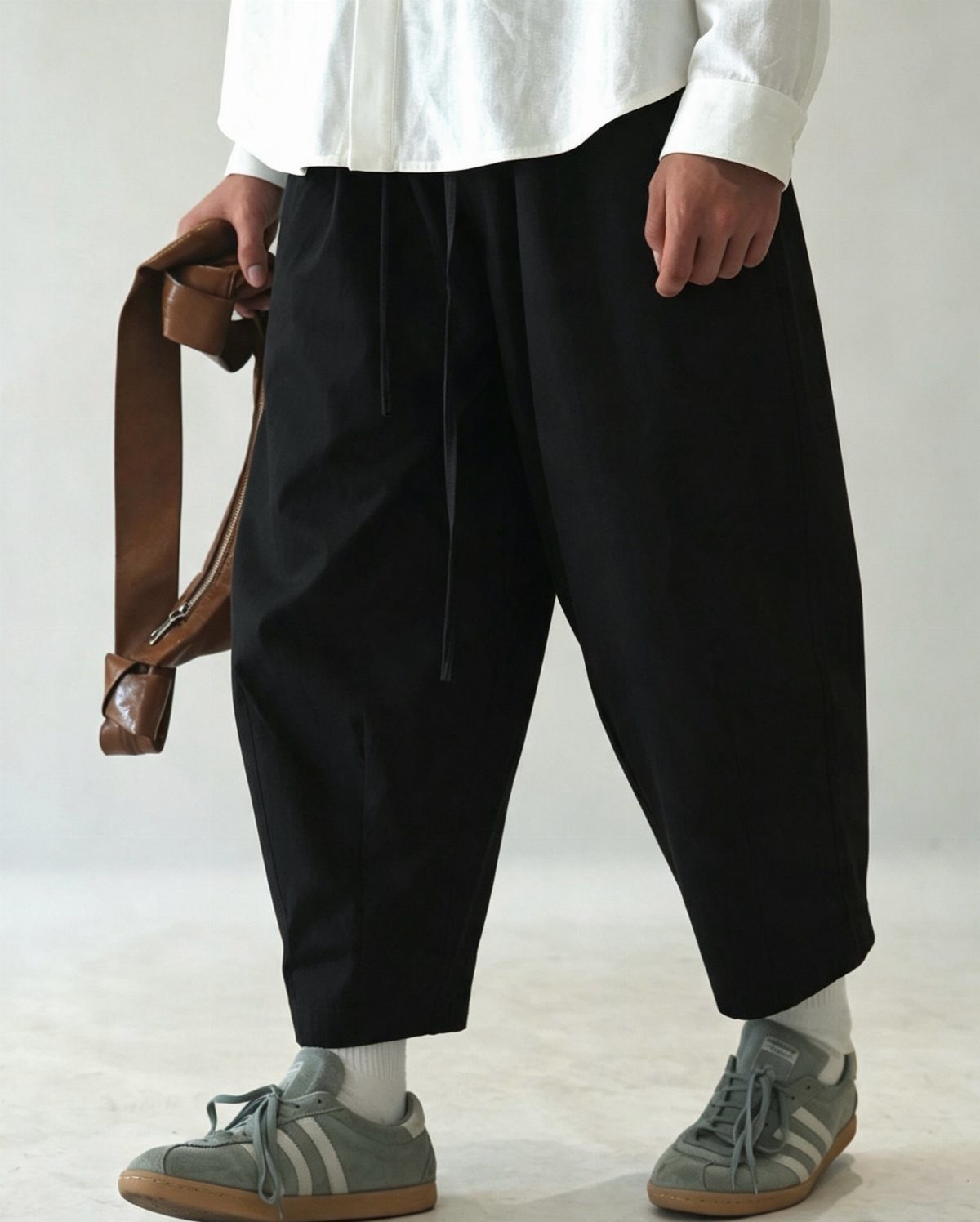
A cropped hem ends above the ankle, so the shoe and sock get seen. That makes footwear part of the outfit: clean sneakers or loafers work, and a white sock against a black pant, as above, adds a deliberate contrast.
Pair a cropped leg with a slim, simple top, like a plain white long-sleeve shirt. Keep the hem a consistent length, because an uneven one reads as a mistake, not a choice.
7. Wide-Leg Pants
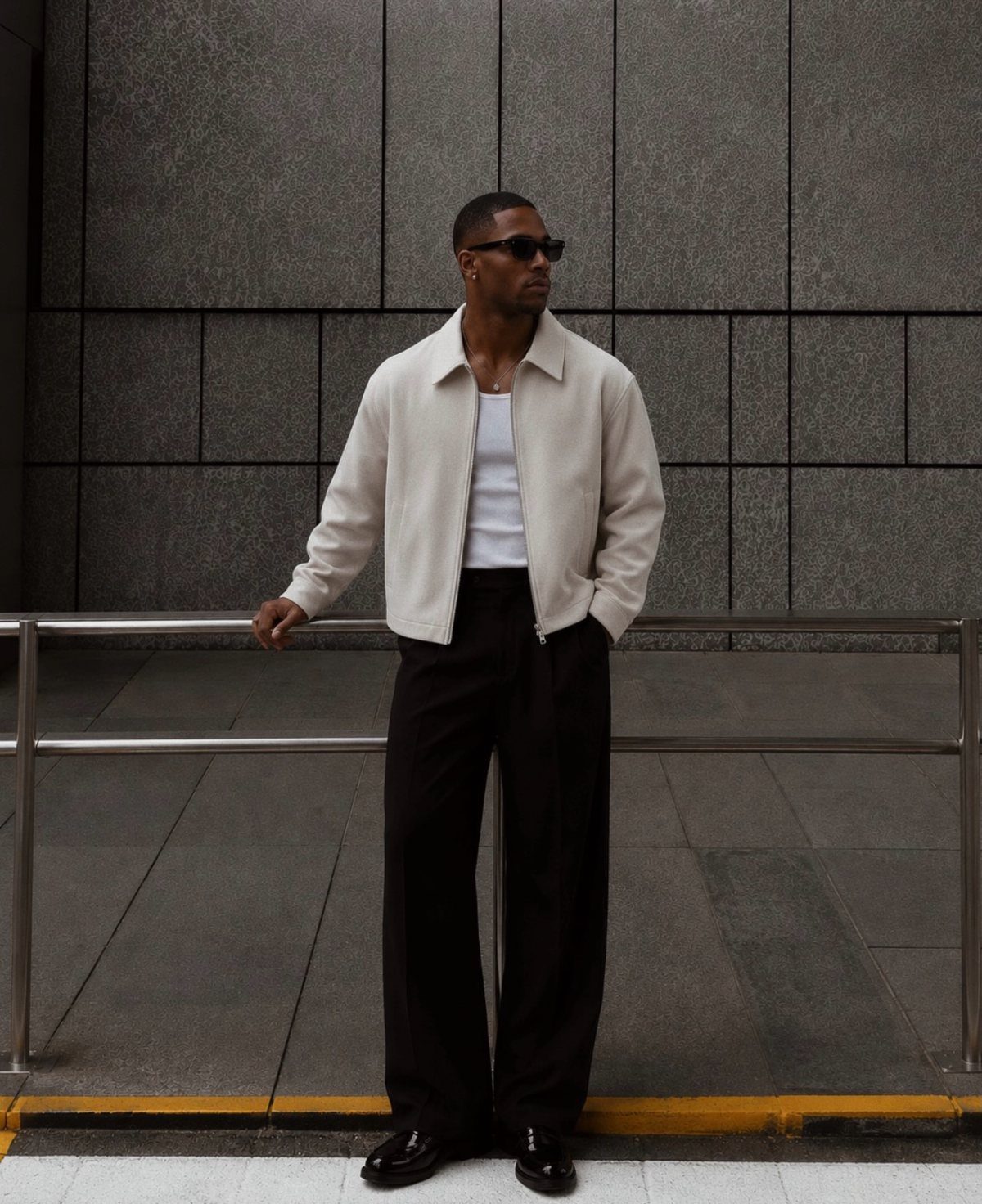
Wide-leg pants swap the usual slim taper for a straight, loose fall from hip to hem, and that volume is the whole appeal.
Black is the easiest shade to start with, and a white tee under a white jacket keeps the top half quiet.
Balance matters here. A fitted or cropped top stops the outfit from looking oversized, and the hem should just skim the shoe so the fabric doesn’t pool.
8. Joggers
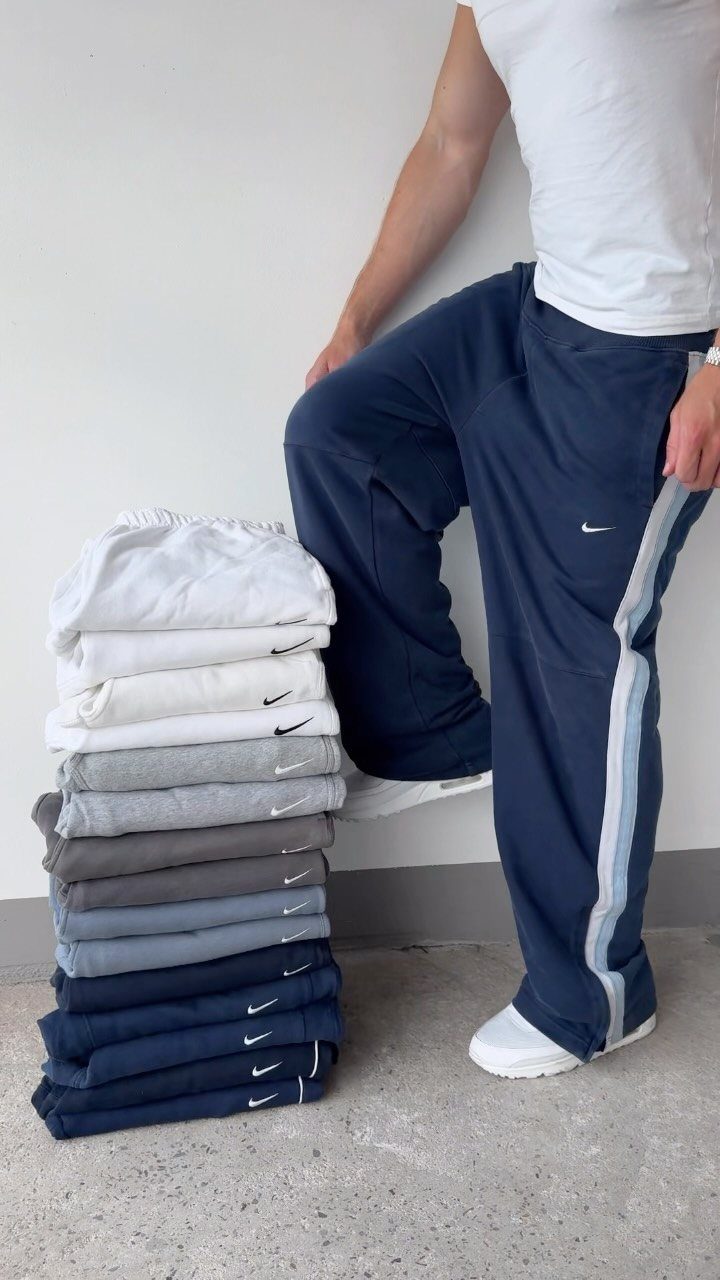
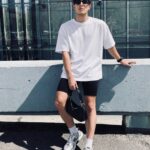
Navy joggers with a plain white tee is about as simple as an outfit gets, and I’d start with navy over black because it looks softer and less like gym kit.
Joggers are built for comfort, so they suit errands, travel and lazy weekends.
Keep the top clean and the sneakers plain. A cuffed ankle shows off the shoe and keeps the leg from looking sloppy.
9. Carpenter Pants
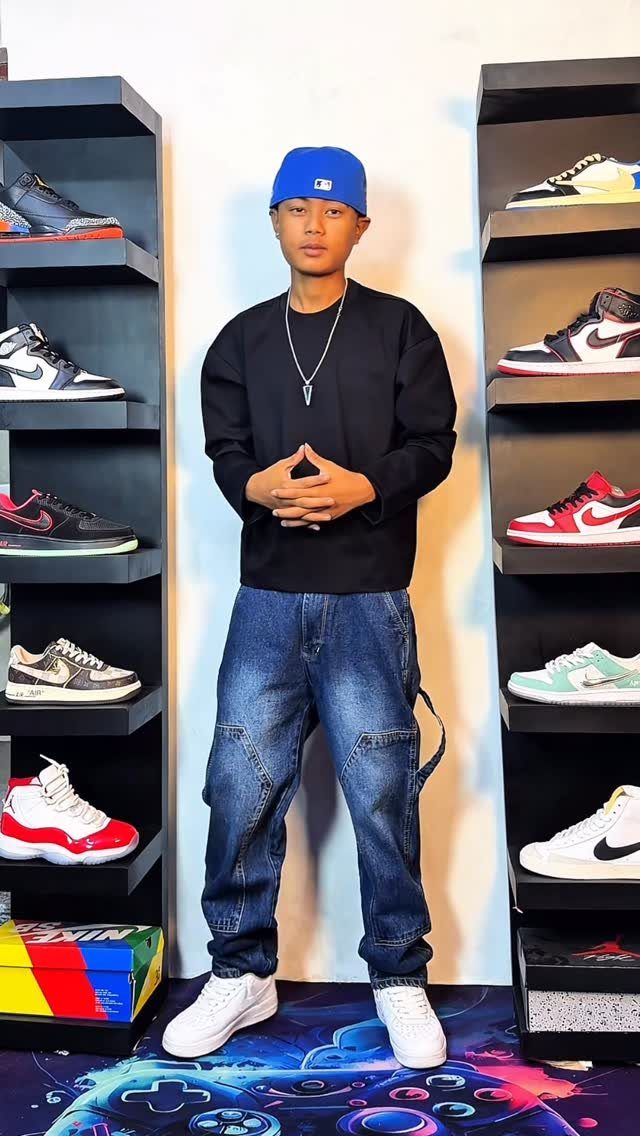
Carpenter pants have never been the obvious pick in men’s closets, yet the utility pockets earn their place: they’re practical and, in blue denim, look good.
A cap is optional. I’d skip a baggy top, since the pants already bring plenty of volume.
10. Relaxed Fit Pants
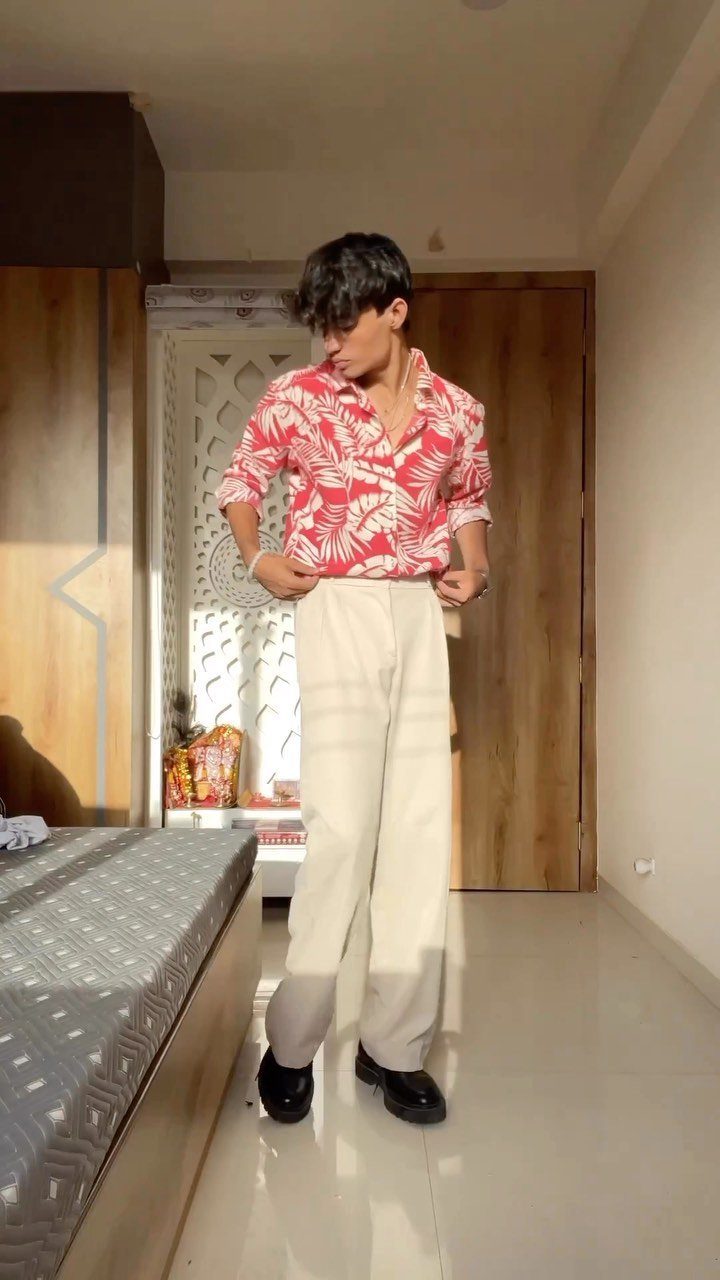
Beige relaxed fit pants take their cue from workwear, which is why they feel so easy on a weekend.
The cut leaves room without going baggy, and a neutral shade lets a loud top do the talking, like the red floral shirt here.
I’d keep everything else plain: simple shoes, no belt clutter. Let one piece carry the pattern and the pants stay the calm part.
11. Wool Trousers
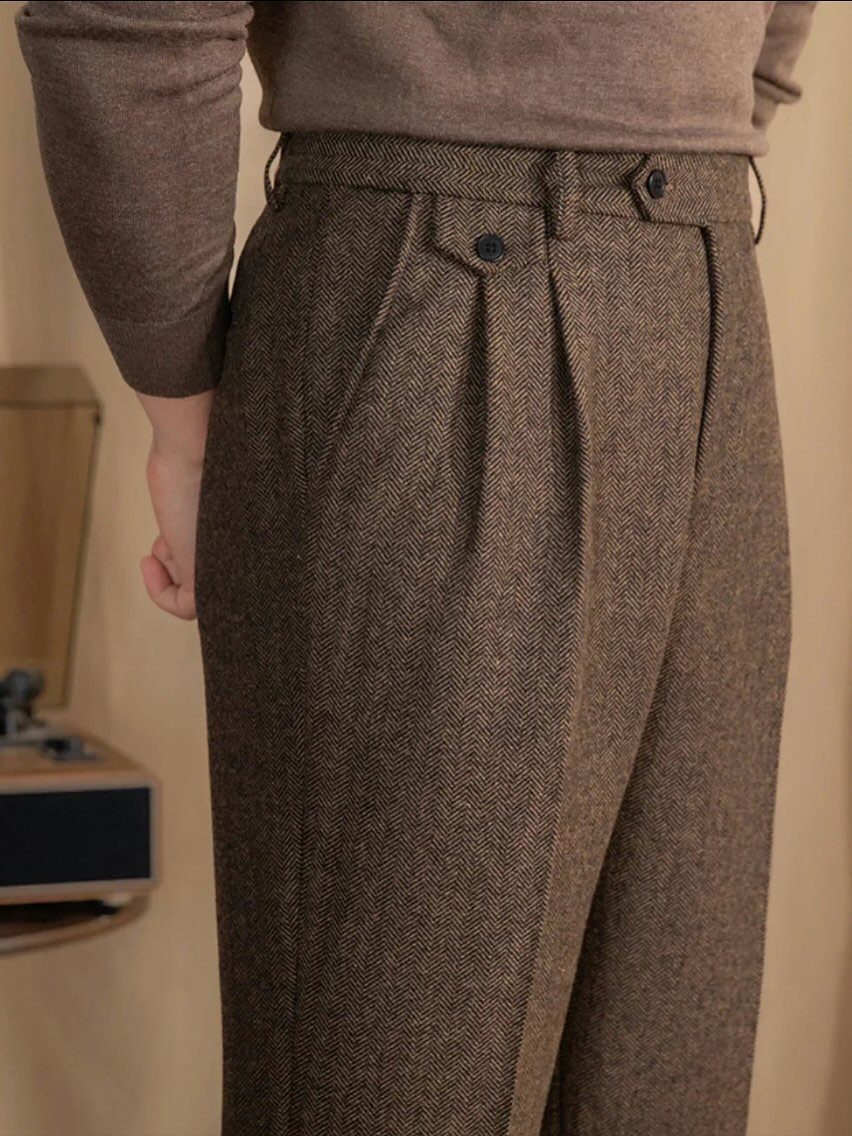
Herringbone wool in brown is the warm answer when cord feels too thin. The woven pattern adds texture without shouting, and pleats give the trouser a bit more room through the hip.
Matching it with a brown sweater in a similar shade makes the outfit look planned. If that feels like too much brown, I’d switch the sweater to cream and let the trousers stay the focus.
Choosing the Right Fit
Fit changes how a pair of pants looks more than the style name does. Chinos shift from sharp to shapeless depending on how they cut through the leg.
Slim fits taper close and pair better with anything collared. Straight fits hold their width from hip to hem and suit the widest range of builds.
Relaxed fit loosens everything up for casual, streetwear-leaning outfits. Tapered cuts add room at the seat and thigh, then narrow below the knee so the ankle stays clean without clinging.
Build should steer the choice.
Slender legs look good in fitted cuts. If you have broader thighs or hips, I’d go with a regular or tapered cut, since both give that room without adding bulk at the hem.
Pick the silhouette first, then the style. A structured look and a relaxed one can come from the same pair of pants in two different cuts.
Fabric Selection
The fabric sets how trousers hang, whether they wrinkle by lunch, and how they sit after an hour of wear. Before you check the color, check the tag.
Cotton breathes and handles daily rotation without fuss. Wool holds a crease and carries formality, so tailored trousers lean on it.
Stretch blends are worth a look if you wear slim or fitted cuts, because the added flexibility makes them easier to move in.
Match the cloth to the occasion and climate. Denim is thick and tough, so it belongs to weekends and casual trips.
Lighter cotton and wool blends fit work and meetings better. If comfort matters most, choose softness; if you need the pants to hold a crease through a long day, choose structure.
Styling Tips
Think of the outfit as a formula: pants, top, shoes. Change one piece and the whole mood shifts, so match the formula to the occasion.
Jeans, a loose tee and sneakers cover casual days without thought. Dark denim looks cleaner, while light wash feels more laid-back.
Chinos, a polo and loafers handle casual Fridays and dinners without dressing up. The polo keeps it approachable.
Cargos, a hoodie and bulky sneakers suit streetwear. Neutral cargos pair easier, and wider cuts lean harder into the look.
Linen trousers and an untucked shirt stay cool when heat arrives.
Choose the shoe last. It tells people how seriously you took the occasion.
Frequently Asked Questions
What pants do men wear now?
Chinos, relaxed fit pants, wide-leg pants, cargos and joggers cover most of what men wear day to day.
Chinos handle the smart-casual end, while relaxed and wide-leg cuts lean toward weekend and streetwear looks. Cut matters more than category: a chino in a relaxed fit will always look looser than a cargo pant cut slim.
What type of trousers should every man own?
Start with chinos, dark denim, a pair of dress pants and a pair of joggers.
Tan chinos first, since they bridge the gap between a jacket and a T-shirt better than any other color. Dress pants cover professional settings, and navy joggers handle errands and travel without looking like gym kit.
How do I choose the right pants for my body type?
Match the cut to your build, then check the fabric and the occasion.
If you carry weight through the hips or thighs, a tapered cut gives you room where you need it and cleans up at the ankle; slim fits work when your legs are narrow top to bottom.
Straight cuts fit the most men without adjustment.
What are the best pants for summer?
Linen breathes better than cotton or wool, which makes it the right cloth when the temperature climbs.
A rust or tobacco brown holds more warmth than khaki, and a stripe up top keeps the look from reading flat. Linen wrinkles, and a few creases look better than trying to press them out every hour.
What are the main types of men’s pants?
The main types are chinos, dress pants, cargo pants, linen trousers, pleated trousers, cropped pants, wide-leg pants, joggers, carpenter pants, relaxed fit pants and wool trousers.
Chinos are cotton twill, dress pants and wool trousers are the formal end, and cargos, joggers and carpenter pants are the casual end. Fit and fabric change how each one looks as much as the name does.