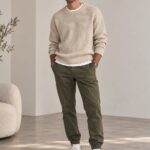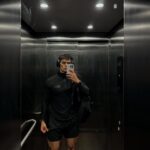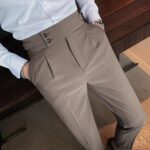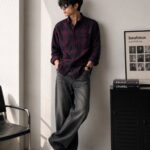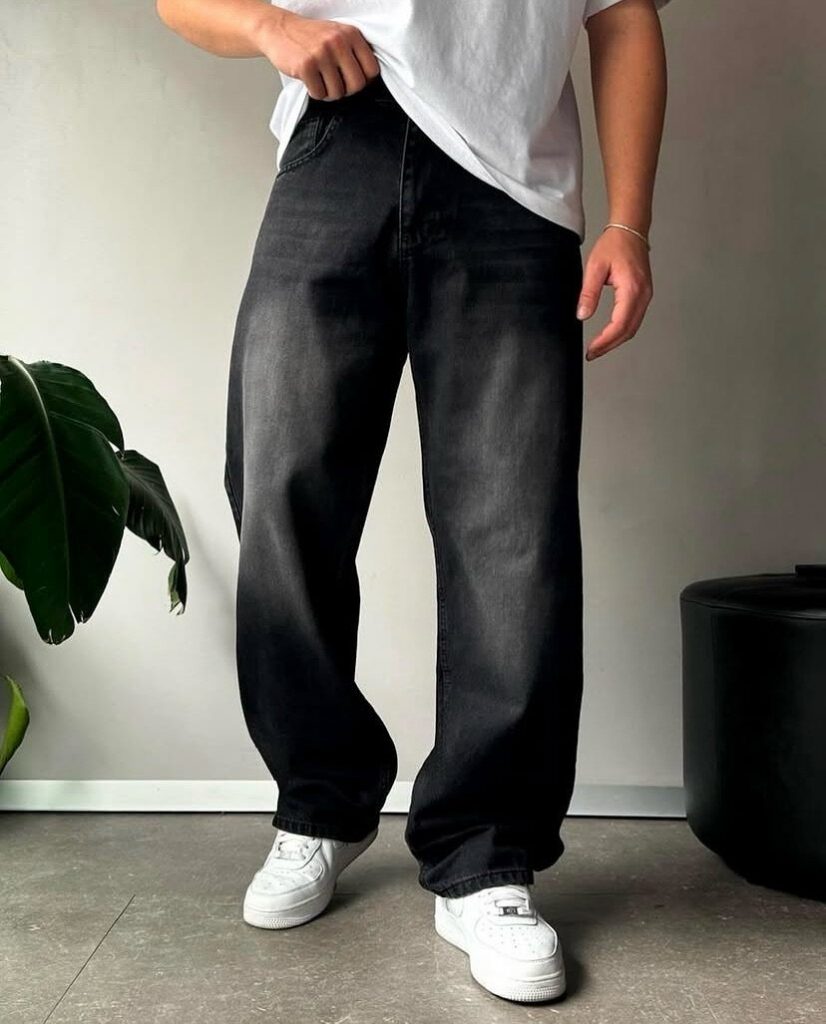
Jeans range from skinny, tight from waist to ankle, to wide-leg and baggy cuts that carry all the volume in the leg, with ripped finishes, jogger waists and carpenter pockets filling the space between.
1. Skinny Jeans
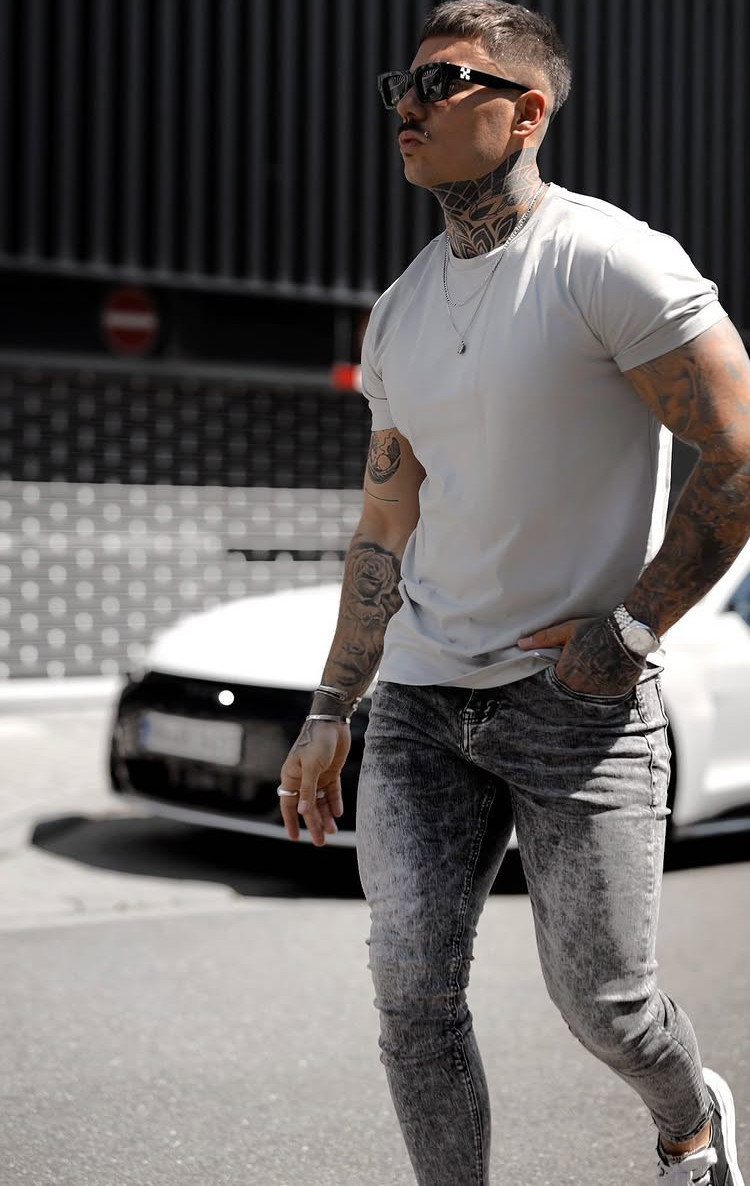
Skinny jeans run tight from waist to ankle, with no slack anywhere along the leg. They show every line, so fit has to be exact.
Keep the top half loose and simple.
A solid tee in light grey balances the tight legs, and a wash that is already faded keeps the whole thing relaxed. If your thighs or calves fight the denim, move up to slim.
2. Baggy Jeans
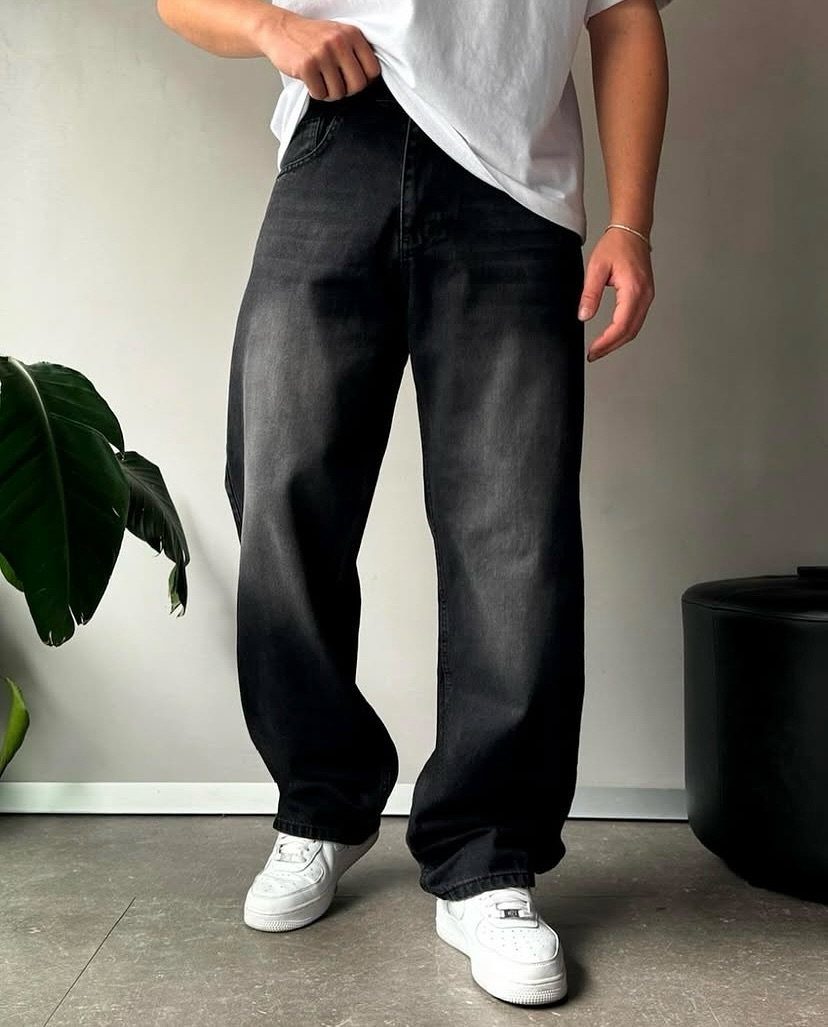
Loose through the whole leg, baggy jeans only work when everything else fits close.
Black denim with a plain white tee and white sneakers is the easiest way to do it, because the color keeps all that extra fabric from looking messy.
I would hem them so the cuff just breaks over the shoe. Fabric piling up around the ankle makes the legs look even bigger, and it shortens you.
3. Slim-Fit Jeans
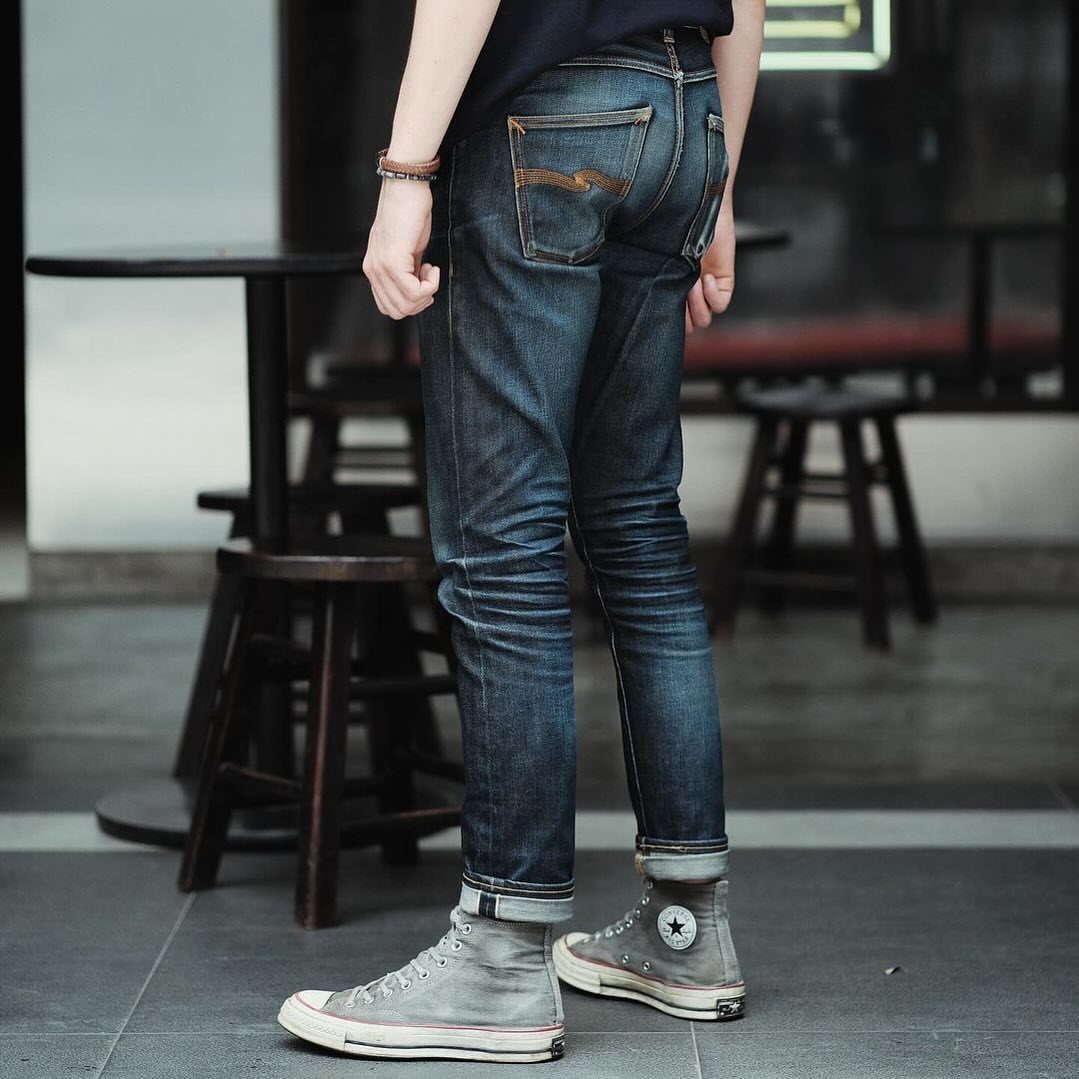
Slim-fit jeans follow the leg without gripping it, which gives you more room than skinny. In dark blue denim they pass as easy and neat in almost any setting.
For most men, this is the cut I would buy first.
High-top sneakers sit comfortably under the hem, and a dark wash dresses up with a button-up as readily as it dresses down with a tee. Try sitting down in the fitting room; if the thigh pinches, size up.
4. Straight-Leg Jeans
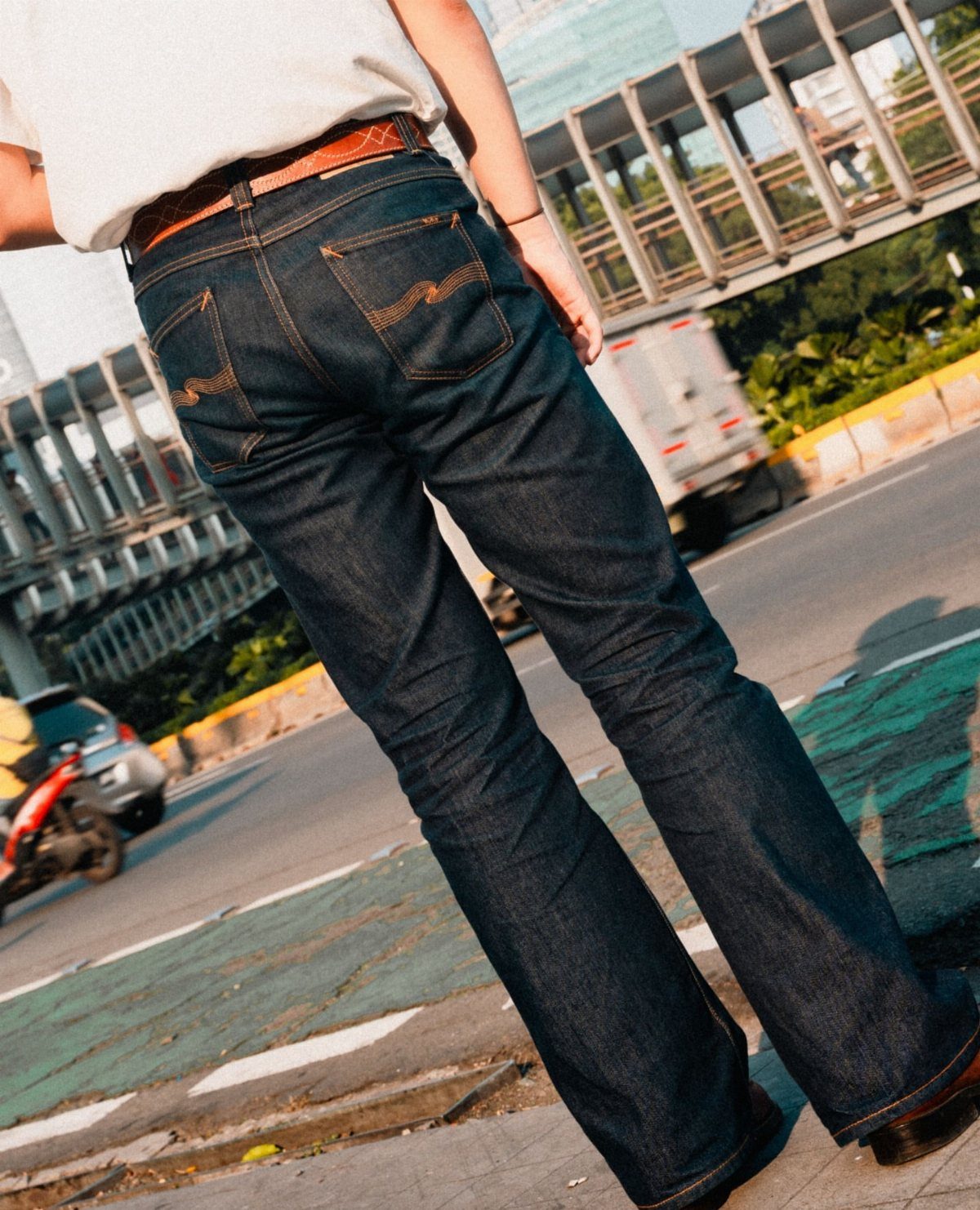
The leg runs the same width from thigh to ankle, so the line stays clean without flare or taper.
The cut suits men who find slim too snug through the thigh but don’t want a baggy look.
Pick a hem that lands at the top of your shoe. A belt matters here, since the plain silhouette leaves the waist as the one detail people notice.
5. Tapered Jeans
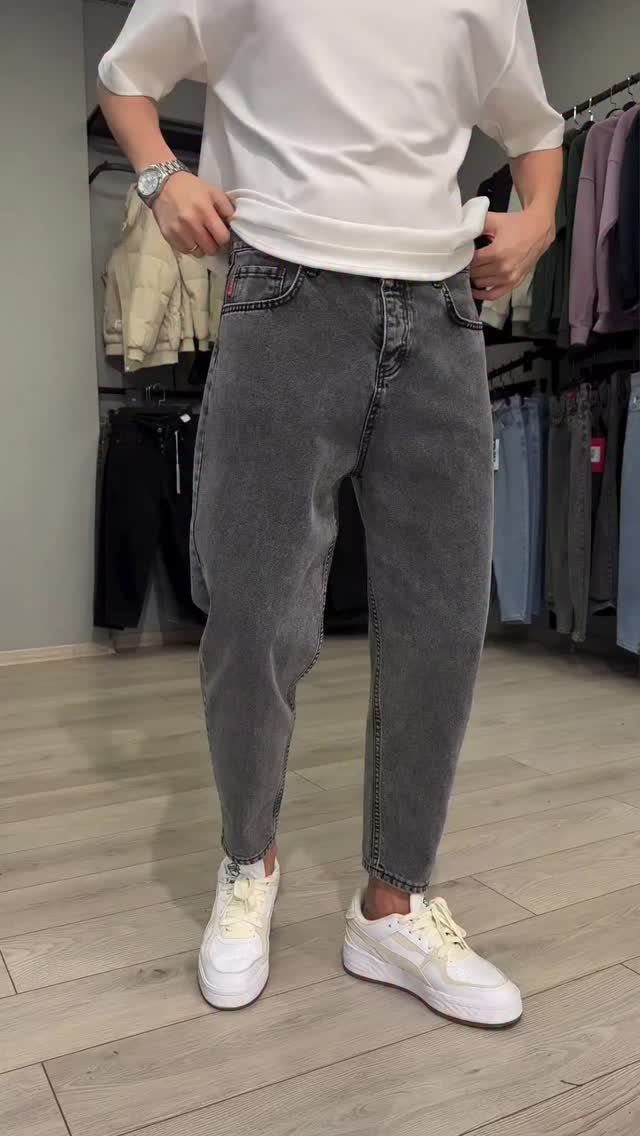
The cut gives room at the thigh and closes toward the ankle, which is why it suits men with bigger quads. Grey denim with white sneakers, like this pair, keeps the shape easy to read.
Since the opening is slim, shoes show.
Low sneakers look best, because bulky boots crowd the hem. If slim jeans cut into your quads, this is the fix I would try first.
6. Relaxed-Fit Jeans
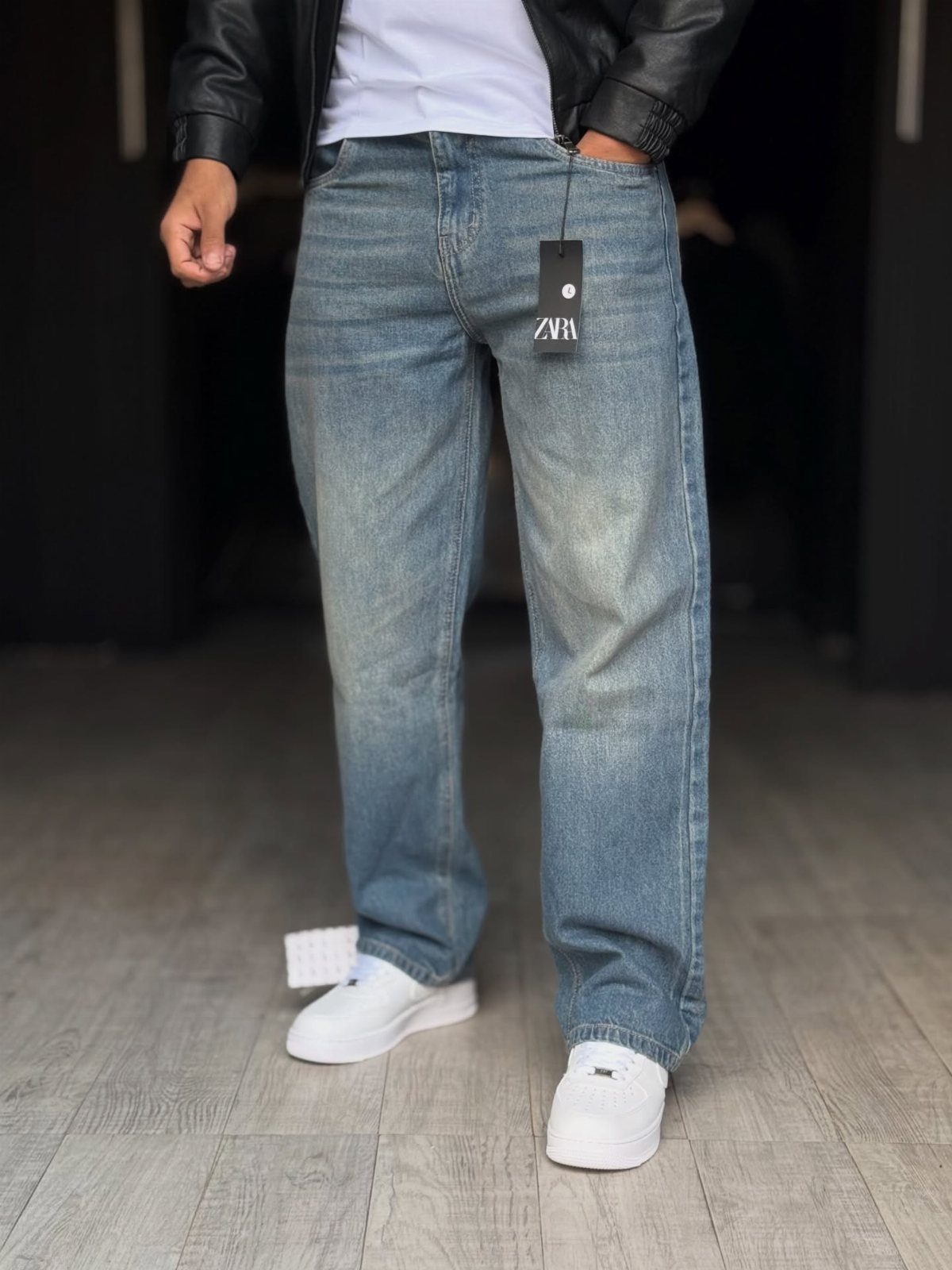
Extra room in the seat and thighs defines relaxed-fit jeans, and a light wash makes that ease look intentional.
Pair them with something more structured on top, as a black leather jacket does here, so the outfit has a sharp edge.
They are comfortable for a full day on your feet. The roomier cut sacrifices some shape, so a solid tee and clean sneakers hold the look together.
7. Bootcut Jeans
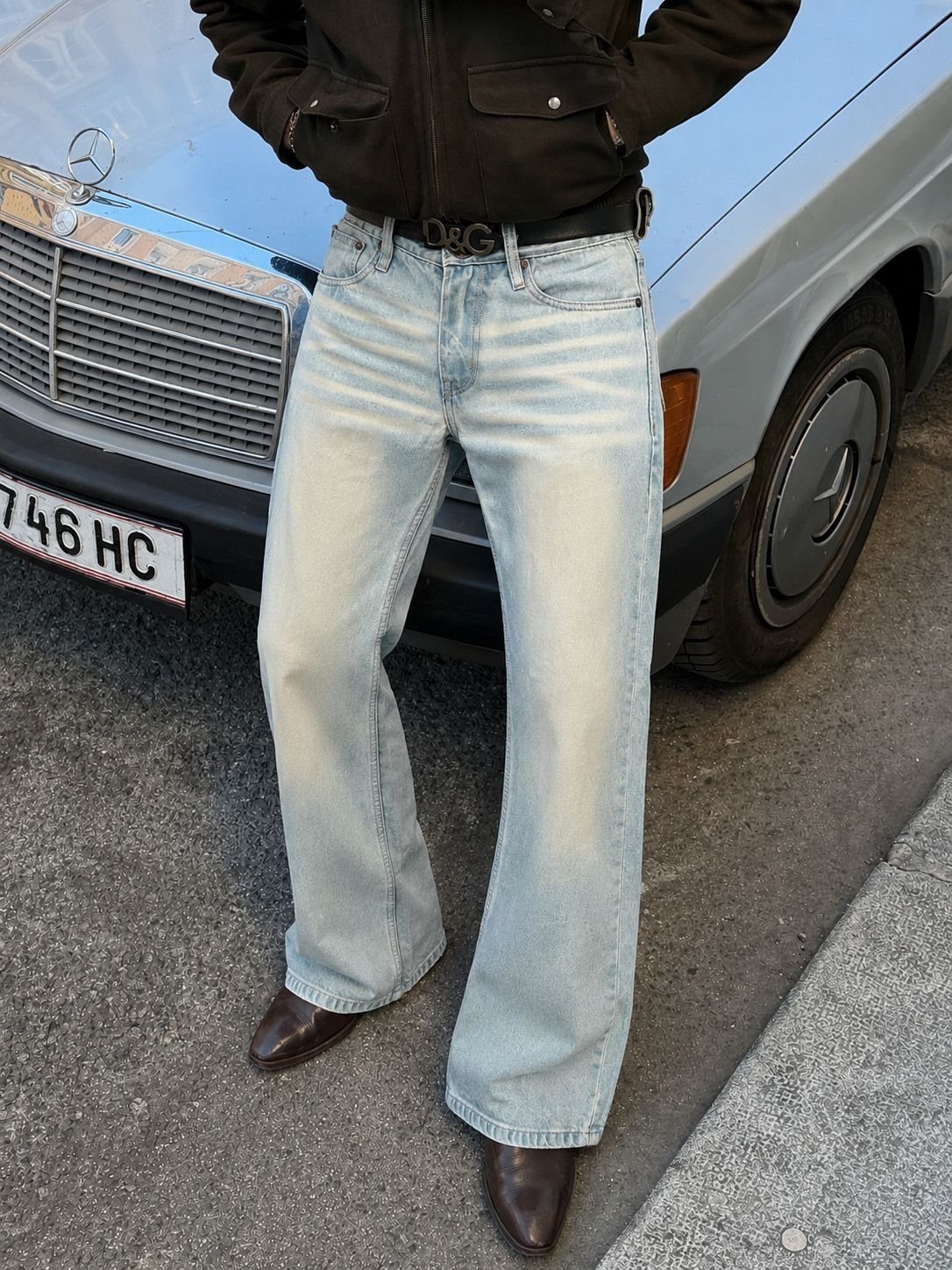
Bootcut jeans widen from knee to hem, cut to clear a boot shaft without bunching.
Hem them long, so the opening covers most of the boot and the flare drapes instead of hanging above it.
Keep the jacket short and dark so the legs do the talking. Sneakers can work, but flat, slim ones look lost under that opening.
Not as flared as flared jeans, but still flared just enough to allow for a boot to comfortably fit under the fabric, bootcut jeans are a happy medium between a straight-leg and a flare.
— Yahoo!
8. Wide-Leg Jeans
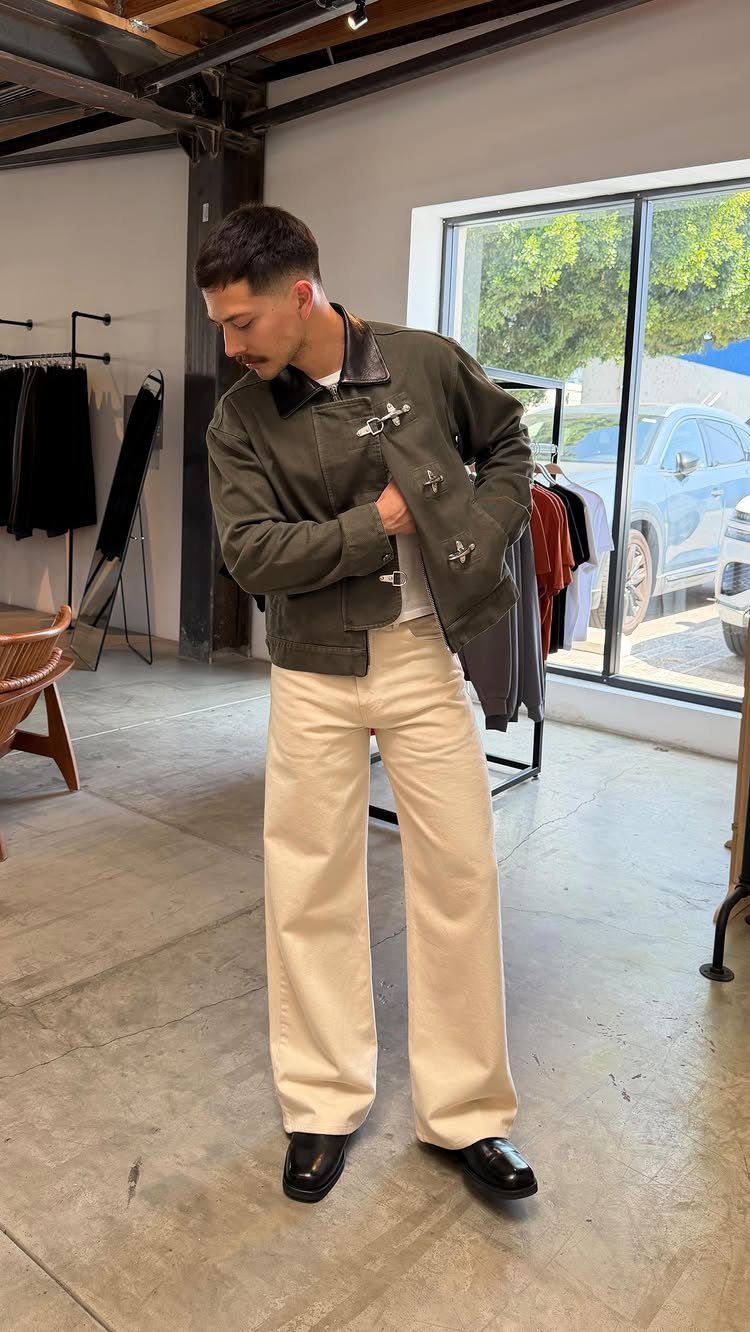
Wide-leg jeans are cut generous from hip to hem, so the leg falls straight and full instead of following your shape. Cream denim keeps the width from reading heavy, and olive on top plays off it well.
Since the jeans carry all the volume, the shirt and jacket should fit close through the shoulders. If it pools on the floor, take it up.
9. Ripped Jeans

Tears and distressing are the reason you buy them, so the wash and where the rips sit decide whether they look worn-in or worn-out. Grey slim denim and a white tee let the distressing do the talking.
I would stay with small rips at the knee and thigh.
Big open tears catch on everything and look rough at work or on a date. The shirt, shoes and jacket should all stay quiet.
10. Carpenter Jeans
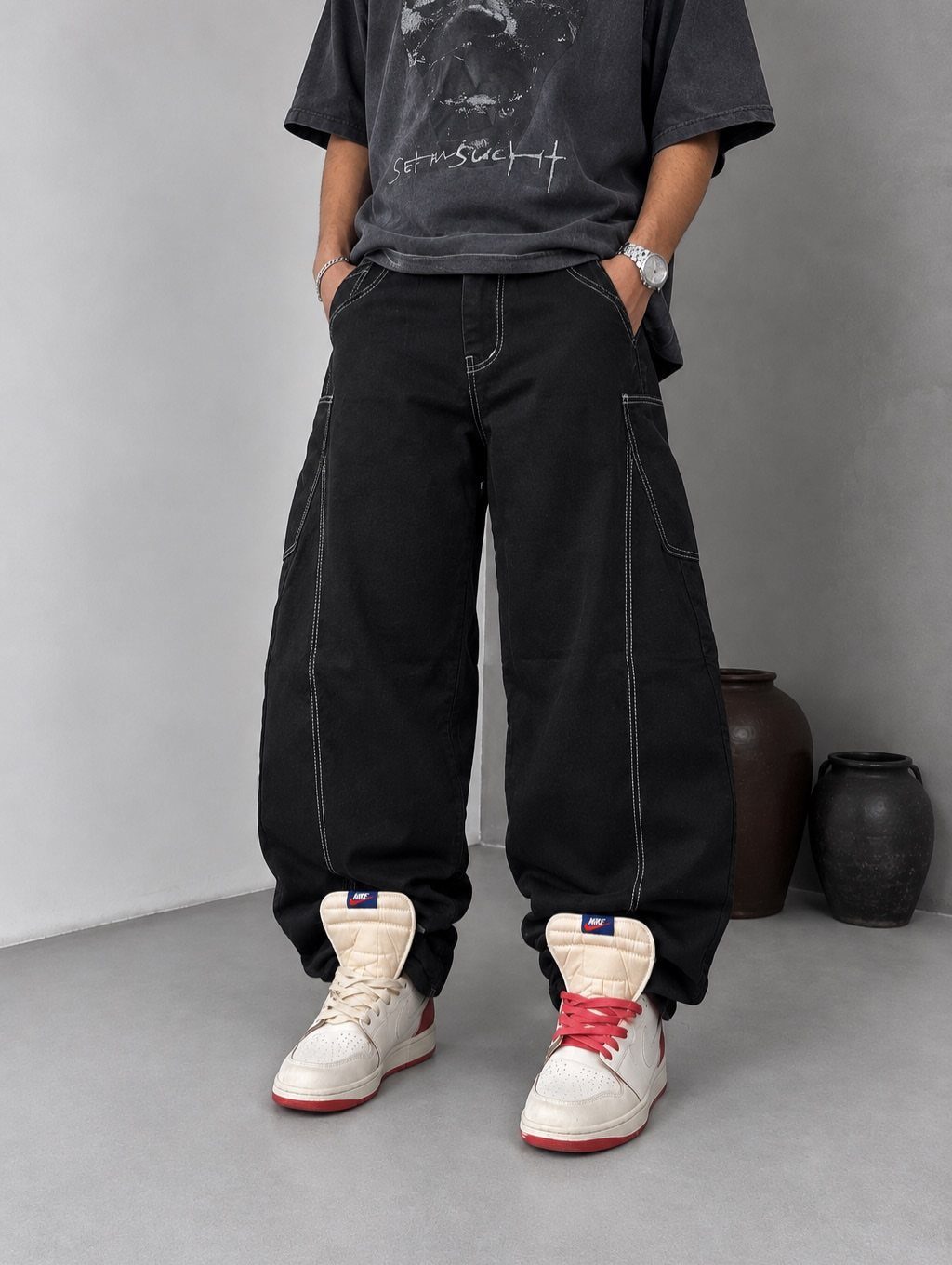
Carpenter jeans take the pockets and proportions from workwear: straight through the leg, roomy in the thigh, and built with hammer loops and extra pocket space.
Let the stitching stand out and pair it with a simple tee.
White sneakers pick up the thread color and tie the outfit together. For a first pair, I would pick black over a light wash, since it looks cleaner.
11. Jogger Jeans
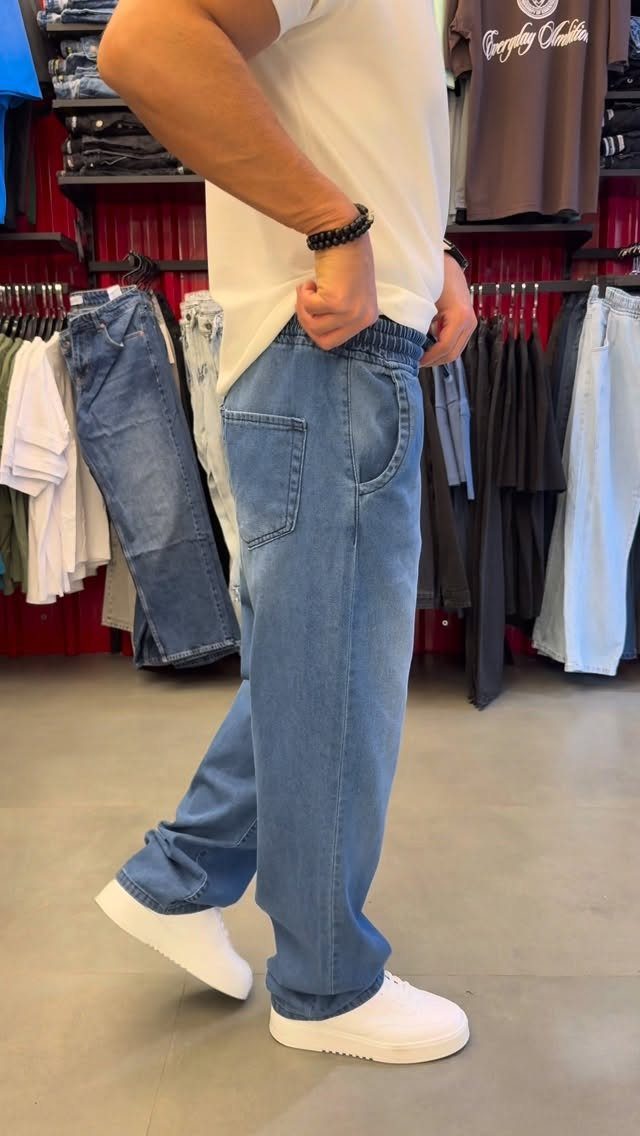
Jogger jeans put denim on an elastic waist, which makes them about as easy to wear as sweatpants. Light blue with white sneakers and a plain white tee stays casual without looking sloppy.
They suit a day when comfort wins, but I would not wear them to an office. Keep the cuff at the ankle clean, and skip a bulky top that makes the whole outfit look like loungewear.
12. High-Rise Jeans
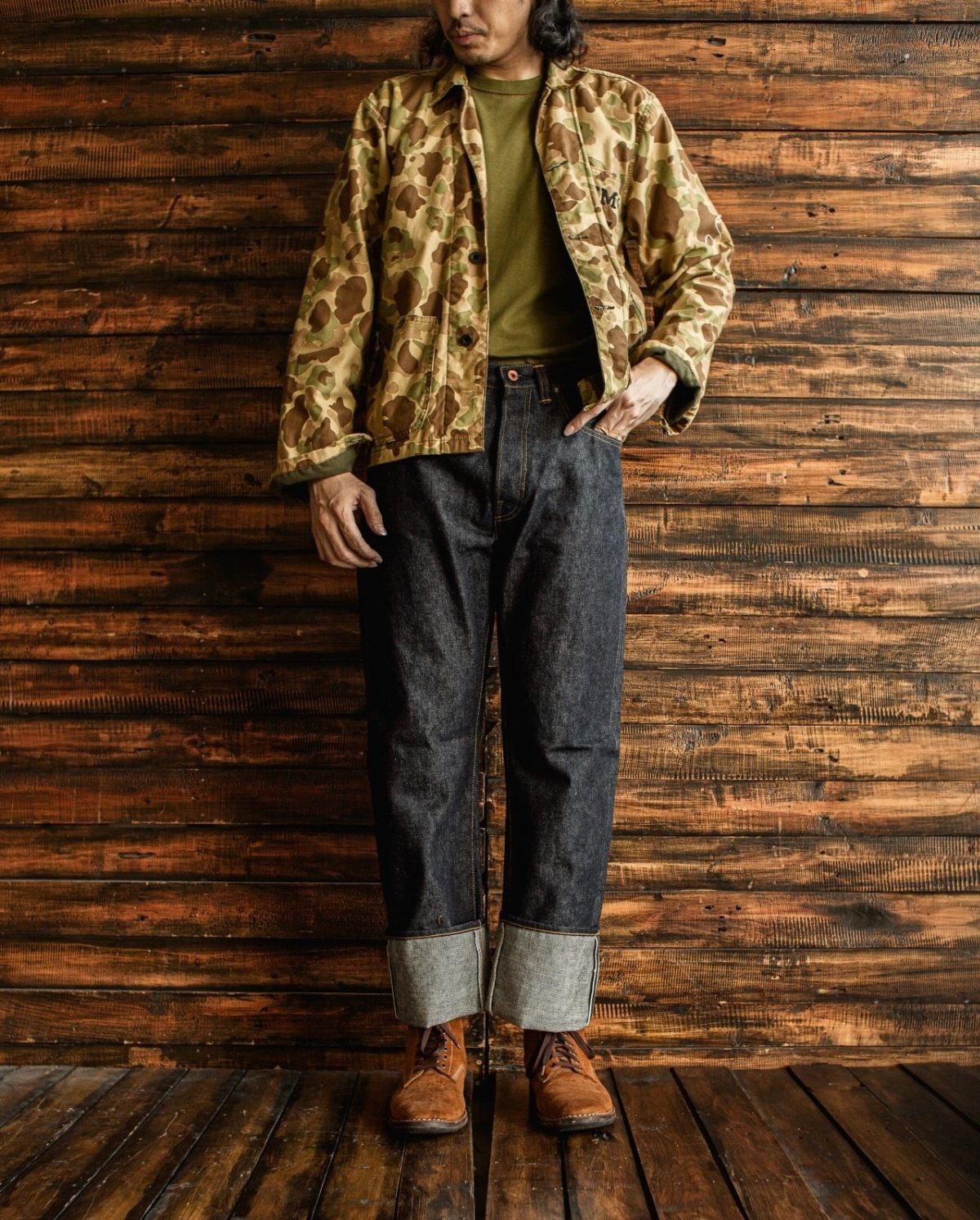
High-rise jeans sit at the natural waist, which makes the legs look longer and gives you a place to tuck a shirt.
Wear a tee tucked in or just slightly over the waistband, and add a belt so the line stays crisp. If you have a short torso, the rise can swallow you, so check it sitting down before you buy.
Choosing the Right Fit
Fit depends on your build as much as on the cut’s name. Lean frames tend to look best in slim, while broader frames usually sit better in straight or relaxed.
Before you commit, check 3 things: how the jeans sit when you stand, how they feel when you sit, and whether the thighs and hips have room without bagging.
If no off-the-rack pair gets all three right, made-to-measure jeans shape the fit to your body, and that is worth the extra step.
Fabric Considerations
Fabric decides how a pair feels at hour 8, not just in the fitting room. 100% cotton denim is durable and softens with wear, but it never stretches, so it stays sturdy and a bit stiff.
Most modern jeans blend cotton with a little elastane, also called spandex. That slight give helps if you commute, travel, or sit for long stretches, and it makes the jeans feel less rigid.
Raw denim is a third option.
It is unwashed, so it starts stiffer and darker, then molds to your body and fades in its own pattern. I would pick it only if you are happy to wait for it to break in.
Wash and Color Options
The wash makes more difference to the way jeans look than most buyers think it will.
Dark indigo and black both dress up enough for a blazer or a shirt with collar, which puts them in range for work or dinner.
Medium blue is what most people picture when they think of jeans, and it goes with nearly everything. Light blue is the relaxed one, best for summer with a simple tee.
If you are buying your first few pairs, start with medium blue and black.
Add grey, lighter washes, or distressed finishes after that. Bright colors are for days when you want to stand out, so treat them as an extra rather than a staple.
Frequently Asked Questions
How many types of jeans are there for men?
The common cuts are skinny, slim, straight, tapered, relaxed, baggy, bootcut, wide-leg, carpenter and jogger, plus ripped and high-rise styles.
Some of those describe the leg shape and others describe details like distressing or where the waist sits, so the number shifts depending on how you count.
Fit, comfort and the setting you will wear them in narrow the choice quickly.
What are raw denim jeans?
Raw denim comes straight off the loom without a wash, which leaves it dark, stiff and flat in color. The fabric softens as you wear it, and the fading pattern records where you bend and sit.
What are the differences between regular fit and straight fit?
The leg holds one width from knee to hem, so there’s no narrowing at the ankle and no flare at the boot.
Relaxed fit, the closest roomy cousin, adds extra space in the seat and thighs and gives up some shape for comfort. This cut gives you room in the thigh without extra fabric bunching at the calf.
Which type of jeans is most versatile?
Slim-fit jeans in dark blue denim are the most versatile, and for most men they are the first pair I would buy.
They look neat enough for a button-up and still work with a plain tee and sneakers. Straight-leg is a close second if slim feels tight through the thigh.
What jeans work best for tall men?
Straight, bootcut and relaxed fits suit tall men well.
The opening needs to sit low on the boot shaft, which means you need the inseam length to support it. Straight and relaxed give room through the leg without pulling tight.