The outfits here run from a matching grey sweatsuit worn for errands to navy puffer jackets and oversized sweaters worn for different occasions.
What picks yours is the dress code of the place you’re going: with none, sweats and a ringer tee work; with one, keep a collared shirt or a blazer and let your shoes carry the polish.
1. Chinos and Tailored Trousers
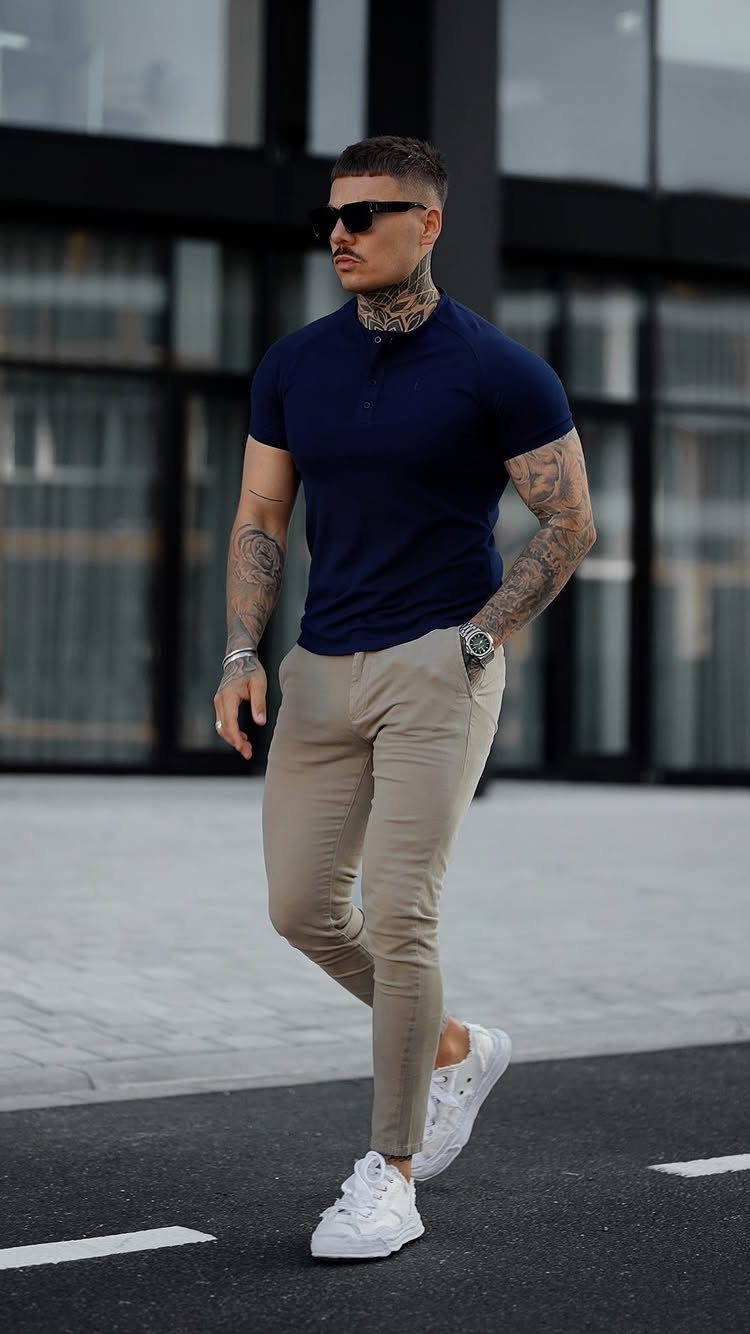
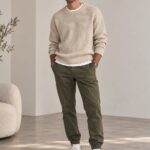
Tan chinos do more work than almost any other pair of pants a man can own. Worn with a navy polo and white sneakers, they make an outfit that needs no second thought on a normal day.
A slim fit that skims the thigh and stops cleanly at the ankle looks sharper than a baggy cut.
For trousers, I’d pick a flat front and a plain finish. Navy and tan sit well together, so the polo can swap for an oxford shirt without changing anything else.
2. Loafers, Derbies, and Minimalist Sneakers
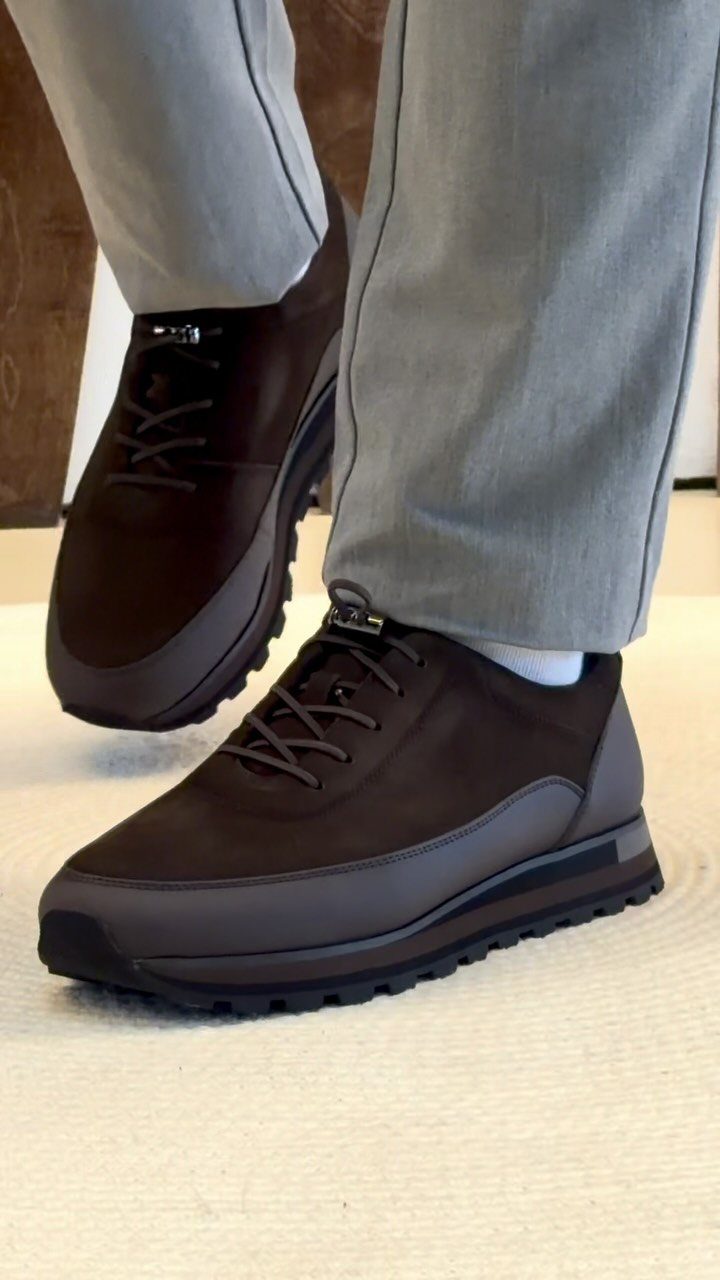
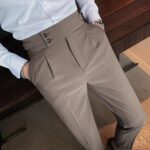
Dark brown sneakers with grey tailored trousers are a quiet pairing, and I like it better than the usual white-on-grey. Brown reads warmer and hides scuffs, so the shoes stay presentable between cleanings.
Keep the sneaker low-profile and free of loud logos.
Let the trouser hem land right at the shoe, with a slight break or none, so the line stays clean. Loafers and derbies follow the same grey-trouser logic if you want something dressier.
3. Accessorizing Smart Casual
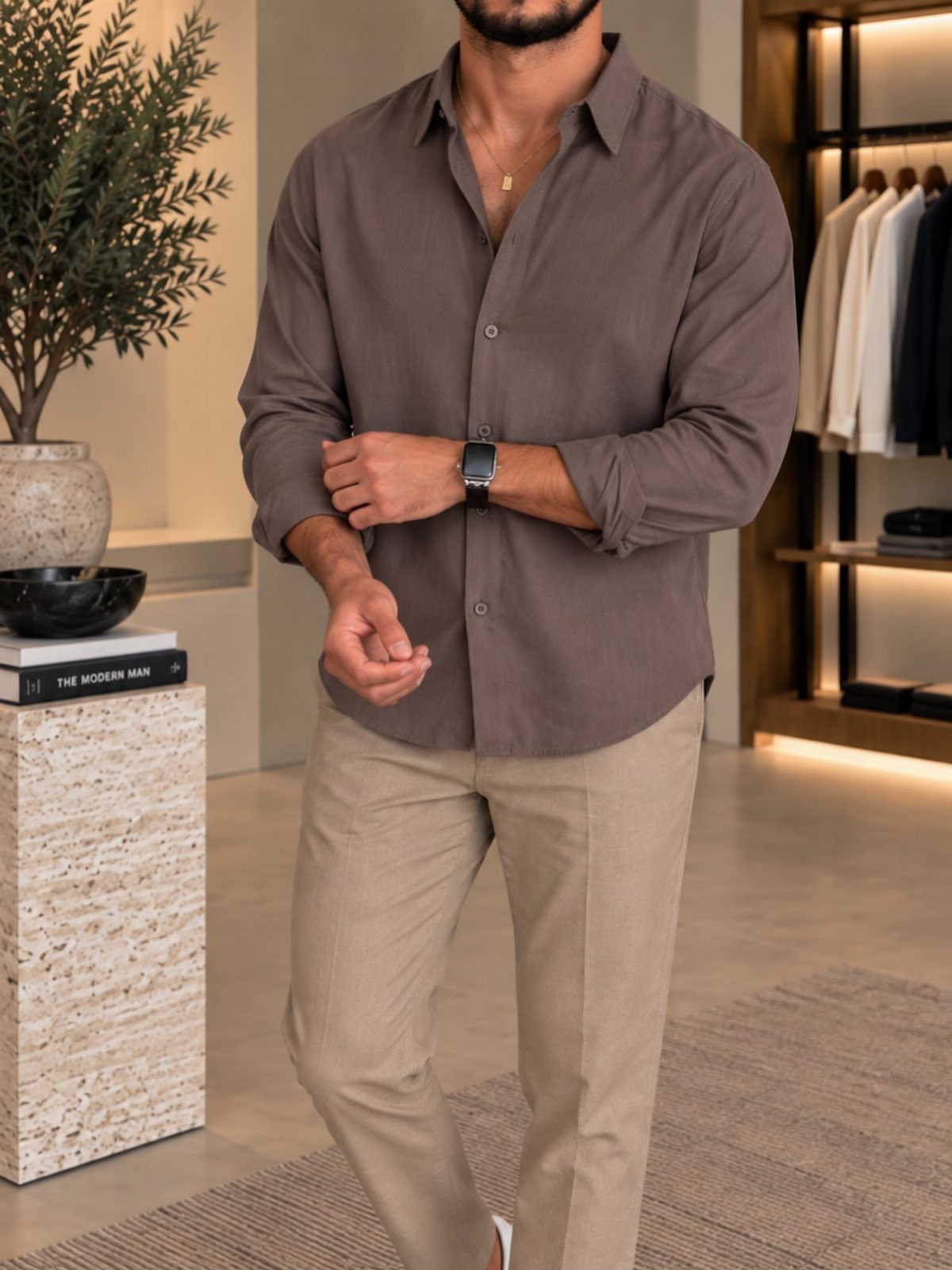
A watch and a thin gold chain are enough. Against a brown button-down and tan trousers, those 2 pieces add contrast without competing with the shirt.
Choose one metal tone and repeat it where you can.
Leaving a top button open gives the chain room to show, and a watch with a plain dial keeps the look relaxed. Stop at two or three items; a fourth starts to look like effort.
4. Smart Casual for Work
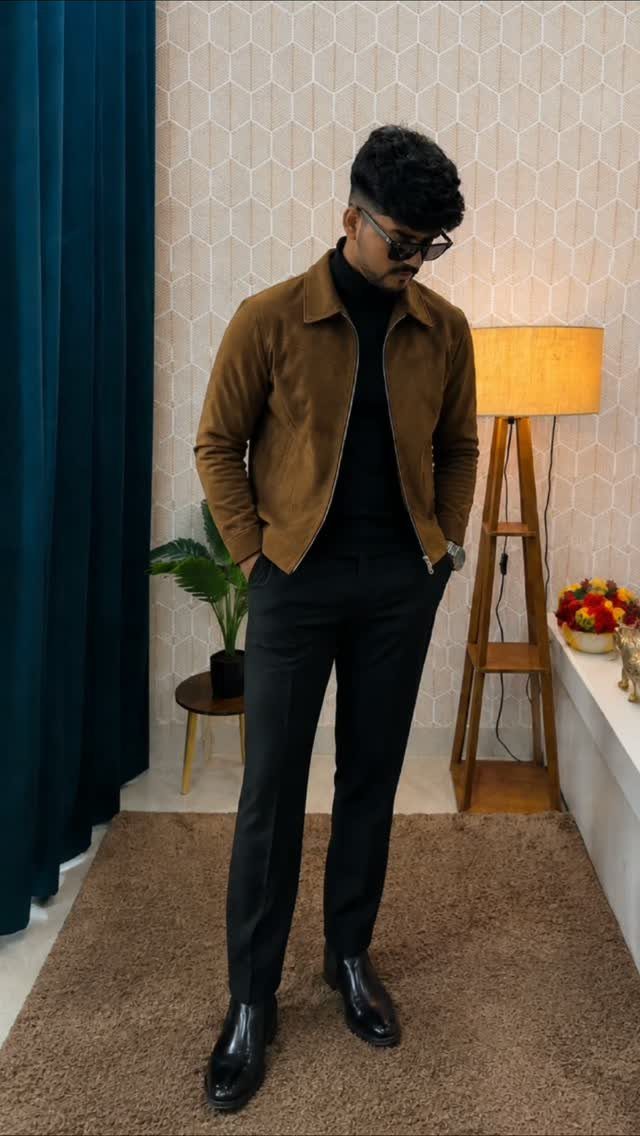
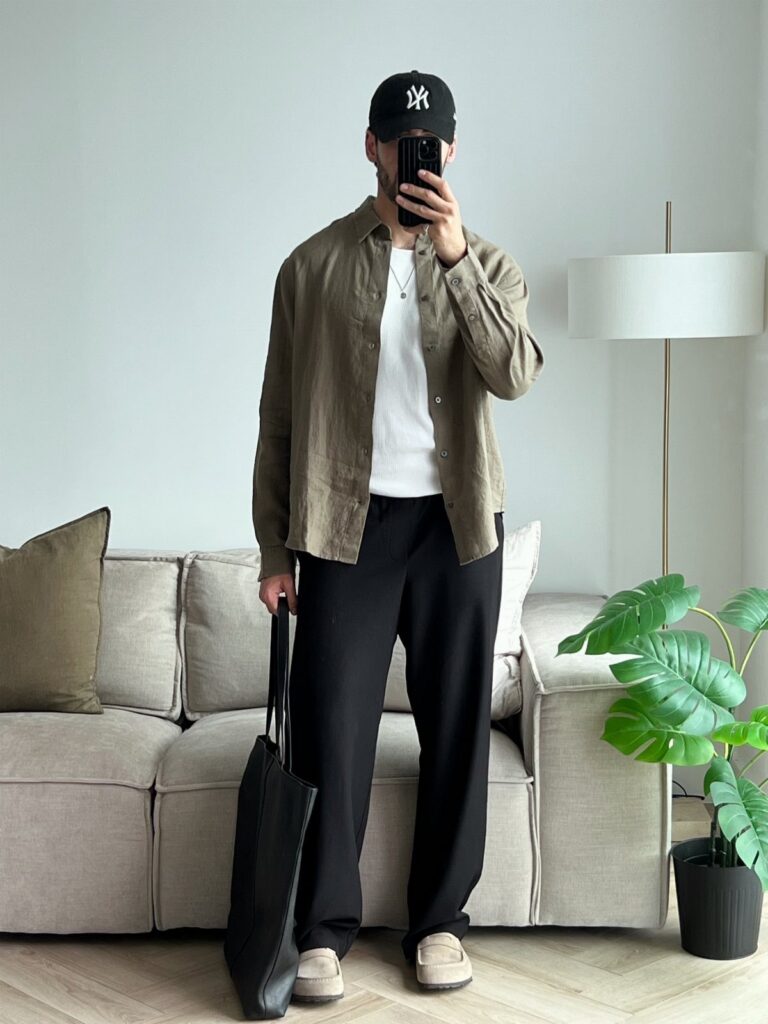
Black on black is an easy way to dress for the office without feeling stiff.
A black turtleneck and black trousers do the job of a shirt and tie, and a brown suede jacket on top gives the outfit texture and warmth.
I prefer dress shoes here over sneakers, since they keep the look polished. The turtleneck sits neatly under a jacket with no collar to fuss over, which makes mornings simpler.
5. Grey Hoodie and Sweatpants Set
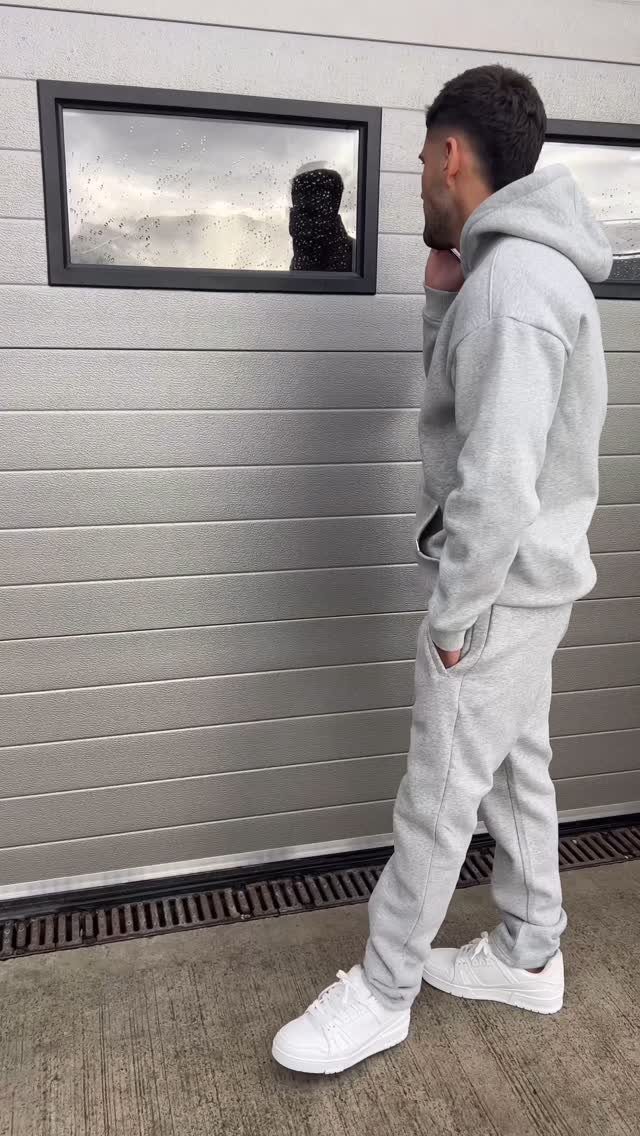
A matching light grey sweatsuit looks planned rather than lazy, and that is its whole advantage. One color from hood to cuff gives a clean line, and crisp white sneakers keep it from looking like pajamas.
Keep the pieces fitted, not slouchy, and make sure the 2 grey tones actually match.
Mismatched washes show up fast in daylight. It suits errands and travel days best; I wouldn’t wear it anywhere with a dress code.
6. Puffer Vest and Knit Sweater
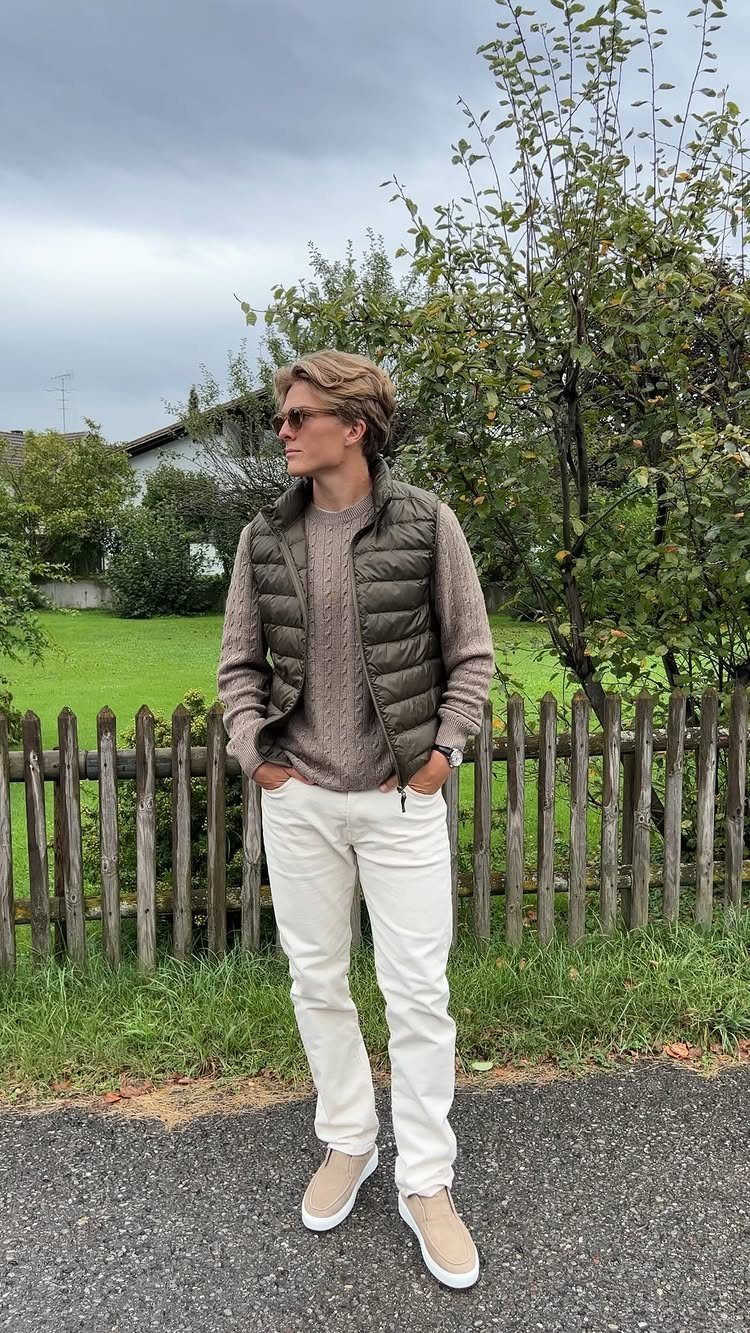
Layering a brown quilted puffer vest over a chunky beige knit gives you warmth in the core while leaving your arms free. The sweater supplies bulk, so the vest works as a second texture rather than a second jacket.
White pants lighten the whole thing, and tan sneakers keep the palette soft and consistent.
Stay in earth tones and the pieces mix without effort. White trousers do show dirt, so I’d save this for dry days.
7. Navy Puffer Jacket and Beanie
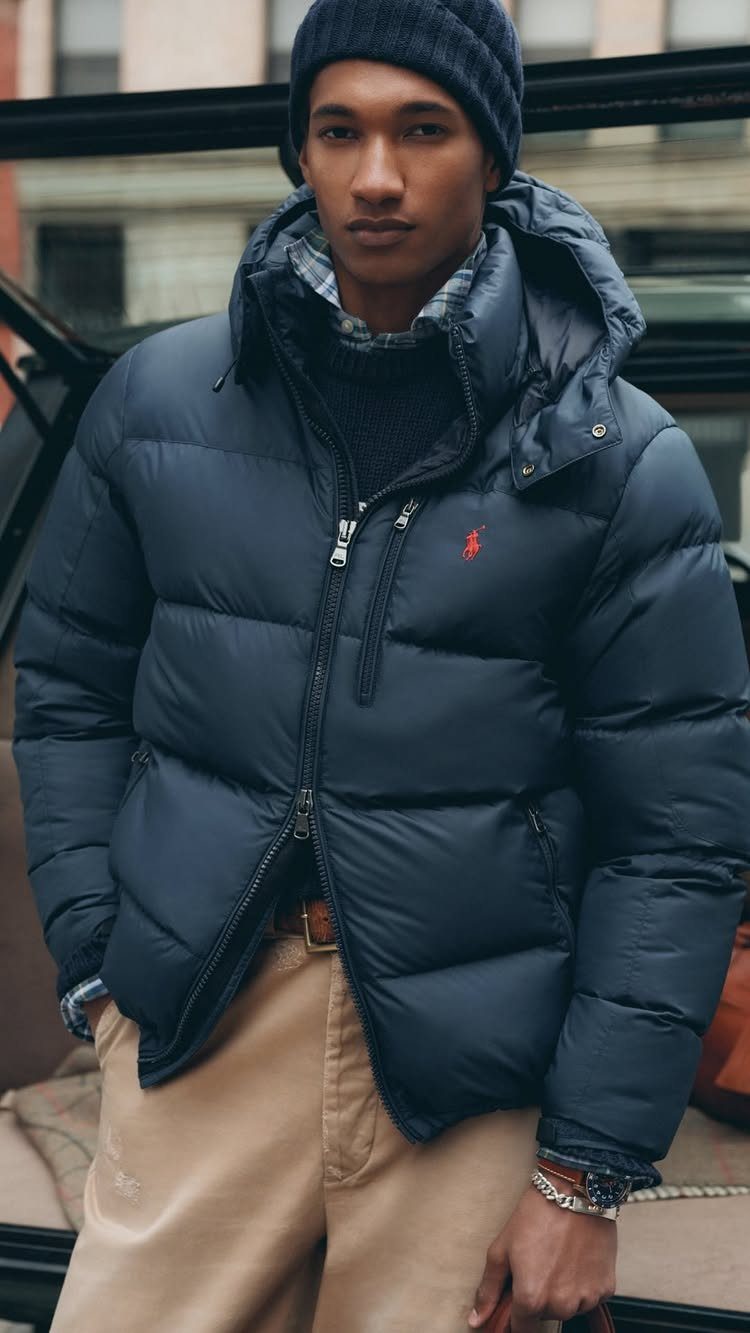
A navy puffer with a hood and a navy beanie make one dark, matched top half, and that is why it looks put together with so little work.
A dark sweater underneath keeps the tones close, and khaki or tan pants give the only contrast.
Keep the sweater thin enough that the jacket zips without bunching.
I’d choose a plain knit beanie with no logo, worn just over the ears. Navy and tan sit well together, so the same jacket works with the chinos from earlier on this list.
8. Black Sweatshirt and Blue Jeans
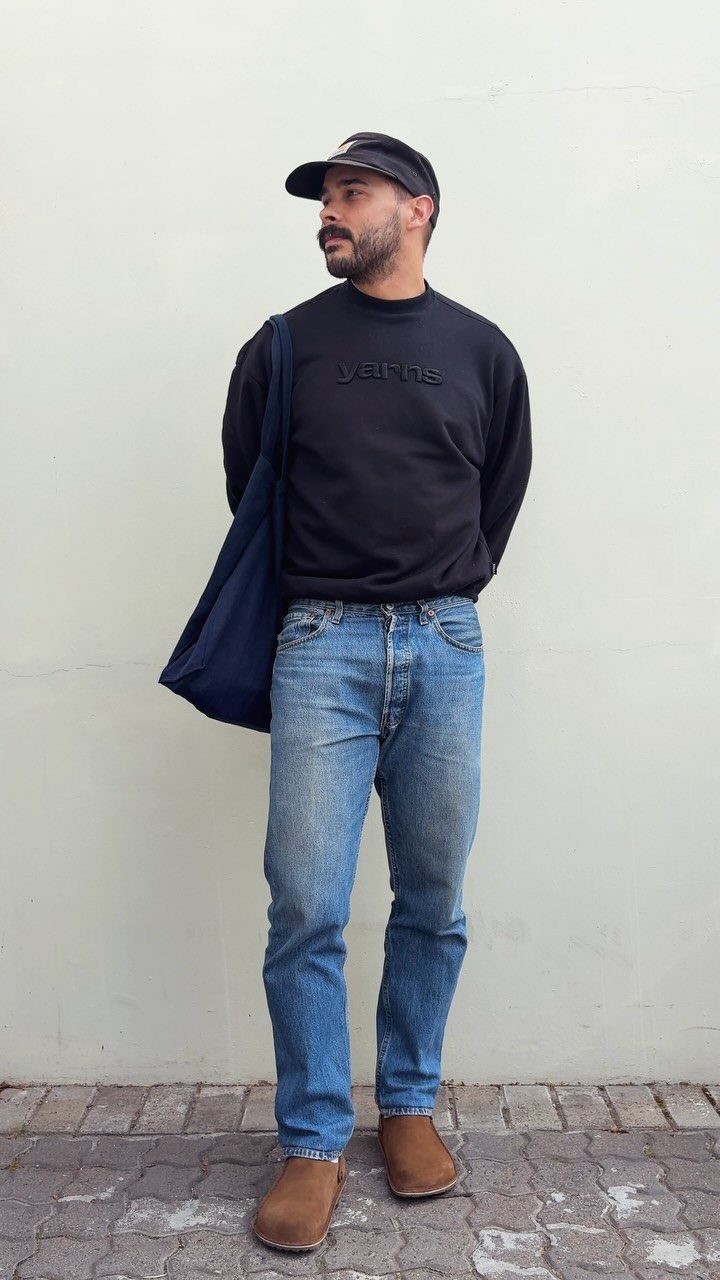
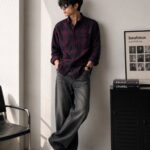
Black crewneck sweatshirt, straight-leg blue jeans: nothing here needs explaining, and that is its strength. Straight legs hold their shape over shoes better than skinny or baggy cuts do, so the whole outfit looks cleaner.
Brown suede shoes warm up the black, and I like them better than white sneakers here.
A black cap matches the top and keeps the look relaxed. Pick a mid-blue or dark wash for jeans; very light washes fight the black sweatshirt.
9. Oversized Sweater and Shorts
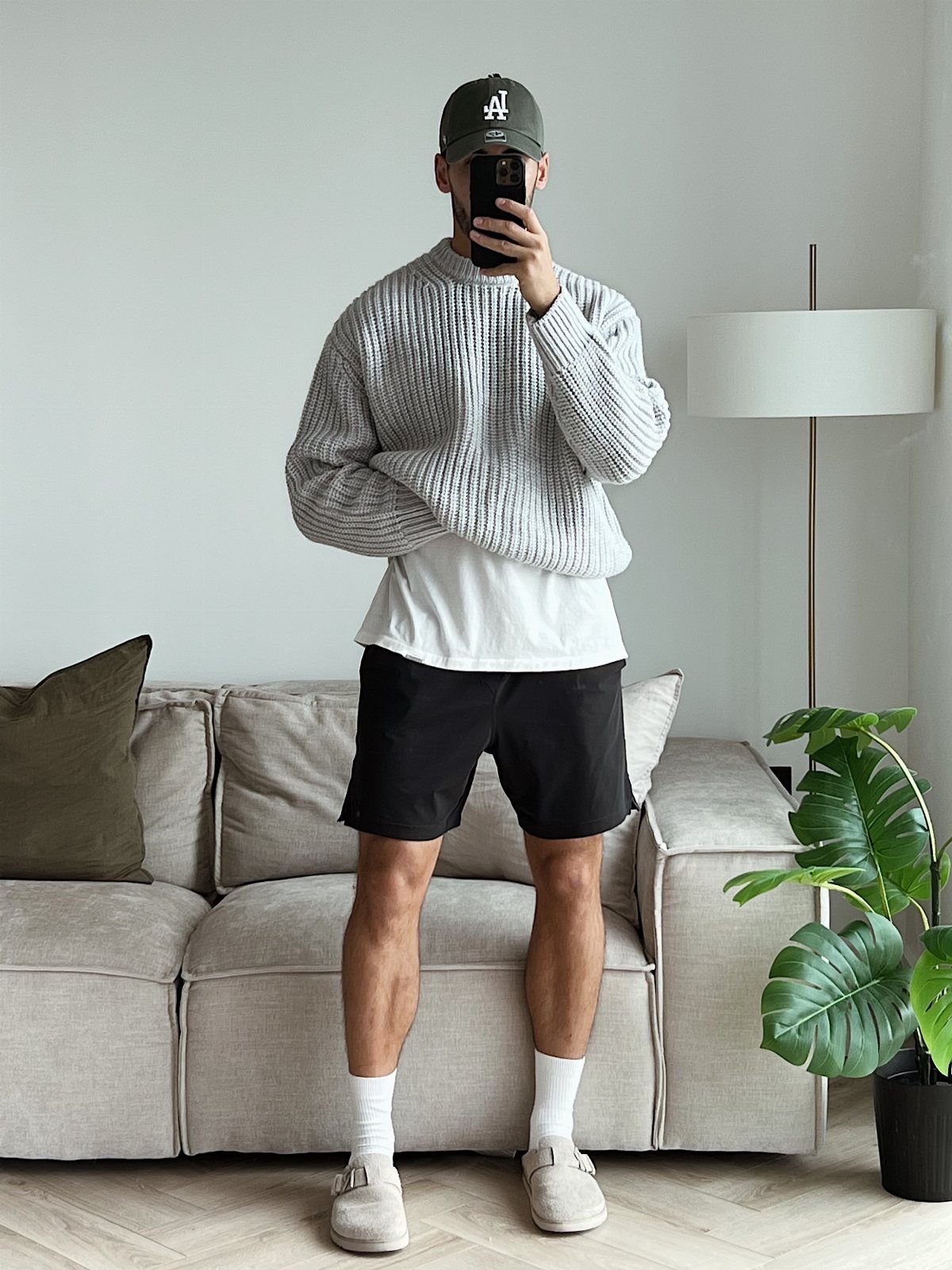
Shorts in cold-ish weather sound odd, but a chunky grey sweater over a white tee makes them work. The bulk on top is balanced by bare legs, so black shorts keep the outfit from feeling heavy.
Let the white tee hem peek out slightly below the sweater, and match the white crew socks to it.
Clogs finish the look at home or on a quick errand. I’d choose shorts that end near the knee, since longer ones swallow the sweater’s volume.
10. Graphic Tee and Sweatpants
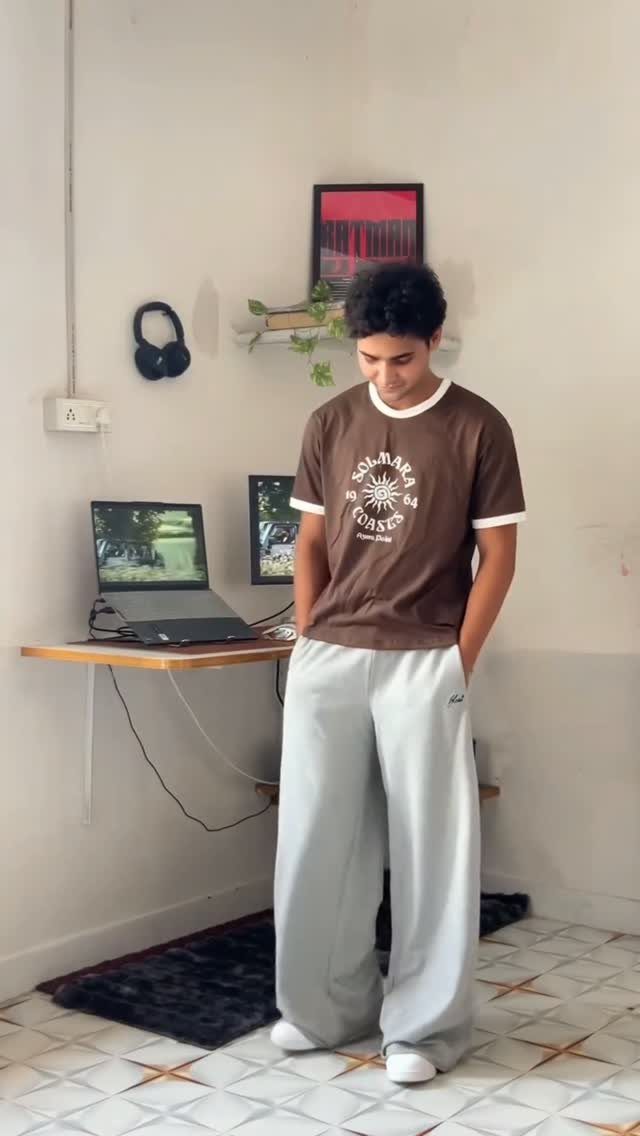
A brown ringer tee with wide grey sweatpants is the easiest way to look relaxed without looking sloppy. The contrast trim on the collar and sleeves adds detail, so the shirt doesn’t need a loud print to stand out.
Wide sweatpants need a clean shoe to balance them, and white sneakers do that.
Tuck nothing in; just let the tee fall at the hip. Pick sweats in a heavier fabric, since thin ones cling and lose the relaxed shape.
Dressing for Different Occasions
Smart casual shifts with the room, so adjust one or two pieces rather than the whole outfit. For a relaxed office, keep the tailored shirt and neat trousers, and let the shoes be the polished part.
For a casual outing, you can drop to well-fitted jeans, but keep a collared or crisp shirt so it still reads as dressed.
For an evening event, move toward the formal end: a blazer, dress shoes, and a shirt with some structure. Comfort stays in the fit, not in loose or stretched-out pieces.
If you’re unsure about a setting, aim a notch above what you expect. Taking a blazer off is easy; adding one you left at home isn’t.
Maintaining Clothing
Polish comes from 3 habits, and none of them cost much: make sure everything fits, press out the wrinkles, and keep your shoes and grooming in order.
Steam or iron shirts and trousers before you wear them, and hang them up rather than leaving them in a pile. Check hems for fraying or drooping, and get them fixed or taken up before they show.
Wipe down shoes regularly and keep hair and facial hair trimmed. These small details are what people notice first.
Understanding Smart Casual
Smart casual sits between formal and casual, and most mistakes come from leaning too far either way.
A tailored shirt in place of a tee, neat trousers in place of jeans, and polished shoes in place of trainers are the 3 swaps that move an outfit toward it.
The workable method is to mix one refined piece with one relaxed piece. A blazer or dress shoes paired with chinos or well-fitted jeans gets the balance right.
It’s less formal than business casual, but more polished than weekend clothes. That’s why it suits both an office and a social evening.
The trouble is, as brilliant as it is when handled correctly, smart casual remains one of the most misunderstood terms in the menswear lexicon.
— Esquire
Frequently Asked Questions
What is smart casual?
Smart casual sits between formal and casual: more polished than weekend clothes, less formal than business casual.
3 swaps get you there: a tailored shirt for a tee, neat trousers for jeans, and polished shoes for trainers. That balance is why it works in a relaxed office and at a social evening.
What are some comfortable outfits for men?
Tan chinos with a navy polo and white sneakers is the easiest place to start.
A black crewneck sweatshirt with straight-leg mid-blue jeans is another, and a brown ringer tee with wide grey sweatpants looks relaxed without looking sloppy. All three stay comfortable because the fit does the work, not loose or stretched-out pieces.
How do I dress for casual occasions?
Start with clean, well-fitted basics and mix one refined piece with one relaxed piece.
A blazer or dress shoes with chinos or well-fitted jeans gets the balance right. Keep a collared or crisp shirt so the outfit still reads as dressed, and add one detail like a watch.
What should I wear to evening events?
Go for dark trousers, a dress shirt with some structure, a blazer and dress shoes.
Evening settings call for more polish, so move toward the formal end. If you’re unsure, dress a notch above what you expect, since taking a blazer off is easy and adding one you left at home isn’t.