Which casual dress code fits depends on where you’re going, because the 11 looks here run from a quarter-zip sweater with a collared shirt and tie for the office to a white linen button-down for a warm day at a cafe table.
Most of them share one habit: a single piece does the work while everything else stays quiet, whether that’s loafers on a polo or a pale pink shirt against black trousers.
Fit decides how any of them turns out, so check it before you pick a style.
1. Smart Casual
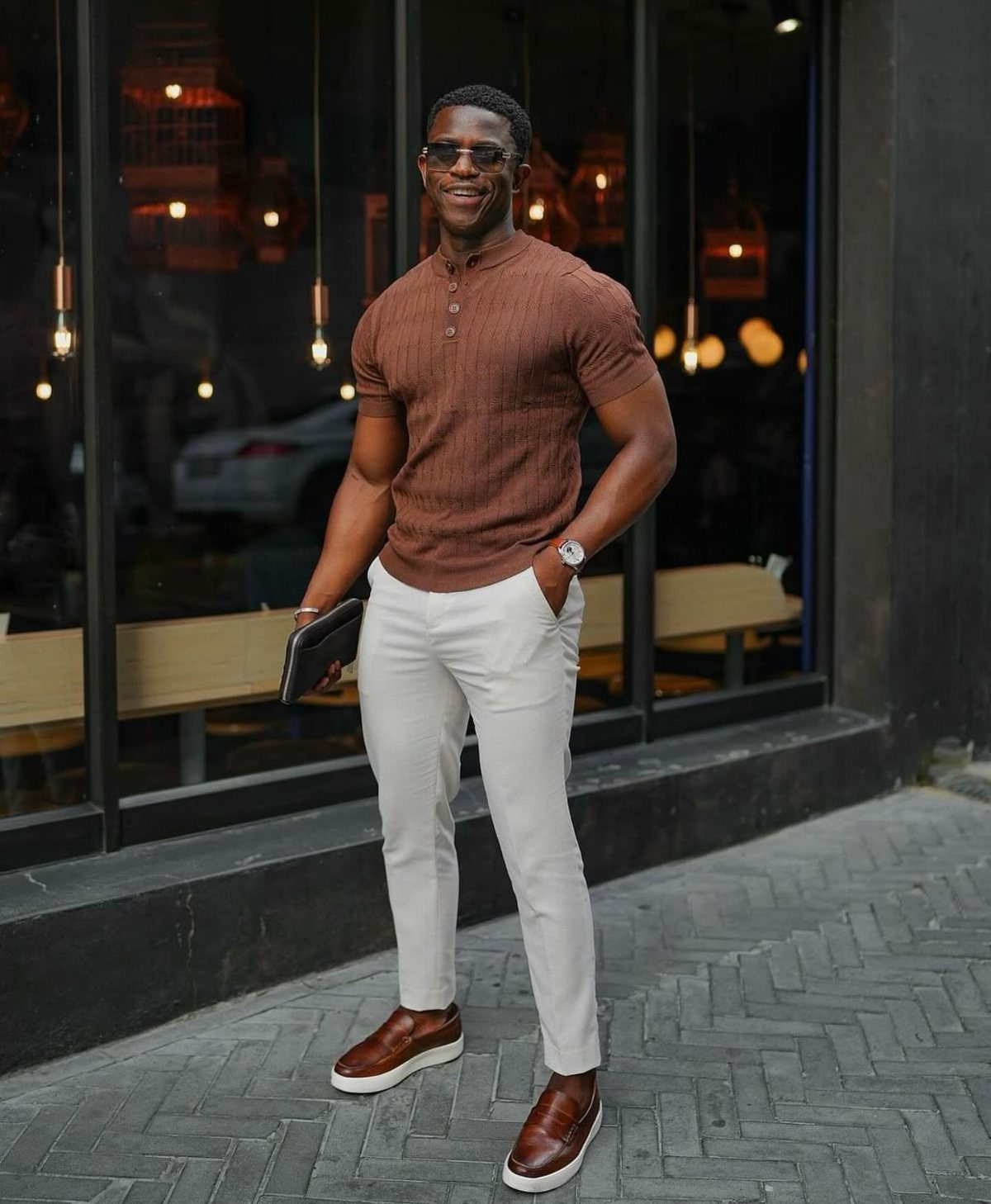
Smart casual works by letting one piece do the dressing up.
I like this formula because it needs no jacket and no tie. Pick the one piece you want to look sharp, and keep the rest simple.
Shoes are the easiest place to start. A good pair lifts a casual outfit more than any shirt will.
2. Business Casual
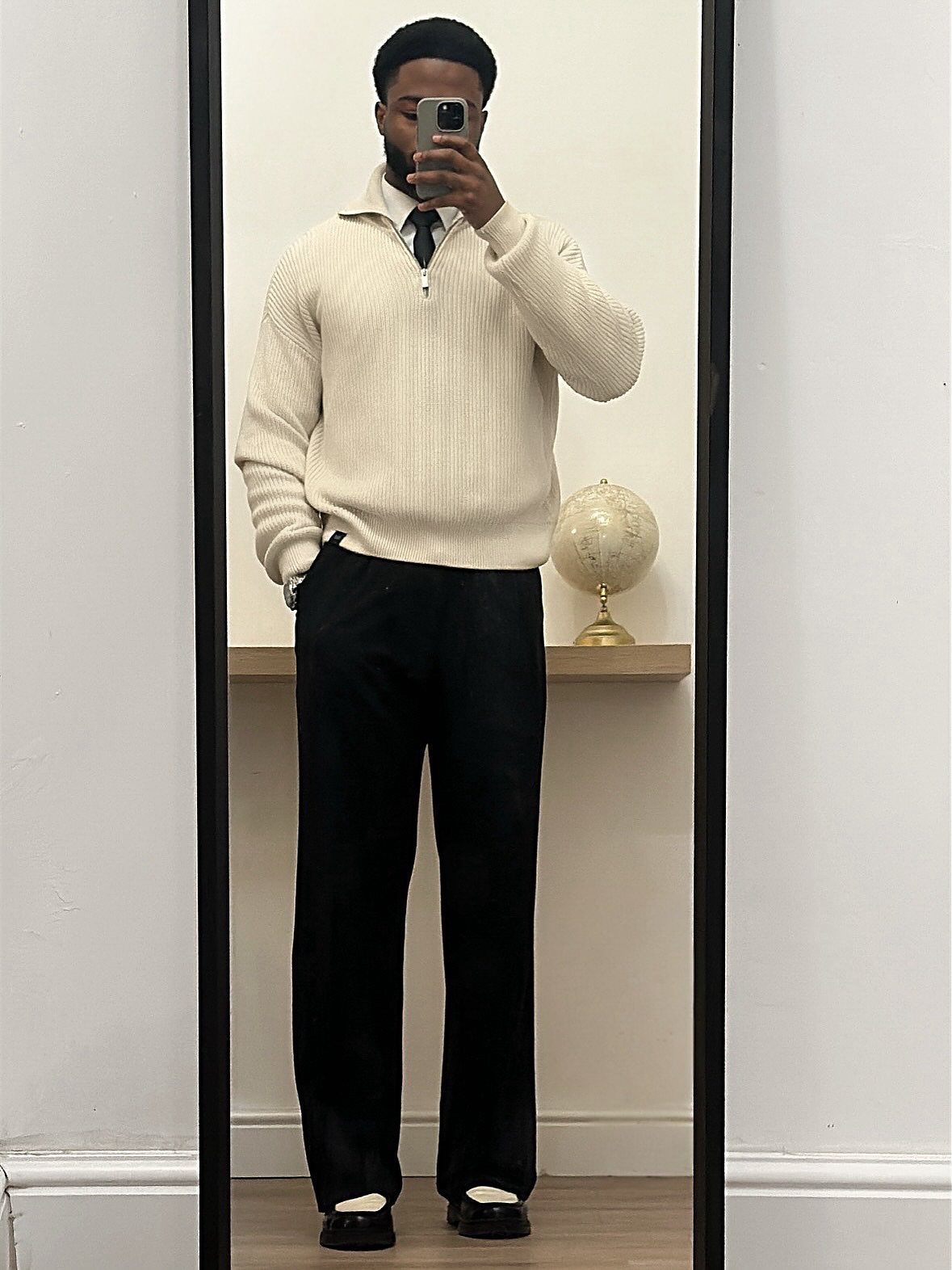
A quarter-zip sweater over a collared shirt and tie is business casual at its most comfortable. Black wide-leg trousers keep the bottom half easy while the tie holds the office standard.
For work, I would pick this over a full jacket on days without client meetings. Keep the sweater a solid, quiet color so the shirt collar and tie knot stay visible at the neckline.
Wide-leg trousers need a clean hem that just touches the shoe. Anything longer looks sloppy.
3. Black on Black
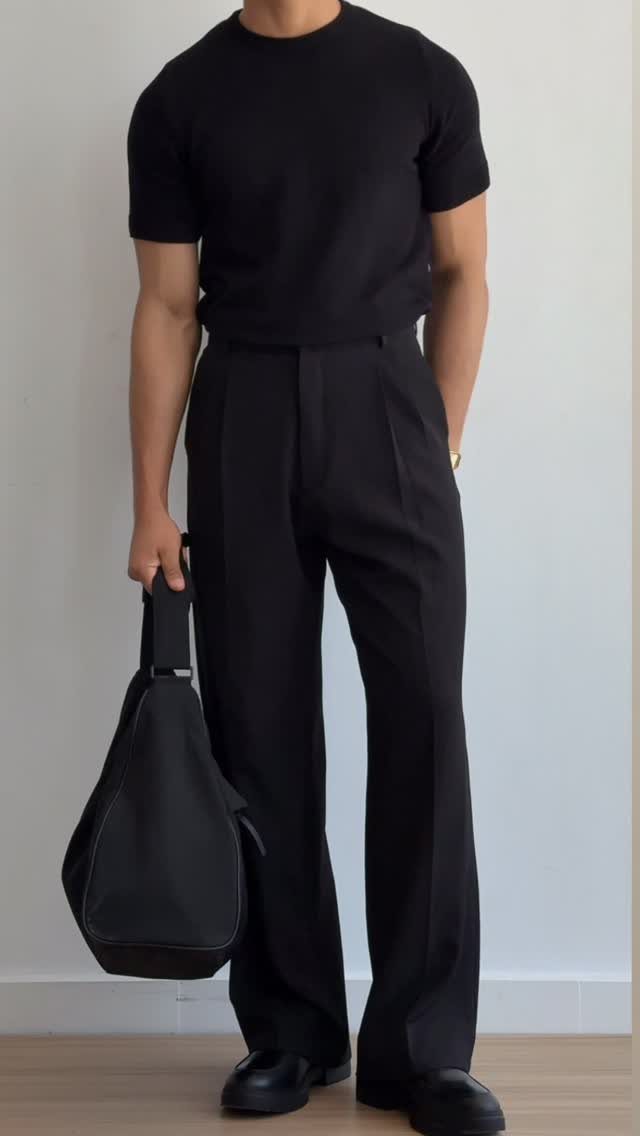
Head-to-toe black is the most relaxed outfit in the formal category, and a plain tee is what makes it so.
Because there is no color to carry the look, texture has to. Mix a soft cotton tee with leather and a matte trouser so the pieces don’t blur into one flat block.
Black fades as it ages, and a faded tee beside fresh trousers gives the game away. Replace the tee first.
4. Casual
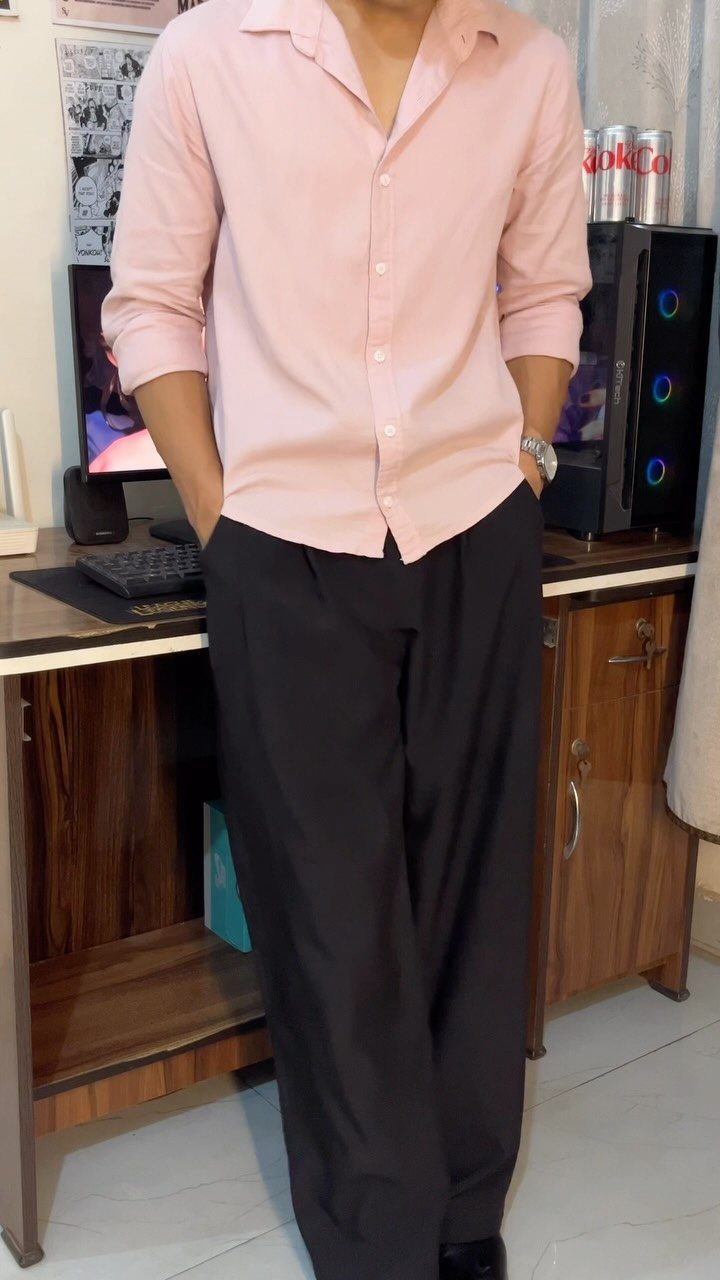
Pink shirts get skipped by many men, and that is a mistake. A light pink button-down with black trousers is relaxed but clearly put together, and it takes about 2 minutes to assemble.
Black trousers give the pale shirt contrast, so the color reads as a choice. Wear the shirt untucked and sleeves rolled for home or a casual meeting, or tucked for dinner.
Press it once. Wrinkles on a light shirt show far more than on a dark one.
5. Clean Sneakers, Loafers
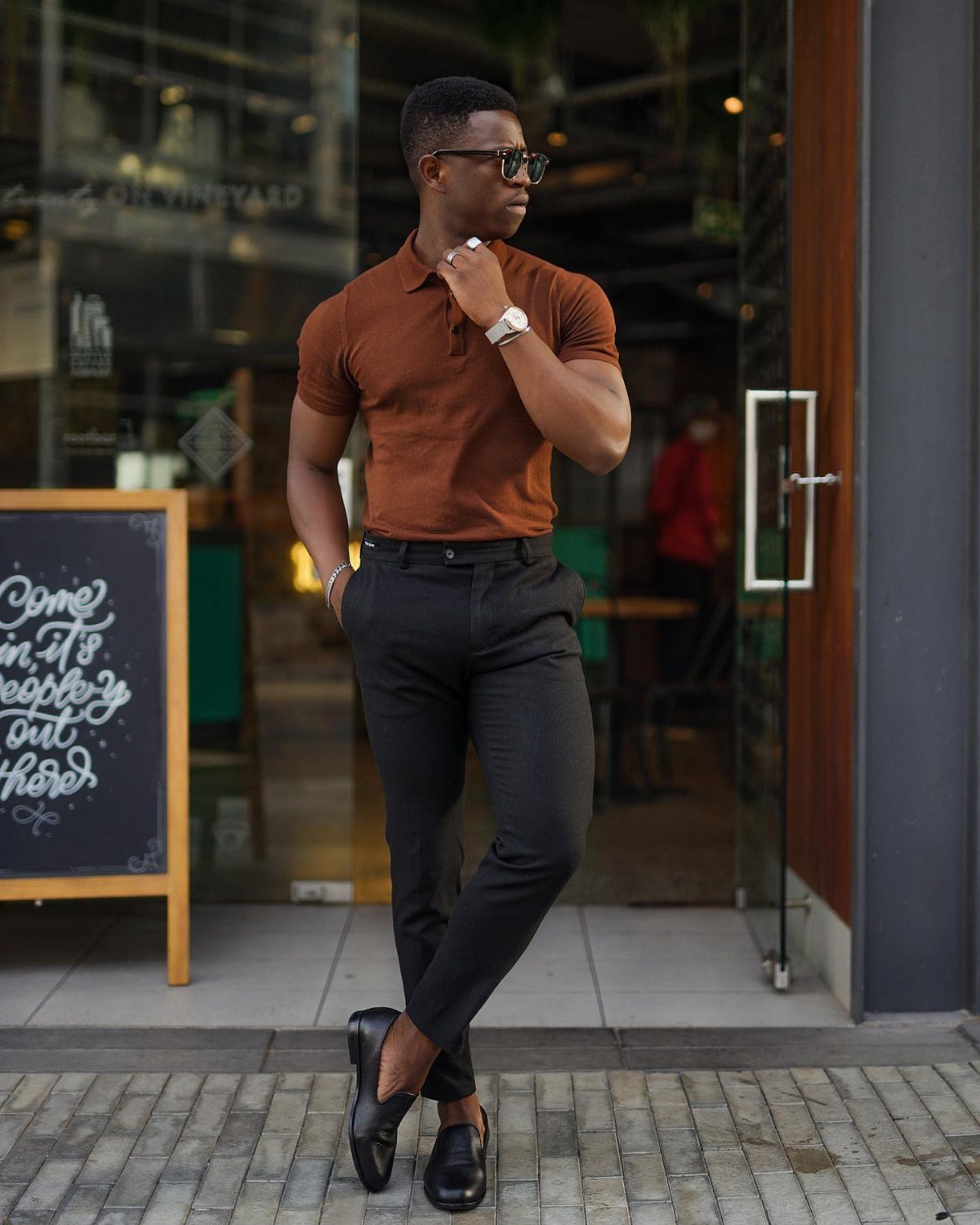
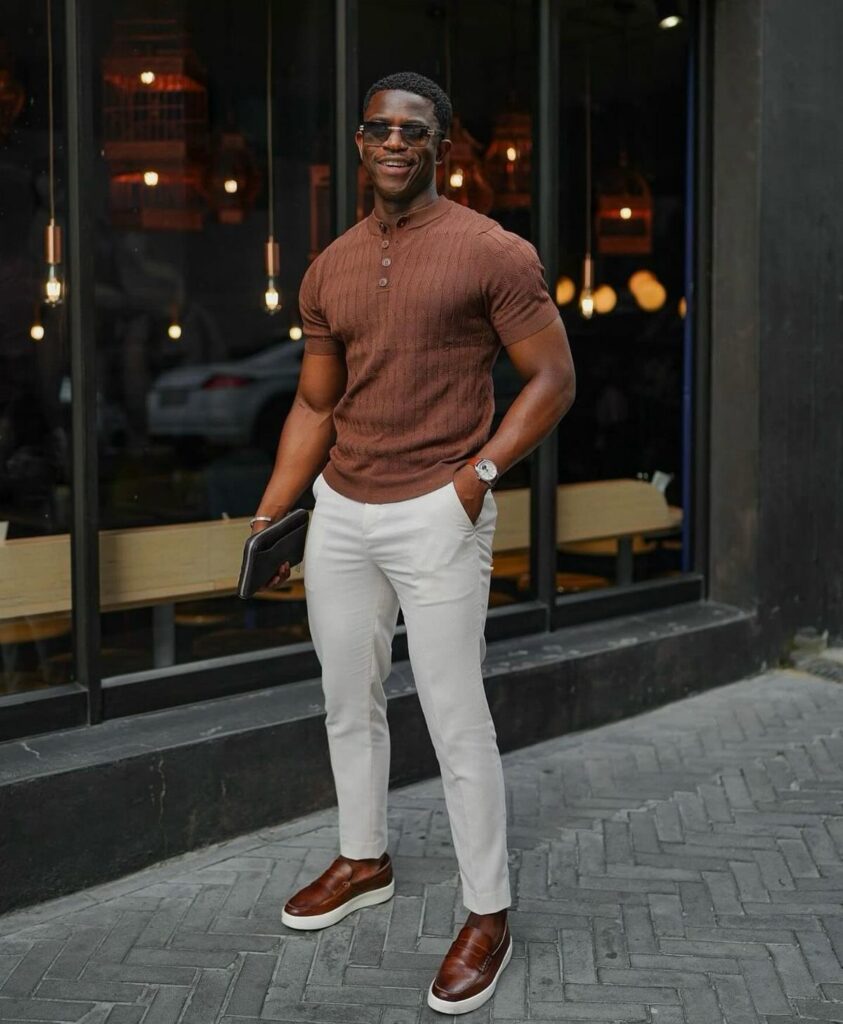
Loafers change what a polo and black trousers say. Black leather loafers make the outfit look finished, where sneakers would make it look like weekend wear.
I prefer loafers here because the brown polo and black trousers already lean tidy. Wear them with thin socks or none, and keep the leather polished.
If you choose sneakers instead, they must be spotless and plain. A scuffed pair undoes what you built.
6. Ultra Casual
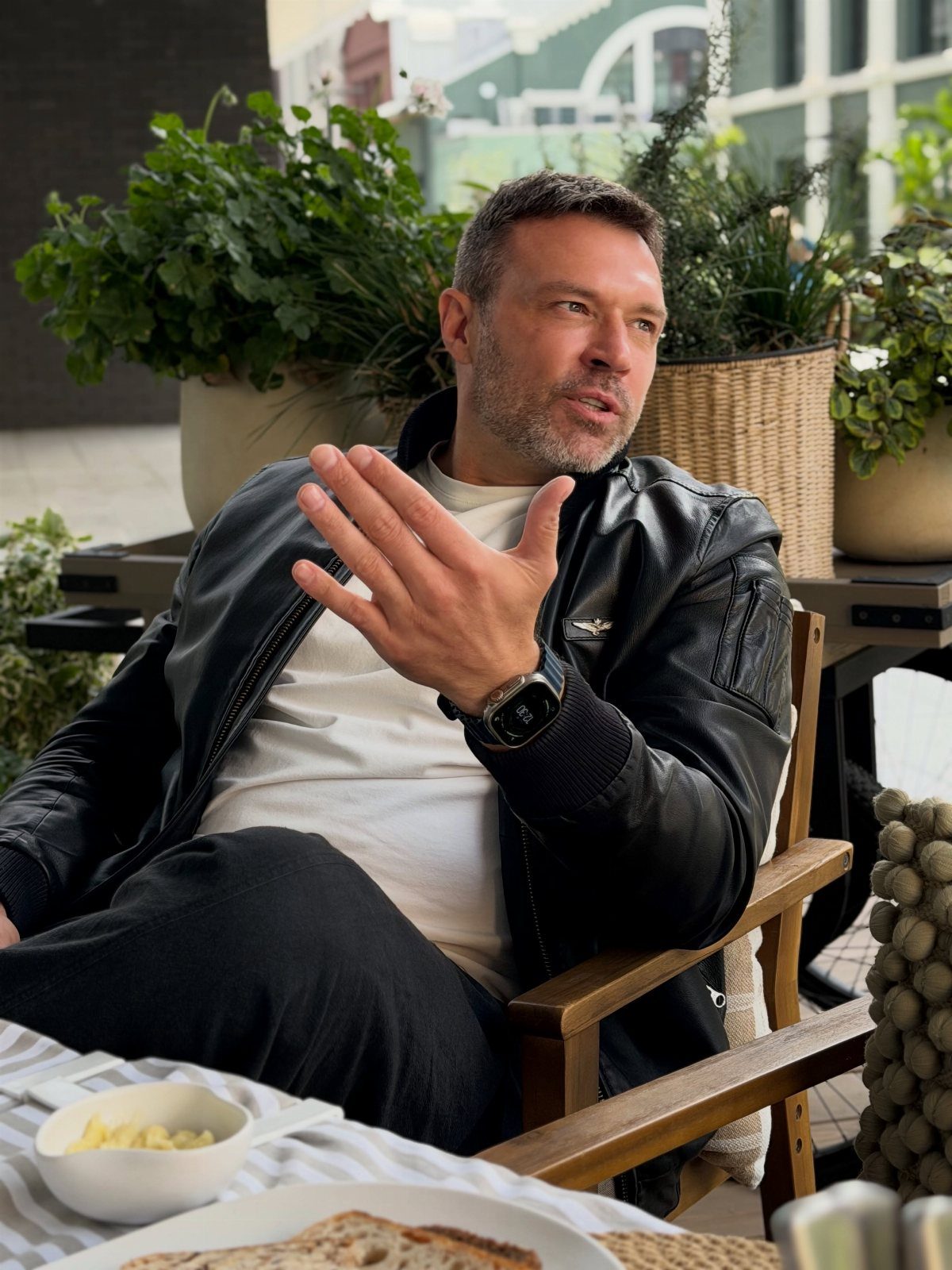
The white shirt brightens the dark jacket and black pants, and nothing else is needed.
This is the dress code for coffee, errands and casual evenings out. Its rule is fit: the tee should be crisp, with no stretched collar, and the jacket should sit close at the shoulders.
Skip logos and extra layers. The outfit works because it stays this simple.
7. Blues and Neutrals
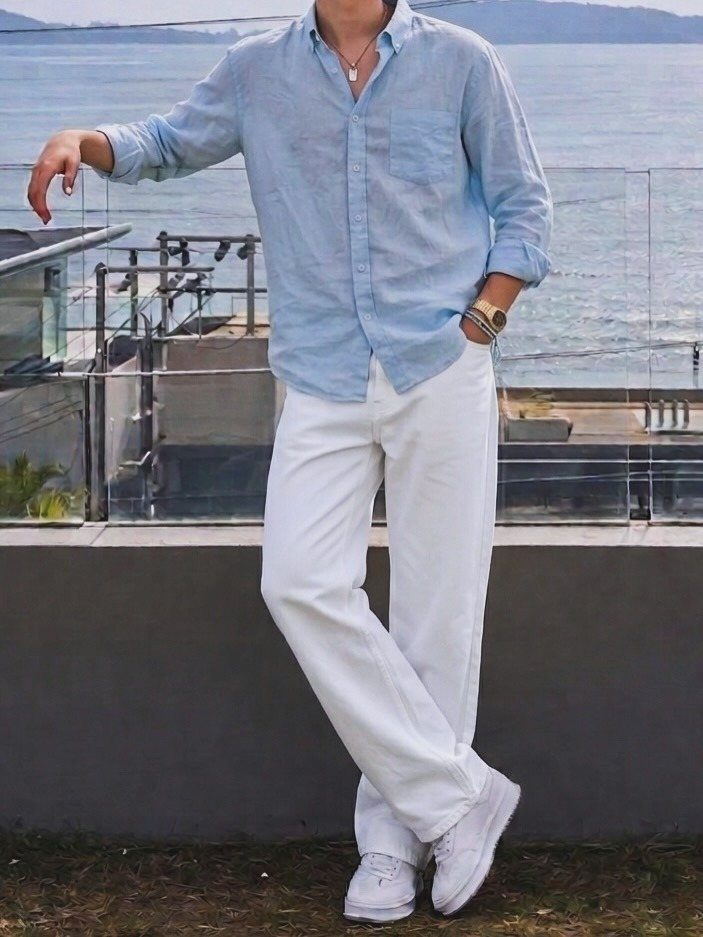
Light blue and white is a two-color outfit, and it works because neither color competes. Pale blue shirt, white trousers, white sneakers: nothing else is needed.
Keep the sneakers clean, since white shoes next to white trousers show every scuff. Roll the sleeves once or twice if the weather is warm.
For a warm-weather dinner or a day by the water, I would choose this over jeans every time.
8. Button-Down Shirt and Jeans
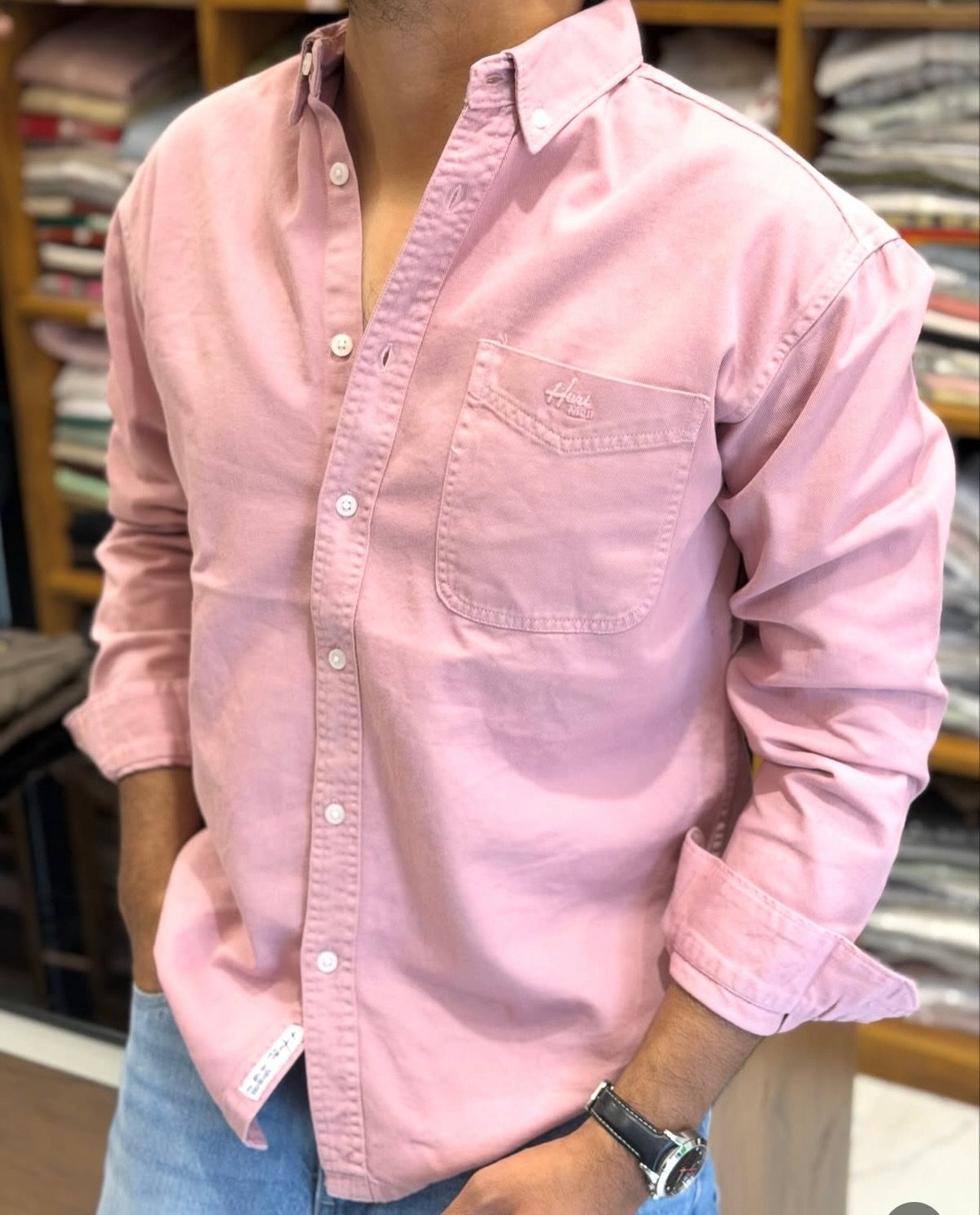
Pink and light blue denim is a pairing many men skip, and I think they should try it. The 2 colors are both soft, so they sit together without a fight.
Roll the sleeves to the forearm and leave the shirt untucked or half-tucked at the front. Choose a wash that stays clearly blue, not gray, so the pink looks deliberate.
Jeans keep it casual enough for a weekend; add a pair of clean leather shoes and it holds up for a relaxed dinner.
9. Casual Jacket Over T-Shirt
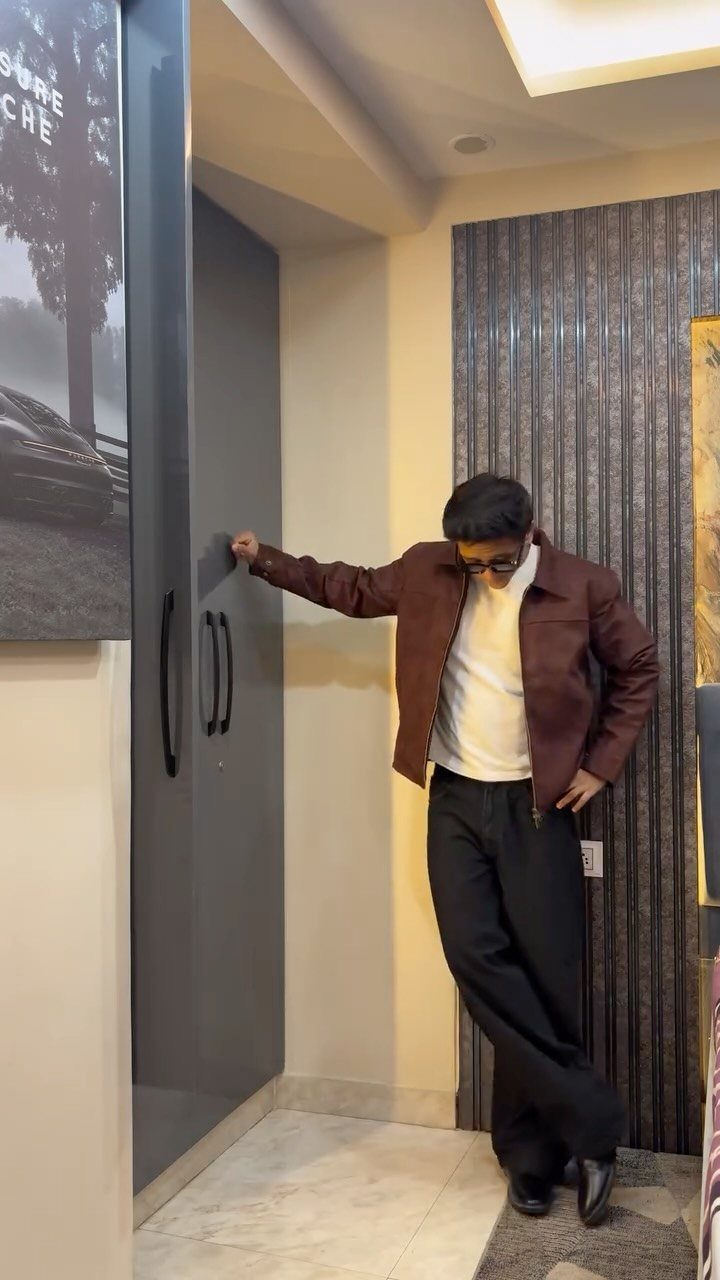
A brown jacket over a white tee is the easiest layer I know for a day that has no set plan. The white tee keeps the neckline bright, and the brown adds warmth that black or navy cannot.
Dark trousers finish it. Pick a jacket that sits close at the shoulders and ends near the belt line, because a boxy, long jacket swallows a plain tee.
Wear the tee untucked only if it ends at the hip. Otherwise tuck it in front.
10. Olive Shirt and White Trousers
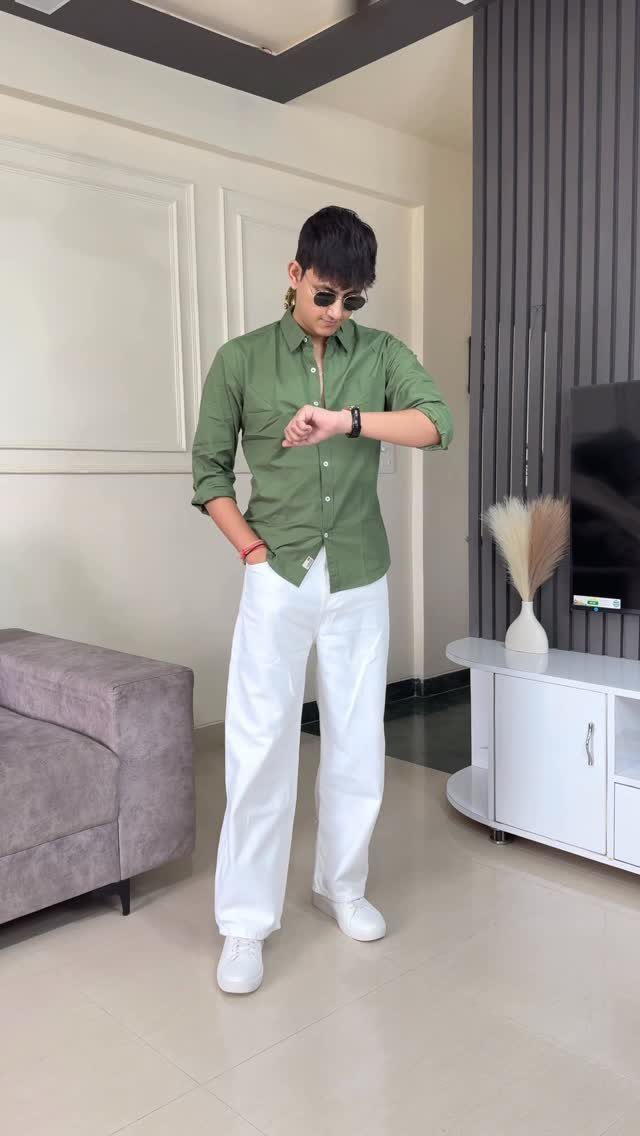
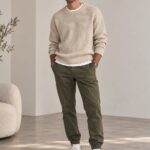
Olive and white make a quiet, earthy pair, and wide-leg white trousers give the look its relaxed shape. Leave the olive shirt untucked so the trousers’ fuller cut doesn’t swamp your frame.
White sneakers keep the line clean from hem to floor. Aim for a hem that just grazes the shoe, as with any wide trouser.
I would wear this on a warm day at home or out for lunch. Light trousers do show dirt, so check the seat and hems before you leave.
11. White Linen Button-Down
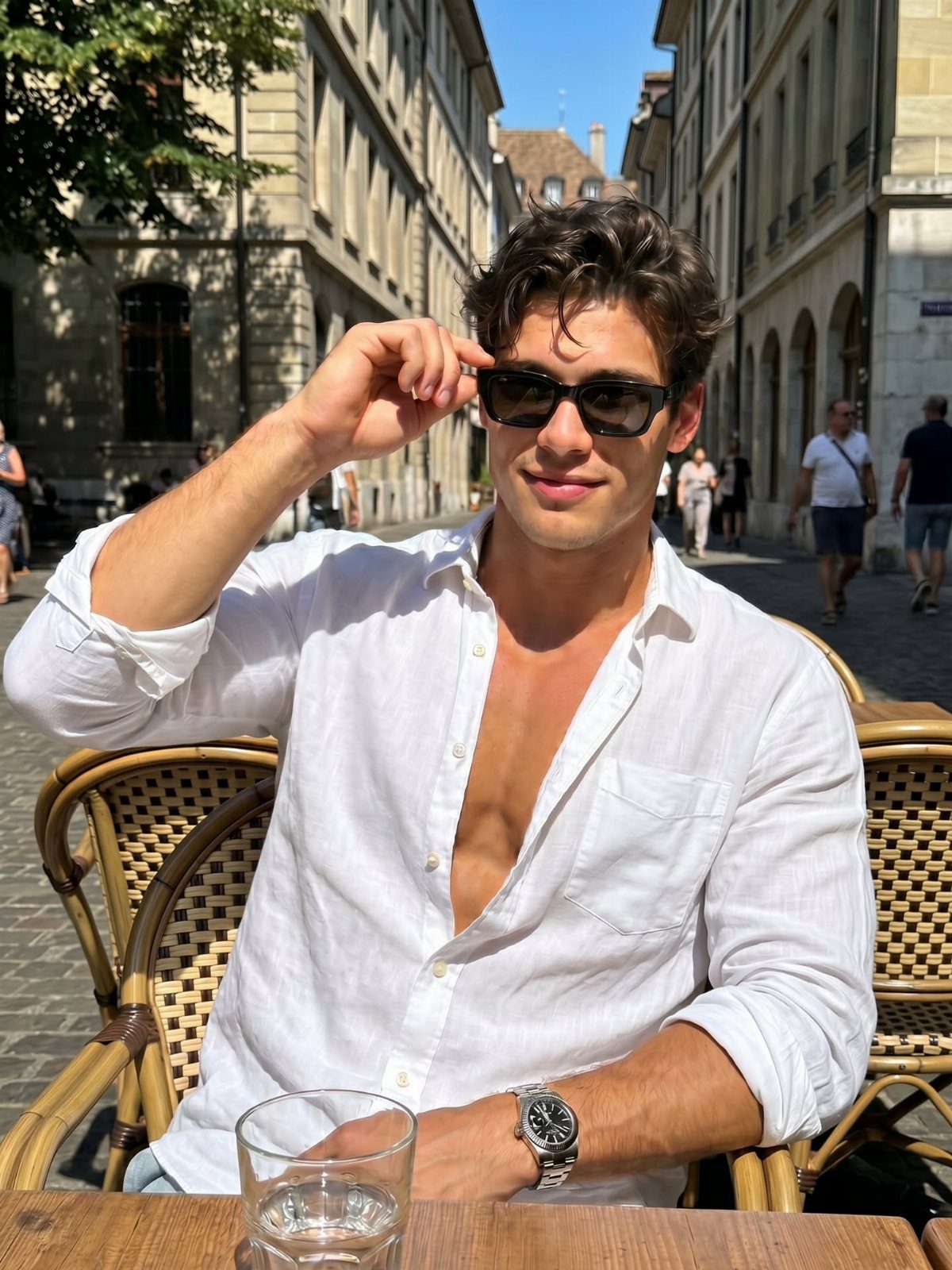
A white linen button-down is the shirt I reach for when the day is warm and the plan is loose. Linen is breathable, and it wrinkles; accept that, because the creases are part of the look.
Wear it open at the collar with the sleeves rolled, and add sunglasses for a cafe table. Pair it with tan or navy trousers, or shorts.
Wash it gently and steam it lightly, not hard. A shirt that looks slept in is fine, but a stained white one is not.
Understanding Smart Casual
Dark-wash, straight-leg jeans work with a polo or button-down.
A plain black or white tee can pass too, as long as the rest is sharp: tailored trousers and sleek leather sneakers.
My method is to pick one laid-back piece you love and sharpen everything around it.
Wearing a tee? Add well-cut chinos and loafers.
Wearing denim? Keep the cut clean and the color dark, then add a lightweight blazer or overshirt.
Choosing the Right Fit
Fit matters more than the dress code, because a sloppy fit sinks a good outfit at any level of formality. Clothes that are too big look careless, and clothes that are too tight look strained.
Check 4 spots: the shoulder seam should sit at the edge of your shoulder, sleeves should end near the wrist, trousers should have a clean line to the shoe, and a shirt should not pull across the chest or belly.
Off-the-rack pieces rarely fit perfectly.
A tailor can usually shorten sleeves, take in a waist and fix a hem for a modest cost. I would spend that money on the pieces you wear most.
Accessorizing
Keep accessories few and good. One quality watch and one proper belt do more than a handful of cheap extras.
A belt shows you thought about the outfit. It does not need to be expensive full-grain leather; woven and textile belts are a fine way to add some variety.
Skip the tie. A pocket square adds color instead, and it should echo your shirt without being too bold or contrived.
If you want more interest, put pattern on top, and start with a classic like plaid.
Avoid fads: oversized cuts, overly tight fits and loud prints. If you can’t see yourself wearing a piece in 5 years, don’t buy it.
Frequently Asked Questions
What does casual dress code mean for men?
Casual dress code means comfortable clothes that still look put together, for informal settings like errands, coffee or a weekend dinner.
Casual doesn’t mean careless: a crisp tee with no stretched collar, a jacket that sits close at the shoulders and clean shoes keep it sharp. Skipping logos and extra layers helps too.
What is the difference between casual and smart casual?
Smart casual is casual with more thought behind it.
Pick one piece to carry the sharpness, such as loafers, clean leather sneakers, a blazer or well-cut chinos, and keep everything else simple. Plain casual doesn’t need that deliberate step up.
What are some good casual clothes for men?
Good starting pieces are a white tee, a light pink or light blue button-down, dark or light-blue jeans, black or white trousers, a brown jacket and clean white sneakers.
A white linen button-down also works on warm days, with tan or navy trousers or shorts. Most of these mix well, so a few pieces make many outfits.
How to find your personal style?
Start with one laid-back piece you love, such as a tee or a pair of denim, and sharpen everything around it.
Add well-cut chinos and loafers to the tee, or keep the denim dark and clean with a lightweight blazer or overshirt.
Fit comes first: shoulder seams at the edge of your shoulder, sleeves near the wrist and a clean line from trouser to shoe. Avoid fads, and don’t buy anything you couldn’t see yourself wearing in 5 years.